Can a Statue Show You What Freedom Looks Like?
The Vision of a Greek God
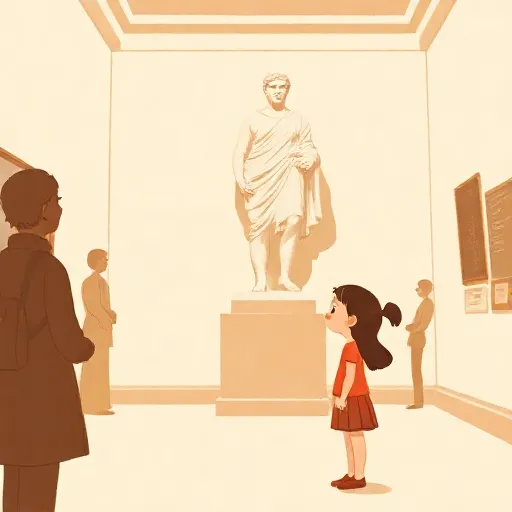
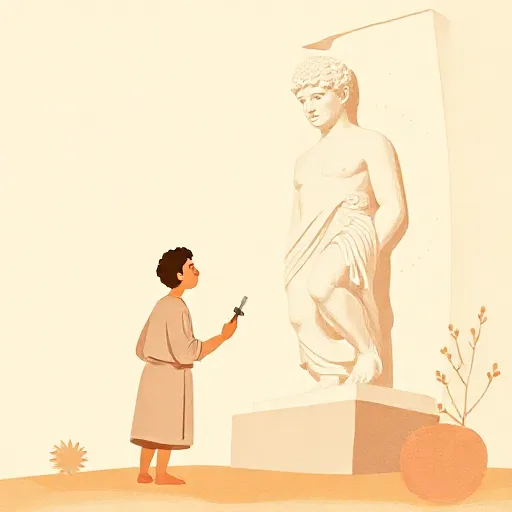
Imagine you’re standing in front of a marble statue of Zeus in a quiet museum. His forehead is smooth, his body perfectly balanced, and he looks completely at ease — powerful but not threatening. A 19th-century German philosopher named Georg Wilhelm Friedrich Hegel (1770–1831) would lean over and tell you something surprising: That’s not just a statue. That’s what it looks like when a human being is truly free.
Hegel spent years thinking about art, beauty, and what it means to be human. He didn’t think art was just about pretty pictures or decoration. He argued that the whole point of art is to make freedom — the inner freedom of the human spirit — visible, audible, touchable. And he believed that art wasn’t just a random collection of nice things. It had a whole history, moving through different forms, from mysterious symbols to perfect bodies to deep, inward feelings.
For Hegel, art was serious business. But with a twist: he also thought that in the modern world, art’s biggest job might already be behind us. That idea still makes artists, critics, and ordinary museum-goers argue today.
Art as Freedom Made Visible

So what is art, according to Hegel? It’s not about copying nature, like painting a bowl of fruit just to show off how realistic it looks. And it’s not mainly about teaching lessons or making people act better. The core purpose of true art, Hegel said, is to create beauty — and beauty is the sensuous expression of spiritual freedom.
Let’s unpack that. By spirit (or Geist in German), Hegel meant the part of existence that is conscious, that thinks, imagines, and makes choices — in other words, the human mind and everything it can do. Freedom, for him, is when spirit decides its own path rather than just being pushed around by instincts or outside forces. So when a sculptor takes a block of lifeless marble and forms it into a human figure that seems alive and untroubled, the sculptor isn’t just carving a shape. They’re showing you the idea of freedom in a material thing. That’s what Hegel called true beauty.
This sets him apart from earlier thinkers. Immanuel Kant (1724–1804) thought beauty was about the pleasurable “free play” a beautiful object sets off inside your mind — not a real property of the object itself. Hegel disagreed. He sided with the poet Friedrich Schiller (1759–1805), insisting that beauty is an objective quality of the thing. A statue can really be beautiful because it actually makes freedom visible there in the stone.
And for Hegel, the human body was the best medium for this. Colors and sounds can stir emotions, but only the human form can directly embody the freedom of a thinking, feeling spirit. So the highest art doesn’t just show any subject: it shows people — or gods in human shape — as the visible image of freedom.
The Three Ages of Art: Symbolic, Classical, and Romantic
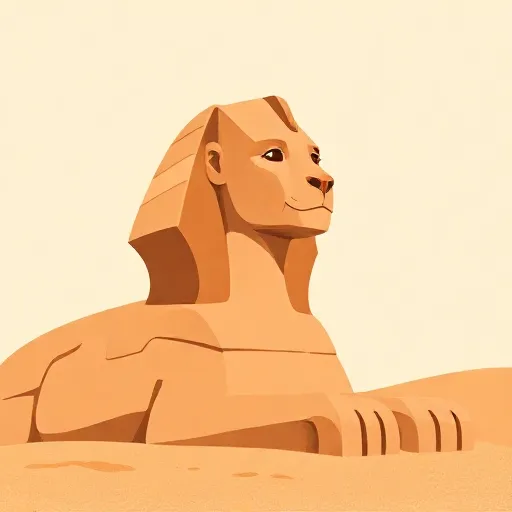
Hegel didn’t think all art was equal. He saw a great pattern in history, a journey from symbols that pointed to freedom to works that actually embodied it. He called these the three art-forms: symbolic, classical, and romantic.
The first stage, symbolic art, is really “pre-art” in Hegel’s view. The ancient Egyptians built pyramids and sphinxes that were full of meaning, but the meaning was hidden. A pyramid is a giant stone shape that houses a dead pharaoh; it points to something important but doesn’t show that thing clearly. Hindu gods with many arms or animal heads try to suggest a divine power that is bigger than any natural shape, but the shape itself is distorted and restless — it never settles into a free, human calm. Symbolic art, Hegel said, is like a riddle that hasn’t been solved. It’s art that hasn’t yet found its real voice.
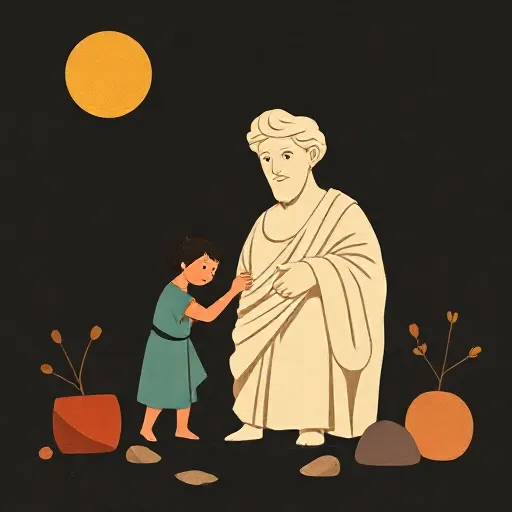
Then came classical art — the art of ancient Greece. This, Hegel claimed, is where art finally fulfilled its purpose. Greek sculptors like Phidias and Praxiteles carved gods and heroes in the perfect human form. Think of the Dresden Zeus or the famous statue of the goddess Aphrodite. The forehead flows seamlessly into the nose; the limbs are relaxed yet ready to move. There’s no distortion, no riddles. The statue is the freedom of spirit, made fully visible. For Hegel, classical sculpture achieved “absolute beauty” — the closest art ever came to showing us what it feels like to be a free, self-possessed soul. Greek drama, like Sophocles’ tragedies, took this further: free heroes and heroines acted out conflicts between ethical passions — the family versus the state, for example — and in their actions you saw the drama of human freedom itself.
After the classical age came romantic art, which Hegel associated with the Christian world. Romanic art doesn’t aim for that perfect outer harmony of body and spirit. Instead, it turns inward. The freedom it expresses is a deep, inner, spiritual freedom — the kind that matters even when your body suffers. Paintings of Christ on the cross or the Madonna cradling her child don’t show idealized athletic perfection. They show tenderness, sorrow, love, and a soul at peace even in pain. This, Hegel said, was a new kind of beauty: the beauty of inwardness. The faces in paintings by Raphael or van Eyck reveal an inner life that a Greek statue, for all its calm majesty, never could. Romantic art also gave us secular heroes — characters like Shakespeare’s Macbeth or Hamlet, driven by inner passion or noble confusion, whose freedom lies in the sheer force of their personality.
Does Art Come to an End?
Here’s where Hegel’s story takes a twist. He wrote that “art, considered in its highest vocation, is and remains for us a thing of the past.” That sounds like he was announcing the death of art. But that’s not quite what he meant.
For Hegel, the highest job art ever had was to reveal ultimate truths about the world and ourselves, often through religion. In ancient Greece, art and religion were almost the same thing: the sculpture of Zeus was your image of the god. But after the Reformation, religion turned inward, and art was released from that sacred role. Nowadays, Hegel said, we look to philosophy and faith, not art, for our deepest understanding of things. Art still matters enormously, but it doesn’t have the same world-defining power it once did.
What worried Hegel was a different kind of “end.” In his own time (the early 1800s), some artists were making works that no longer seemed to express genuine human freedom at all. Some painters just copied everyday things in minute detail — a bunch of grapes, a shiny metal cup — without infusing them with a sense of life. Others wrote witty books that played with ideas in a random, mocking way, like shredding a puzzle just to show off how clever they were. When art becomes only about natural appearances or ironic jokes, Hegel argued, it stops being real art. It loses its soul.
Yet he didn’t think all modern art was doomed. He admired 17th-century Dutch painters who could make a simple scene vibrate with color and life, what he called “objective music.” And he believed that modern art had a new “holy of holies”: the human heart itself. Artists were now free to explore all the joys, sorrows, strivings, and trivialities of being human, in any style from any age. The only condition was that the work must still be “beautiful” and alive — it must let us see our own freedom and feel at home in it.
Why Hegel’s Big Idea Still Matters

So why should a 12-year-old today care about a dusty German philosopher’s theory of art? Because Hegel asked a question that still hasn’t been settled: What makes something a genuine work of art?
Walk through any modern art museum and you’ll see things a classical Greek sculptor could never have imagined — abstract splashes of paint, a chair nailed to a wall, a video of someone sleeping. Some people say, “That’s not art.” Others say it is, because art can be anything an artist says it is. Hegel would jump into that debate with both feet. He’d say: it’s not about rules or being old-fashioned. It’s about whether the thing in front of you shows you something true about human freedom and life, in a way that’s both sensible and beautiful. If it just shocks you, or just copies reality, or just shows off the artist’s cleverness without heart, then he might whisper, “Yes, but is it really art?”
His claim that art’s job is to give sensuous form to freedom might also make you look at your own doodles, your favorite song, or a film differently. When a piece of music makes you feel understood, or a character in a story acts with stubborn courage, Hegel would say you’re catching a glimpse of what it means to be a free spirit. That’s not a small thing. It’s a reminder that art at its best isn’t about escape — it’s about recognition.
Think about it
- If art must be beautiful to be real art, who gets to decide what counts as beautiful? Can one person’s ugly be another person’s masterpiece?
- Can a piece of music or an abstract painting express human freedom even if it doesn’t show a person at all?
- Hegel thought art once revealed the deepest truths, but in modern life that job belongs more to science and philosophy. Do you think art today still helps us understand who we really are, or has it become just entertainment?