Can Words Be Weapons? The Fight Over Hate Speech
Shouts, Posters, and Slogans: What Counts as Hate Speech?
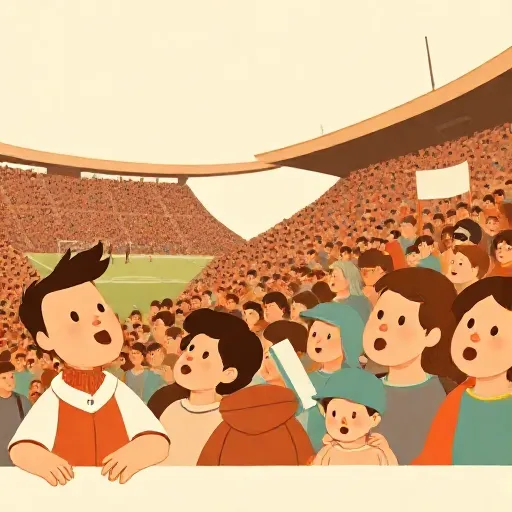
Imagine a soccer match. Opposing fans chant monkey noises at a Black player. Someone holds a banner with a hateful slogan like “Arabs out of France.” This isn’t just rude. Many countries would punish it as hate speech — a kind of speech that attacks people because of their race, religion, gender, or other protected features. But what exactly makes something hate speech? And why is it so difficult to draw a line?
Contemporary political philosopher Bhikhu Parekh collected examples from around the world. He noted leaflets calling for the removal of “undesired aliens,” a poster of a woman in a burka asking “Who knows what they have under their sinister clothes?”, and statements that deny or trivialize the Holocaust. These cases have one thing in common: they target members of a group in a way that feels more like a punch than a disagreement.
Legal scholar Robert Post suggests that the law can define hate speech in four main ways: by the harm it causes, by its content, by its intrinsic properties (the type of words used), or by its attack on human dignity. Almost all real laws mix these together. But each path has traps. Which one we choose depends on what we want to achieve — and that is a deeply philosophical question.
Defining Hate Speech: Four Ways to Draw a Line

A harm-based definition focuses on the damage done. Contemporary philosopher Susan Brison says hate speech vilifies people based on traits like race or religion and does so face-to-face, creates a hostile environment, or acts like group libel. The problem? Suppose someone says “Arabs out of France” and another person says “Only French Nationals should occupy France.” The second sounds less abrasive but sends a similar message. Would it count? That depends on how likely it is to create a hostile environment — and reasonable people disagree.
A content-based definition homes in on the message itself: speech that “expresses, encourages, or incites hatred” against a group. This catches both loud and soft versions of the same idea. But it forces us to decide which ideas cross the line. We also need to distinguish hateful speech from legitimate criticism — a distinction that depends on shifting social norms, and minority groups often have little power to shape those norms.
Intrinsic property definitions zero in on particular words: slurs, epithets, and other expressions widely known to insult. This is simple: if you use a slur, it’s hate speech. But “Arabs out of France” has no slur, yet many see it as hate speech. And when members of a targeted group reclaim a slur (using it among themselves to rob it of its sting), the same word no longer works the same way. Philosopher Judith Butler (born 1956) argued that the real trouble isn’t the word itself but the harmful act it performs — a speech act that puts someone in a subordinate position.
Finally, dignity-based definitions focus on speech that undermines a person’s basic social standing as a social equal and bearer of rights, as contemporary legal philosopher Jeremy Waldron puts it. Germany’s penal code, for instance, bans attacks on human dignity by “insulting, maliciously maligning, or defaming part of the population.” The worry with this approach is that it might sweep in controversial political speech along with truly hateful attacks.
Why It Hurts: Face-to-Face Shouts and Whispered Poison
Philosophers often separate hate speech into two kinds. Assaultive hate speech is the shouting from a car — words that hit you like a slap. Propagandistic hate speech spreads among people who share the same prejudice, like a KKK newsletter whispering poison inside a group. But for the people targeted, the distinction often blurs. A racist flyer posted in public can feel as violent as a face-to-face insult.
The harms pile up. Victims report immediate fear, stress, and emotional distress. Over time, they may start avoiding certain streets, jobs, or conversations — shrinking their public life just to stay safe. Contemporary legal scholar Jeremy Waldron calls this “an environmental threat to social peace, a sort of slow-acting poison, accumulating here and there, word by word”. Waldron adds that public hate speech attacks the very atmosphere we all need: the assurance that we are equal citizens.
But some philosophers argue that words can hurt in an even more direct way. Using ideas from J.L. Austin (1911–1960), they distinguish constitutive harms (damage done in the saying of something) from consequential harms (downstream effects). When someone yells a slur, they aren’t just causing later pain — they are, in that very moment, ranking a group as inferior and legitimizing bad treatment. Understanding this can reframe the debate: if hate speech constitutes verbal discrimination, then restricting it might be like banning a “Whites Only” sign, not just censoring opinions.
Secret Codes: Slurs and Dogwhistles

The most obvious weapon is a slur: a word built from the ground up to demean a group. Slurs throw a double punch. They point at someone (like “cracker” points at white people) and they pack an attitude of contempt. Philosophers disagree about where that contempt lives — in the word’s meaning, in the speaker’s intent, or in a community-wide taboo that makes it shocking to utter.
Less obvious are dogwhistles. A dogwhistle is a coded message that sounds innocent to most ears but activates bias in those who know the code. The infamous Willie Horton ad during the 1988 U.S. presidential campaign showed a Black man who, while on prison furlough, attacked a white couple. Race was never mentioned, but the ad stirred racial fears. Contemporary philosopher Jennifer Saul calls this a covert intentional dogwhistle: once people noticed the racial undertone, the ad lost its power, proving it worked below the surface.
Code words like “inner city” can pull the same trick. You might hear “Food stamp programs help many inner-city families” and, without thinking, connect “inner city” to a racial stereotype. Underneath the plain meaning, a not-so-innocent message gets through. This makes dogwhistles frustratingly hard to pin down — and it forces us to ask whether speech that functions like propaganda should count as hate speech, even if it looks clean on the surface.
When Speech Silences: The Power to Steal Someone’s Voice
Perhaps the most unsettling harm is that hate speech can silence its own targets. Feminist legal scholar Catharine MacKinnon (born 1946) originally made this argument about pornography, but the idea applies to racist hate speech too. Some speech acts, MacKinnon observed, set the ground rules for what can and cannot be said — who gets heard, and whose words count.
Contemporary philosopher Rae Langton developed the silencing argument using Austin’s categories. Imagine a woman says “No” to a sexual advance. In a world drenched with sexist images that portray women’s refusals as part of a game, her “No” might not be recognized as a refusal at all. That’s more than a hurt feeling. It’s illocutionary silencing: she performs the speech act of refusing, but the hearer fails to recognize it as such, and so her refusal has no force. She is, effectively, unable to refuse.
Now apply this to hate speech. When a community is constantly bombarded with messages that it is inferior, criminal, or dangerous, its members may find that their own words weigh less. Their arguments in the public square are dismissed, their complaints not taken seriously. Some withdraw entirely. In this way, hate speech doesn’t just attack dignity — it can rob people of their voice, turning freedom of speech into a one-sided privilege.
What Should We Do? Bans, Counterspeech, and You

If hate speech can wound and silence, what’s the right response? Many democracies around the world legally restrict it, arguing that protecting dignity and public order justifies a limit on free expression. Supporters say bans send a powerful public message that everyone belongs, and they stop the poison from spreading. Opponents reply that bans can chill legitimate debate, give governments too much power, and drive hate underground without curing the attitude behind it.
One objection says the cure is “more speech” — let good ideas defeat bad ones. But victims point out that when you’ve just been verbally assaulted, it’s hard to give a reasoned reply. Hate speech can knock the words right out of you.
A third path, called supported counterspeech, tries to break the deadlock. Instead of punishing hate speakers, the state would give targets the resources to speak back: funding for community newsletters, anti-racism art projects, radio spots, or workshops. Contemporary political theorist Katharine Gelber argues that if hate speech robs people of their capacity to participate, what they need is not silence on both sides but active support to regain their voice.
This debate is alive because it touches your life every day. Someone may hurl a slur in the school hallway. A politician may use a code word that makes some kids feel unwelcome. The question isn’t just what the law should do — it’s how you, your friends, and your community decide to treat one another’s words. And that depends on first understanding exactly what those words are doing.
Think about it
- If a word is deeply offensive but members of the group it targets use it among themselves as a joke, does that word lose its power to hurt outsiders? Why or why not?
- Imagine a politician says something coded that secretly stokes fear against a minority, but most listeners don’t notice. Should that be considered hate speech? How could you prove it?
- If hate speech can make people afraid to speak up, how might a school create a “supported counterspeech” program to help students respond — without silencing anyone’s opinions?