Why Protect Speech You Hate?
What Even Counts as “Speech”?
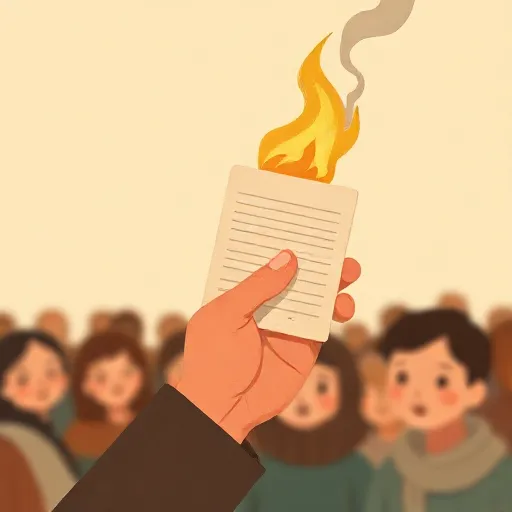
In 1968 a young man named David O’Brien burned his draft card on a courthouse steps. He was protesting the Vietnam War. Was that an act of free expression, or just an illegal fire?
Philosophers and lawyers argue that not all communication uses words. Dancing, painting, and even burning a piece of paper can send a message. But when is an action really “speech”? The legal scholar John Hart Ely (1938–2003) once wrote that burning a draft card is “100% action and 100% expression.” The line is hard to draw.
That is why we need a deeper question: why does free speech matter? Once we know why communication is valuable, we can decide what kinds of acts deserve protection. If free speech is meant to protect our ability to hear different views and make up our own minds, then the government shouldn’t ban a protest just because it doesn’t like the message. But if it bans all fires in public, and the draft-card burning is just one fire among many, free speech probably isn’t the issue. The value behind the freedom is what guides us.
Why Protect Speech at All? The Listener’s Side
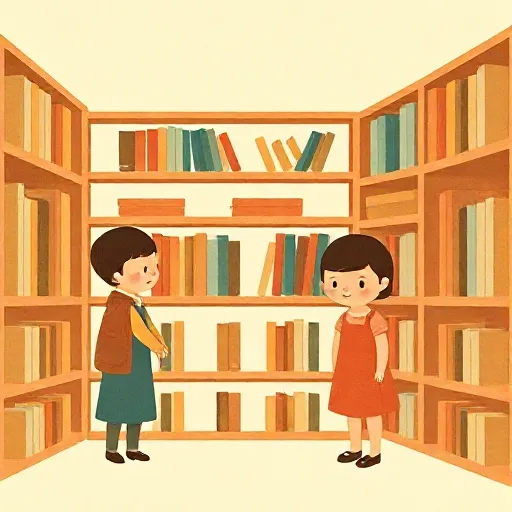
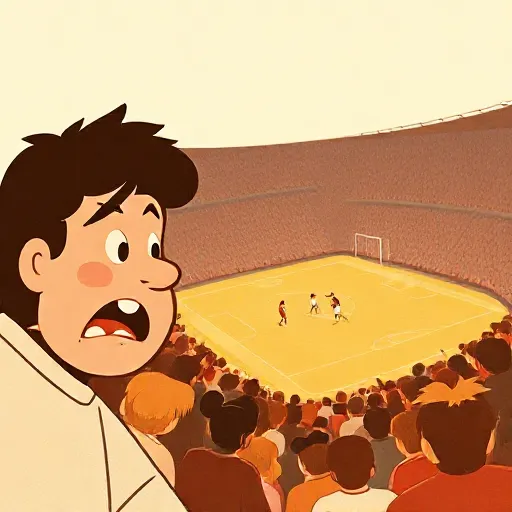
Imagine the government removes a book from every library because it doesn’t want you to hear the ideas inside. That feels insulting. It treats you like a child who can’t be trusted to think.
This insight drives the listener autonomy view of free speech. The philosopher T.M. Scanlon (born 1940) argued that a state must always respect its citizens as people who can make up their own minds. If the government silences a speaker simply because it worries you might be persuaded, it disrespects your right to weigh reasons for yourself. Ronald Dworkin (1931–2013) called this the right to moral independence — the state cannot pre-screen which arguments you are allowed to consider.
This theory explains why laws must be content-neutral and viewpoint-neutral. A content-neutral law bans a whole topic (“no discussing abortion”), while a viewpoint-neutral law avoids picking sides (“no pro-choice views”). Both are suspicious. But viewpoint discrimination is even harder to justify: picking which opinions you may hear is the deepest insult to your autonomy. The U.S. First Amendment tradition is built on these ideas.
John Stuart Mill (1806–1873) offered a more practical version. In his book On Liberty he said we need free debate because we are all fallible. A view we think is false might actually be true, or at least contain a grain of truth. Even when an idea is plainly wrong, arguing against it helps us understand why it’s wrong. Mill compared the clash of opinions to a collision that teaches the calm bystander the most — not the loud partisans. He called this the marketplace of ideas, though few today believe that good arguments always defeat bad ones automatically. Still, allowing open discussion is our best tool for hunting down mistakes.
Speakers Need to Express Themselves, Too
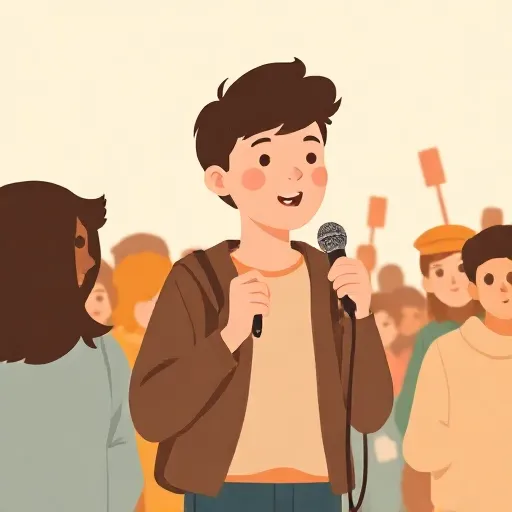
But free speech isn’t only about listeners. Another family of arguments says it’s about speaker autonomy. You have an interest in declaring who you are, what you value, and what you believe. That’s true even if nobody hears you — hence your private journal deserves protection. And it’s true when you share ideas with others to test them. Through talking we learn from feedback and sometimes find out we agree with someone else after all.
Expressing yourself also helps you grow. Mill noted that trying out different viewpoints in speech lets people develop their capacities. That’s why children, not just adults, have a stake in free expression: a child arguing about a book or a game is learning how to think.
Some political philosophers worry that making “autonomy” the main value goes too far. Not every society officially celebrates intense personal independence. That’s a debate within liberalism. But even those who are cautious about autonomy agree that letting the state silence you because it disapproves of your viewpoint is unfair. Imagine the government said only Christian views could be voiced but not Muslim or Jewish ones. That would treat some speakers as less than equal, which violates the basic idea of free expression.
What About Democracy?
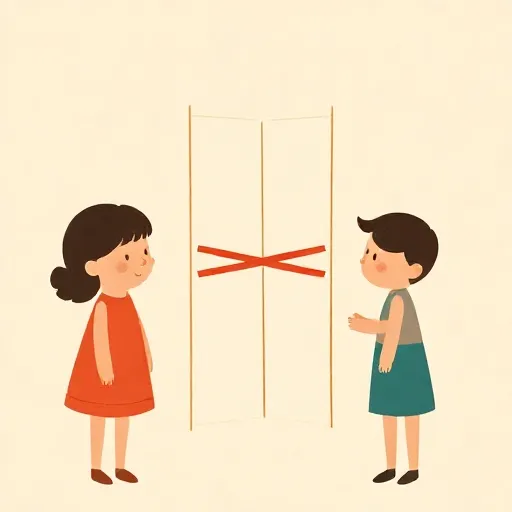
Many thinkers tie free speech tightly to democracy. If the people are supposed to govern themselves, they must be able to discuss every proposal, even the dangerous ones. The political theorist Alexander Meiklejohn (1872–1964) insisted that free political speech is not just a tool for democracy — it is part of democracy. When the state silences dissenters, it partly suspends democracy itself. John Rawls (1921–2002) agreed: restricting political speech always disrespects citizens as free and equal.
Democracy theories also highlight a special danger. Those in power have a strong incentive to shut up opponents and critics. History shows that laws against “sedition” or “false news” are often used to crush legitimate protest. So many philosophers want political speech to receive the strongest legal protection of all. But others, like Seana Shiffrin (born 1958), push back: thoughts about your friends or your mortality can matter just as much as thoughts about elections. Free speech should protect the whole thinking person, not just the voter.
The Nazi propagandist Joseph Goebbels reportedly joked that democracy gives its deadly enemies the means to destroy it. Some philosophers today ask: must a democratic commitment to free speech really include a self-destruct button? Or can the values of democracy itself sometimes set limits on what we may say? That question leads to the hardest cases.
When Free Speech Hurts: Where Do We Draw the Line?
Most legal systems protect free speech — up to a point. You can’t falsely shout “Fire!” in a crowded theater, threaten violence, or knowingly lie to ruin someone’s reputation. But how do we handle deeply offensive or hateful speech that attacks whole groups?
One approach is external balancing. Here, free speech runs into other values such as the equal dignity of all citizens. The legal philosopher Jeremy Waldron (born 1953) argues that hate speech is like group defamation: it undermines people’s standing as respected members of the community. Societies that ban hate speech, such as many European countries, are not rejecting free speech outright. They are balancing it against the harm done to people’s equal status.
Another approach finds internal limits within free speech itself. If speech is protected because it respects listeners’ autonomy, it may also be restricted when it destroys someone else’s autonomy. Hate speech can intimidate people into silence — shutting down their expression. Similarly, if free speech is meant to aid genuine thinking, then deliberate lies may fall outside its protection. Seana Shiffrin contends that lying is not the sincere transmission of thought that her theory values.
Yet many philosophers worry that once you start banning speech, you set a precedent. Chilling effects occur when people steer clear of perfectly legitimate speech for fear of punishment. Laws are often vague, and officials make mistakes. The remedy, some say, is to protect more speech than you believe is morally right — creating “breathing space” for real debate. Others turn to counter-speech: instead of silencing a harmful speaker, answer them with better arguments. John Milton in 1644 and Mill both championed this. The question is whether counter-speech always works, and whether it’s fair to ask the targets of hatred to carry that burden.
Your Feed, Their Rules: Free Speech Online
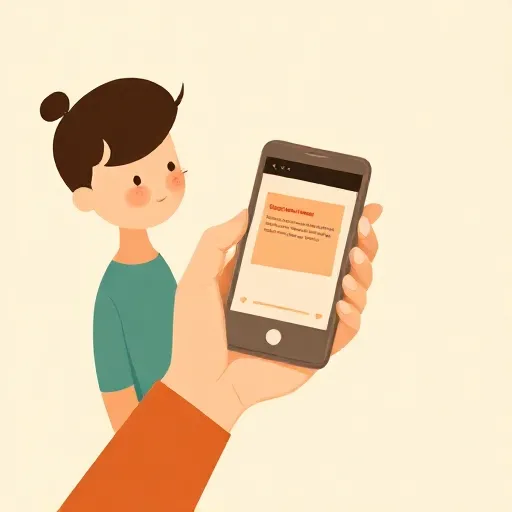
Today the biggest free speech battles are not in courthouses. They’re on your phone. Large social media platforms remove millions of posts every week: hate speech, dangerous health misinformation, violent threats. Are they obligated to protect your speech, or are they private clubs that can set any rules they like?
One view says platforms are like newspapers. Just as the New York Times can choose which op-eds to publish, so can Facebook or TikTok. Their own free speech rights include editorial control. But an opposite view says that platforms have become public forums — spaces dedicated to expression that should be as neutral as the government is supposed to be. Matthew Kramer (born 1957) argues that if a company controls a space where public discourse happens, it inherits obligations to respect freedom of expression, just as a state does.
Even if we don’t go that far, platforms clearly shape what billions of people think. The philosopher Jack Balkin describes a new “triadic” model: speakers, platforms, and the state all interact. Platforms don’t just carry messages; they amplify, recommend, and hide them. That raises tough questions about what a fair content-moderation system looks like. Should platforms use court-like rules with appeals? Or, given the enormous scale, is it better to think about the overall health of the information environment, even if some mistakes happen?
And there is a deeper question: should the government force platforms to moderate content? Many countries are writing laws that require platforms to remove harmful speech. But if you worry about state abuse of power, you might prefer that platforms, not politicians, make those calls — even if they sometimes get it wrong.
These debates are just getting started. The next time a post disappears from your feed, you’re not just seeing a technical glitch. You are looking at a live experiment in one of philosophy’s oldest puzzles: How do we protect the freedom to speak and think, while living among people who can be hurt by words?
Think about it
- If a social media platform bans a bullying comment, is that protecting free speech for the victim or violating it for the bully — or both? Where would you draw the line?
- Imagine a classmate spreads a false, cruel rumor about another student. Should the school ban that kind of speech altogether, or require students to argue against it? What might be lost in each choice?
- If your government could listen to every private message you send, you might be too afraid to say anything that matters. Is some level of privacy necessary for free speech?