Can Brain Vibrations Make You a Good Person?
The Doctor Who Tried to Dissolve His Pain
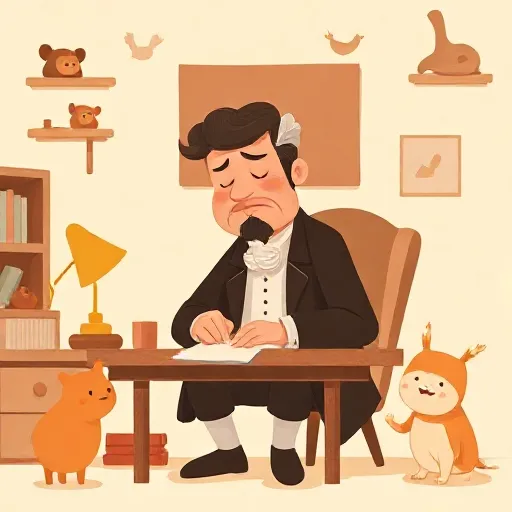
In the 1730s, a doctor named David Hartley (1705–1757) was in agony. Bladder stones—hard, jagged crystals inside the body—made his life painful and dangerous. He and his friend Stephen Hales tried a new remedy. They believed the right chemicals could release a repulsive force locked inside the stones, making them dissolve. The idea came from Isaac Newton’s picture of the universe: a world of tiny, invisible particles held together by forces of attraction and repulsion, not by pipes filled with fluid. Hartley never cured his own stones, but the search taught him something bigger. He began to wonder: if forces and vibrations could explain chemistry and the body, could they also explain the mind? Could every thought, feeling, and moral choice be the result of tiny vibrations rippling through the brain?
Vibrations and Associations: The Two Great Principles
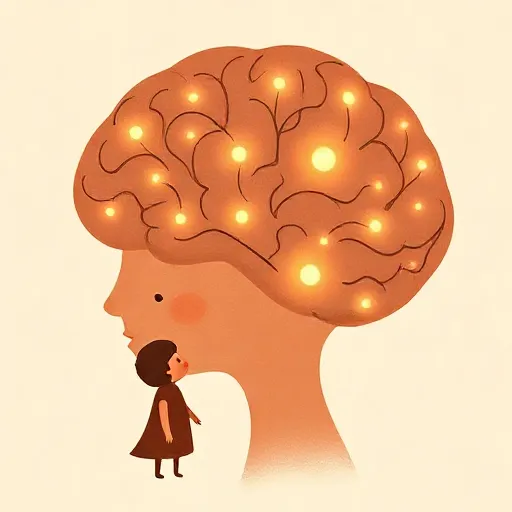
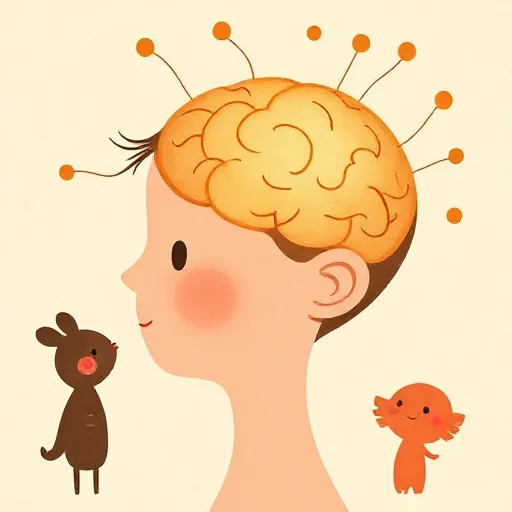
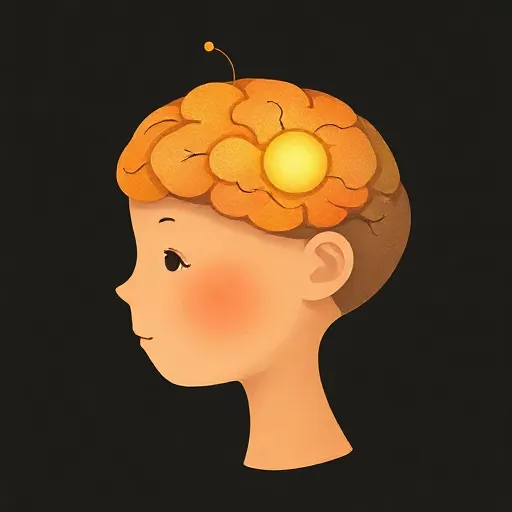
Hartley read Newton’s Opticks, where Newton suggested a subtle “aether” filling space, carrying forces like electricity and heat. Hartley thought nerves were not hollow tubes, as many believed, but solid fibers. When light hits your eye or a pinch meets your skin, it sets off tiny vibrations in the nerves, traveling to the brain and back. Hartley admitted he didn’t know exactly what these vibrations were. He used the word as a placeholder, like an algebraic x—a name for something we can study even before we fully understand it.
His truly big idea was the second principle: association. When two vibrations happen at the same time or close together, they become linked. Just as Newton’s gravity holds planets in orbit, association holds sensations and actions together into complex ideas. A baby hears the word “mama” at the same moment she sees and feels her mother. Those vibrations associate, and the sound becomes meaningful. For Hartley, the mind is not a blank slate at birth. It is a living web, and associations are the threads.
How a Baby Learns to Move and Think
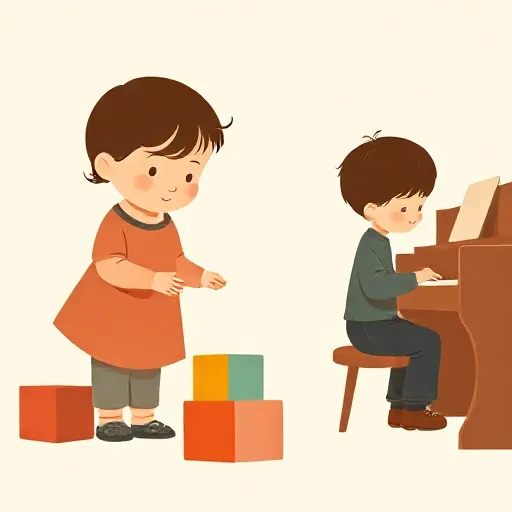
A newborn immediately feels and moves. Hartley observed that two senses working together create stable ideas. This is joint impression. If you could only ever see, with no touch or movement, you would never perceive solid objects or distance—colored patches would just float meaninglessly. But because your eyes and fingers work in tandem, a rattle becomes an object you can reach for, smell, and name.
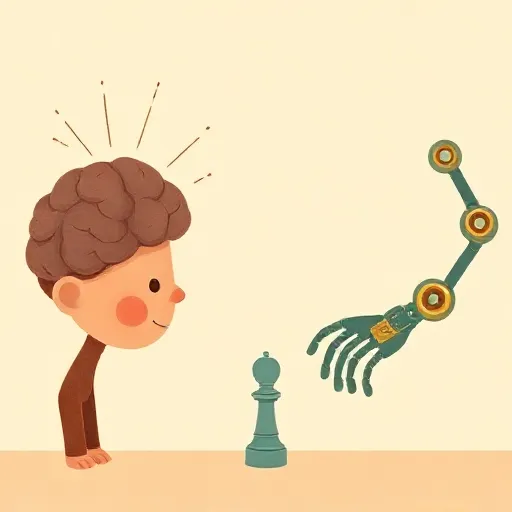
Many motions are originally automatic: your heart beats, your stomach churns. How do we gain control over our bodies? Through substitutions. An infant’s grasp reflex, originally automatic, becomes voluntary when associated with the sight of a toy, the sound of the word “grasp,” and the feeling of wanting it. With practice, voluntary actions can turn secondarily automatic—your fingers find the piano keys without your having to think about each muscle. Hartley called long, practiced sequences of such actions decomplex actions: playing a song, speaking a sentence. His key insight was that all our voluntary skills are really a form of memory, built from practiced associations.
Why You Know Whole Sentences Before You Know Words

Hartley saw language as a decomplex action. Children do not learn words one by one and then assemble them. They hear full sentences, associate them with situations, and later realize those sentences can be broken into pieces. Illiterate adults often cannot divide a spoken sentence into separate words. The meaning of a sentence is not simply the sum of its word-meanings—just as a melody is not a stack of separate notes.
Hartley called language “one species of algebra.” In algebra, x can stand for an unknown and still help you solve a problem. Likewise, words often stand for vague, shadowy ideas, and that sloppiness is a strength. Scientists use algebraic terms like “vibrations” or “quarks” to explore patterns before they fully understand what those things are. Good hypotheses, he said, get closer to the truth step by step, like a doctor refining a diagnosis. He even used new probability math to measure how confident we should be in a belief—making him one of the earliest Bayesian thinkers.
The Six Kinds of Pleasures—and the Transformation of the Self

Hartley listed six climbing classes of pleasures and pains: Sensation, Imagination, Ambition, Self-interest, Sympathy, Theopathy (feelings about the divine), and the Moral Sense. Through association, lower pleasures can “new-model” themselves into higher ones. A child’s simple joy in watching pond creatures can grow into a biologist’s deep curiosity, and later into a desire to protect life for its own sake. Ambition for praise may shift into a longing to be worthy in the eyes of others and of God.
This process Hartley called the transformation of sensuality into spirituality. He described an “annihilation of self”—not a loss of identity, but a breakthrough where egoistic drives are replaced by sympathy and a sense of connection with something larger. For him this was not a miracle. It was the natural, mechanical, and hopeful result of how associations build and change. He believed every person could progress, step by step, toward a state of universal love and moral goodness—a paradise made from human nature itself.
But Is That Really Freedom? Critics Fear a Mind in Chains
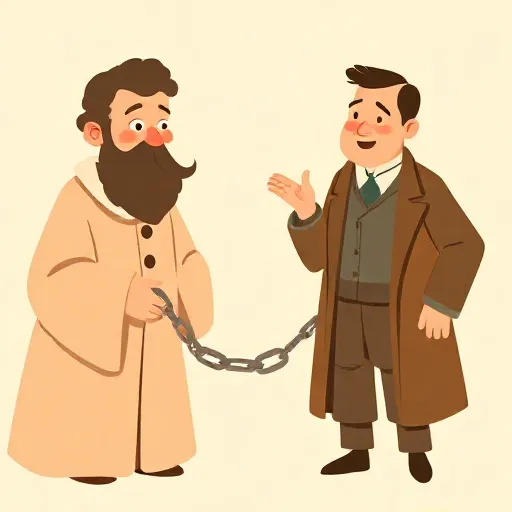
Critics like Thomas Reid (1710–1796) and the poet Samuel Taylor Coleridge (1772–1834) were alarmed. If every idea and choice follows automatically from prior vibrations, then the mind is just a puppet. They argued that true moral responsibility requires a free will that stands outside the chain of causes. Without it, they thought, no one could really be blamed for doing wrong.
Hartley had a surprising reply. He said we use two perfectly good languages. There is the popular language of everyday life, where we talk about choosing, deliberating, and being responsible. And there is the philosophical language of science, where we trace causes and effects, showing how our habits and feelings formed. Trouble comes only when we mix them. In the popular language, you really do decide and act freely. In the philosophical language, your decision is part of a long causal story that includes all your past experiences. Determinism, he believed, does not erase freedom—it explains how we become capable of it through learning and moral growth. Today, as brain science advances, we still ask: does knowing our mental machinery threaten our sense of being in charge? Hartley’s hope was that understanding our inner vibrations and associations could actually help us build better habits, deeper empathy, and a fairer world.
Think about it
- If a brain scanner could predict every choice you will ever make, would you still feel free? Would it be fair to punish someone for a bad action they were always going to do?
- Think of a skill you have mastered, like riding a bike or playing a video game. Your movements happen automatically. Does that automaticity limit your freedom, or does it give you the ability to do more complex, creative things?
- Hartley believed that by studying how feelings associate, we could train ourselves to be kinder and more moral. Do you think learning about the science of the mind can help people become better humans, or does true goodness require something beyond science?