
Do Your Thoughts Move You, or Are They Just Along for the Ride?
The Frog That Swam Without Thinking

In the 1870s, the English biologist T.H. Huxley (1825–1895) watched an experiment that bothered him. A frog with part of its brain removed was tossed into water — and it kicked, paddled, and swam perfectly. A normal frog would have felt the water, decided to move, and moved. But this frog, Huxley believed, felt nothing at all; its brain was simply running on reflexes, like a tiny, wet machine. If the frog’s behavior looked exactly the same without any feelings, Huxley wondered, what exactly were feelings doing for it? And he went further: what if the same thing is true of us?
Huxley’s view is now called epiphenomenalism. The word sounds awful, but the idea is simple: your conscious thoughts, feelings, and sensations are epiphenomena — side effects of your brain doing its real work. The brain’s physical activity causes your mental life, but your mental life never causes anything physical in return. In this article, you’ll meet the arguments that make epiphenomenalism tempting, the fierce objections that make many philosophers reject it, and the surprising experiments that keep the debate alive today.
The Steam Whistle That Does No Work

To understand why anyone would think your mind is useless, start with a basic fact: the physical world seems causally closed. Every time a physical event happens — a muscle twitches, an arm rises — scientists can trace enough physical causes for it, all the way back through nerves, chemicals, and electricity. If every muscle movement already has a complete physical explanation, there is no room left for a non-physical mental event to push things around. If a thought or a feeling could nudge a neuron, that tiny nudge would break the laws of physics. It would be like a ghost’s whisper moving a boulder.
Huxley gave this idea a famous picture: the steam-whistle analogy. A locomotive’s whistle is caused by steam from the boiler, but the whistle itself contributes nothing to the wheels. It’s a byproduct — a side effect — with no power to move the train. Epiphenomenalists say your pain when you stub your toe is like that whistle: the brain’s injury-response circuits cause both the behavior (grabbing your foot) and the feeling of pain, but the pain itself does nothing to make you grab your foot.
You might think you see pain causing you to wince. But epiphenomenalists reply that what seems like causation is often an illusion. A falling barometer regularly comes before a storm, but it doesn’t cause the storm. Both are caused by a drop in air pressure. Similarly, if a brain event causes both your mental state and your action, the mental state will always appear right before the action — but it’s just a reliable shadow, not a cause.
Did Nature Really Design Useless Feelings?

The most common objection to epiphenomenalism is that it defies common sense. It feels absurd to say your agony when you burn yourself doesn’t contribute to your scream. Many philosophers, like Richard Taylor (1919–2003), have argued that we can’t seriously believe our whole inner life makes no difference to our behavior. But epiphenomenalists reply that common sense has been wrong about causation plenty of times. We once thought the sun moved across the sky; we were wrong. The feeling that your thoughts cause your actions may be equally mistaken.
A stronger challenge comes from biology. According to Darwin’s theory of natural selection, a trait can only evolve if it gives an organism an advantage — and that means it must have effects on behavior. If consciousness has no behavioral effects, it couldn’t have been selected for. Yet here we are, conscious. Therefore, the argument goes, epiphenomenalism must be false.
The psychologist and philosopher William James (1842–1910) sharpened this point with a puzzle about pleasure and pain. Usually, the activities that keep us alive — eating, drinking, resting — feel pleasant, and those that harm us feel awful. If pleasure and pain had no effects, James said, this happy alignment would be a staggering coincidence. Evolution couldn’t favor it, because a creature whose “good” feelings came from poison and “bad” feelings from water would behave the same as any other. Epiphenomenalists would just have to accept a mysterious, unscientific harmony.
Epiphenomenalists have a reply that ties the alignment to the brain’s wiring. The brain has reward systems — circuits that, when activated, make us repeat behaviors. Those same brain circuits also produce the feeling of pleasure. In other words, the same physical event that causes pleasure also causes the life-sustaining behavior. So it’s no coincidence that pleasurable feelings accompany useful acts: the brain hardware was naturally selected for its behavioral effects, and pleasure just happens to be a side effect of that hardware.
Can You Even Know Your Own Mind?
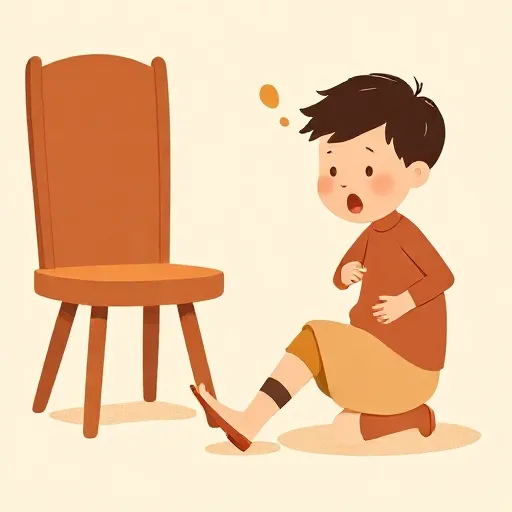
The most technical objection to epiphenomenalism is that it seems to sabotage our knowledge of our own minds. Suppose you say, “I’m in pain.” If pain has no physical effects, then the pain didn’t cause your words. Your words were caused purely by your brain. But if your brain can produce the sentence “I’m in pain” even when no pain is present, how could you ever trust yourself? For that matter, how could you ever learn the word “pain” in the first place, if pain never taught your brain anything? This is the self-stultification argument: if epiphenomenalism is true, you can’t know you have a mind at all, so you can’t reasonably believe epiphenomenalism.
One response from epiphenomenalists points to a crucial idea: what matters for knowledge isn’t direct causation, but reliable connection. Take the earlier barometer case. The barometer doesn’t cause the storm, but you can still reliably infer a storm from the barometer, because a common cause (falling pressure) ensures the barometer reading always accompanies a storm. In the same way, a brain state might cause both a pain sensation and a pain report. The report reliably tracks the pain, even though the pain doesn’t push the report into existence. So you can still know you’re in pain, and your testimony about your own mind can still be trusted.
Other philosophers, like David Chalmers (1966–) and Frank Jackson (1943–), take a different route. They argue that we know our experiences not through causation but through direct acquaintance — a non-causal relation where the experience itself is part of what it means to believe you’re having it. If that’s right, knowing your own mind doesn’t require that it causes anything, and the self-stultification problem evaporates.
When Your Brain Decides Before You Do
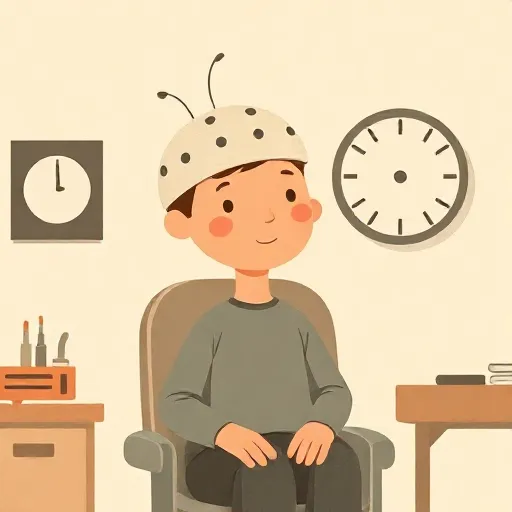
In the 1980s, a neuroscientist named Benjamin Libet (1916–2007) ran an experiment that shook the debate. He asked people to make a spontaneous wrist movement whenever they felt the “urge,” and to note the exact moment they felt that urge using a special clock. Meanwhile, Libet recorded their brain waves. He discovered a burst of brain activity — the readiness potential — that started around a third of a second before the conscious urge. The brain, it seemed, had already set the movement in motion before the person felt like they had decided anything.
Libet himself thought people could still “veto” an action at the last moment, so consciousness might have a tiny stopping role. But many philosophers and scientists drew a bigger lesson: if your conscious urge arrives too late to start the movement, then the feeling of deciding is another causal illusion — like the steam whistle. Later experiments by John-Dylan Haynes and his team found brain activity that predicted simple choices up to several seconds before the choice entered awareness. If even your simplest “free” choices are cooked up by your unconscious brain ahead of time, the old intuition that your thoughts run your body looks shakier than ever.
Critics point out that these experiments involve trivial decisions — when to wiggle a finger, which button to press — not real-life choices about jobs, friendships, or values, where your reasons and lifelong preferences flood in. The results may reveal something about simple reflexes, not about the grand theater of responsible human action. Still, the experiments reinforce the epiphenomenalist’s claim that our sense of mental control might sometimes fool us.
A Scientist Who Knew Everything Except the Experience

One of the most famous thought experiments in recent philosophy also pushes toward epiphenomenalism. Frank Jackson asked us to imagine a brilliant scientist named Mary who has spent her entire life in a black-and-white room. She has perfect knowledge of all the physical, chemical, and biological facts about color vision — how light wavelengths hit the retina, how neurons fire, how the brain processes color. But she has never actually seen a red tomato or a blue sky. The question: when Mary finally steps out and sees red for the first time, does she learn something new?
Most people feel sure that she does. She learns what it’s like to see red. If that’s right, then “what it’s like” is a kind of information — phenomenal information — that isn’t included in all the physical facts. That suggests that conscious experiences are non-physical, a form of dualism. But if experiences are non-physical and the physical world is causally closed, then those experiences can’t have any physical effects. Jackson’s conclusion: the knowledge argument, if sound, supports epiphenomenalism.
Philosophers have debated this fiercely. Some, like David Lewis (1941–2001), argued that even if experiences are physical, the idea of phenomenal information still leads to epiphenomenalism — and since epiphenomenalism is false, we should reject the idea that Mary learns new facts. Others, like David Chalmers, embraced dualism and faced the epiphenomenalist consequence, developing non-causal accounts of how we know our experiences.
This blend of the knowledge argument with the older causal-closure argument keeps epiphenomenalism alive in modern discussions, especially around qualia — the felt qualities of your experience, like the redness of red or the sting of a bee.
So… Do You Really Pull Your Own Hand Back?

Why does a strange doctrine from the 1870s matter to you today? Because it drills into the core of who you think you are. If epiphenomenalism is true, your feelings of deciding to stand up, to speak kindly, or to swerve your bike away from a crash are not the causes of those actions. Your brain is doing it all without you. You would be a passenger in your own skull, watching a movie of your life but never able to touch the screen.
That picture would change how we think about responsibility. If a child’s conscious effort to not hit a classmate doesn’t actually cause their self-control, can we praise them for holding back? If a criminal’s conscious intentions don’t cause the crime, is it fair to punish? Most legal systems assume that you act based on what you consciously think and want. Epiphenomenalism would force us to rethink that all the way down.
Philosophers are still tangled in the debate. Many try to escape epiphenomenalism by arguing that mental events just are physical events — so they can have physical effects without any ghostly push. Others work to show that even if mental properties are distinct, they can still make a genuine causal difference through the idea that a single physical cause can have many real properties that all matter. Still others think epiphenomenalism seems crazy but the arguments for it are so strong we might just have to live with it, learning to understand ourselves as self-describing spectators rather than agents.
Next time you burn a finger and yank your hand back, notice what you actually feel and when. Did the pain cause the pull, or was the pull already underway before the pain lit up your mind? The fact that you can wonder about it at all — and argue about it — is part of what makes the problem of consciousness one of the strangest and most important puzzles you can think about.
Think about it
- If a scientist could predict every choice you’ll ever make by scanning your brain, would it still be fair to blame you for bad choices?
- Imagine you’re playing a video game and the controller disconnects, but the character on screen keeps moving exactly as you intended. If you learned that real life worked the same way — your brain runs the show and your conscious feelings are just watching — would your relationships with other people feel any different?
- You stub your toe and shout “Ow!” a split second after the pain hits. How could you design an experiment (even just in your imagination) to test whether the pain caused the shout or both were just effects of something else in your nerves?