Can One Book Explain the Whole Universe?
A Prince’s Bold Plan to Explain Everything
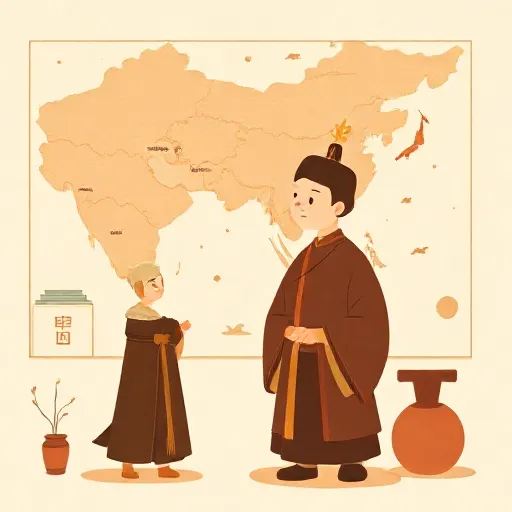
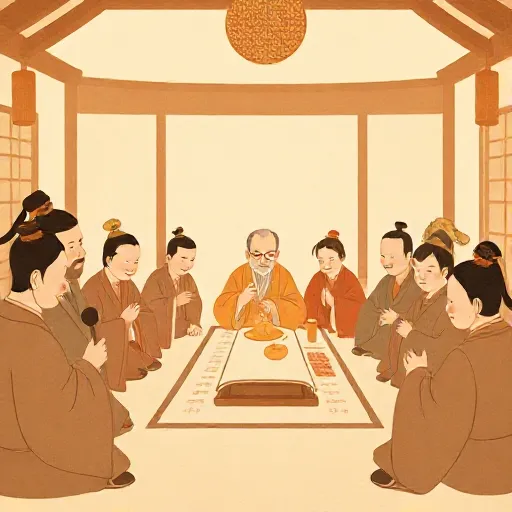
In 139 BCE, a prince named Liu An (c. 179–122 BCE) faced a giant problem. He ruled a distant territory for the Han empire, but the empire was enormous — full of different languages, customs, and beliefs. How could anyone govern such a messy collection of peoples without constant conflict? Liu An gathered dozens of scholars at his palace and gave them a task: write one book that would explain everything and show how a wise ruler could keep the empire together.
That book became the Huainanzi. It didn’t pick one school of thought. Instead, it wove together ideas from Daoism, Confucianism, Legalism, and more. The key was to see that every school had a piece of the truth, like the ribs of an umbrella all connecting to the same center. The scholars called that center the dao — the Way, the deep pattern running through all things. They also talked about tian (heaven or nature), which works without human planning. The ruler who understands the dao can use each piece of knowledge at the right time, just as a tree trunk supports thousands of different leaves. That way, local differences aren’t crushed but are used wisely.
The Universe’s Secret Code: Yin, Yang, and the Five Phases
Liu An’s scholars weren’t the only ones trying to connect everything. Around the same time, the Chunqiu Fanlu (associated with the scholar Dong Zhongshu, born around 195 BCE) built a grand system called correlative cosmology. It said the same principles that move the stars also shape human life. Two of them were yin and yang — complementary qualities, like dark and light, rest and activity, cooling and warming. But this text did something unusual: it ranked yang above yin. Yang was linked with life, virtue, and growth; yin with decline and lowliness. A good ruler should honor yang and push down yin.
Alongside yin-yang, the text used the five phases: wood, fire, earth, metal, and water. These aren’t just stuff — they are stages of change that circle forever. Wood feeds fire; fire leaves ash (earth); earth contains ores (metal); metal condenses dew (water); water nourishes wood. The phases govern seasons, organs in the body, even the rise and fall of dynasties. The cosmos and humanity are not separate: tian and humans are one. That gave rulers a map for predicting events and organizing society. It was early science — ambitious and all-connecting.
Are You Born Good, Bad, or Both?
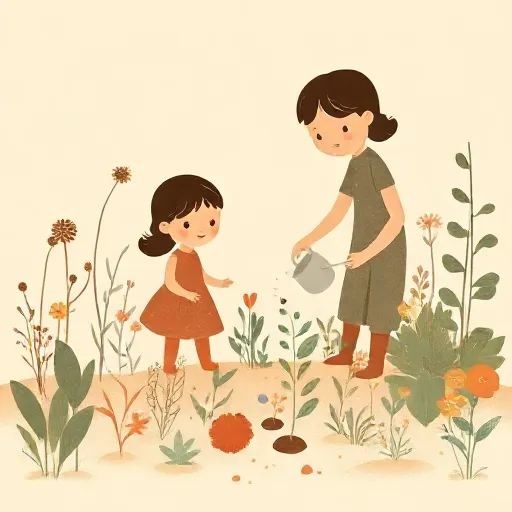
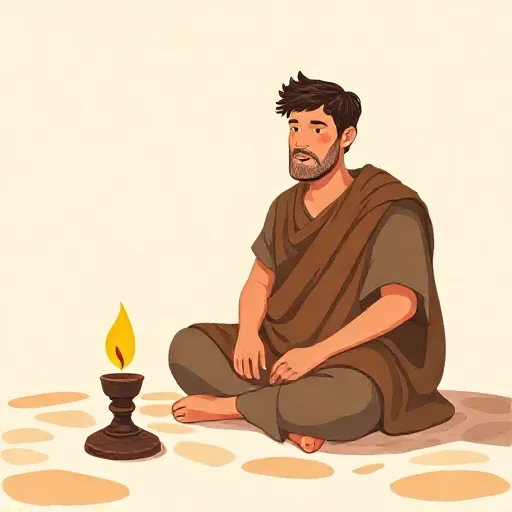
Not everyone was busy mapping the cosmos. Yang Xiong (53 BCE–18 CE) got interested in something closer — your own nature. Earlier Confucians argued fiercely: Mengzi said people are born good; Xunzi said they are born bad. Yang Xiong broke the debate. He said human xing (inborn character) is a mixture of good and evil. It’s like a garden that contains seeds for both beautiful flowers and prickly weeds. What grows depends on how you tend it.
Yang also said that qi (vital energy) acts like a horse that can carry you toward either goodness or vice. So you are not locked in. Cultivate the good parts through rituals and learning, and you become good; neglect them and let the bad parts run wild, and you slide the other way. This view kept a door open for human effort — even though your starting material is mixed, your choices still matter. It was a hopeful but realistic take that would later clash with more deterministic thinkers.
The Man Who Questioned Confucius
Wang Chong (27–100 CE) had no patience for blind respect. He noticed that many scholars treated every word from ancient sages as perfect truth. That, he thought, was a dangerous mistake. Even the best sages, he argued, sometimes said things that were unclear or even wrong. So Wang developed a method he called wen nan — “questioning and challenging.”
First, you ask questions to make a murky statement clear. Then you test it: can you find a counterexample? Does it hold up in practice? Wang divided statements into shi (true, solid) and xu (false, empty, attractive but hollow). Flashy language, he warned, often seduces us — it’s like a math solution that sounds clever but doesn’t actually solve the problem. Real truth isn’t about sounding good; it’s about matching reality. Wang used this method on history, science, and even ethical teachings, and he wasn’t afraid to say that the sages’ everyday remarks were sometimes just wrong.
Can You Change Your Destiny?
Wang Chong also wrestled with a huge question: how much control do you really have over your life? He believed that ming (allotment) sets the basic frame for each person — like being dealt certain cards. Sometimes ming looks frighteningly rigid. Wang once claimed that whether people act generously or selfishly depends not on their character but on how much grain is in the storehouse. A famine year makes even good people neglect their relatives, while a bumper harvest makes everyone neighborly. If circumstances decide behavior, what room is left for choice?
Yet Wang didn’t give up on agency. He distinguished three kinds of ming. Natural allotment is what you’re born with, like your talents and limits. Consequent allotment comes from your own effort — if you work hard, you can reshape some outcomes. Incidental allotment is random: accidents, floods, luck that no one controls. Think of it like a video game character. You start with fixed stats, but you can level up through hard work. Still, a sudden glitch or a random event can change everything. Wang Chong thought moral education and self-discipline were valuable, but only within the bounds set by your natural fate and accidental circumstances. That balancing act still fuels debates about free will today.
Why Han Questions Still Matter Today
Han philosophers were not just dusty scholars. Liu An faced the challenge of ruling a wildly diverse empire — does that sound familiar? We live in a world where different cultures, beliefs, and identities clash and mix every day. The Huainanzi’s answer — find a shared root while letting branches be themselves — is still one of the hardest puzzles of politics. Yang Xiong’s mixed nature pushes you to ask: are your best traits a gift or something you built? Wang Chong’s critical method reminds you that questioning authority isn’t arrogance; it’s how we find truth. And his tension between destiny and effort? That’s the same battle you feel when you wonder whether a bad start can be overcome. Two thousand years later, these thinkers still invite you to think hard about who you are and what you can change.
Think about it
- If you were born with both good and bad tendencies, how would you know which ones to feed and which to starve? Who gets to decide?
- Can a society hold together if people keep very different customs and beliefs, or must some be given up? Where would you draw the line?
- If someone’s life is mostly shaped by luck and circumstances, does it still make sense to praise or blame them for their choices?