Why Do We Obey? The Prisoner Who Uncovered Invisible Power
From a Factory to a Prison Cell
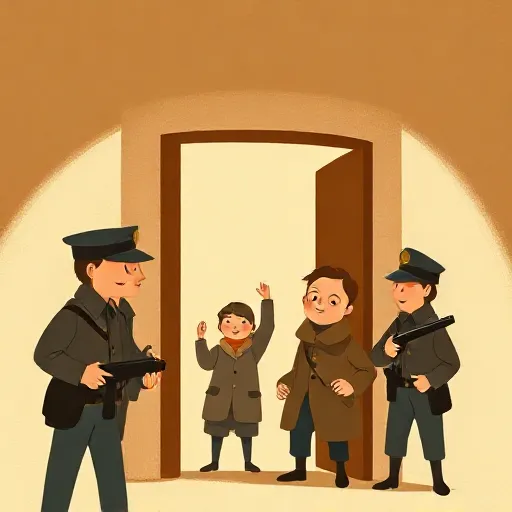
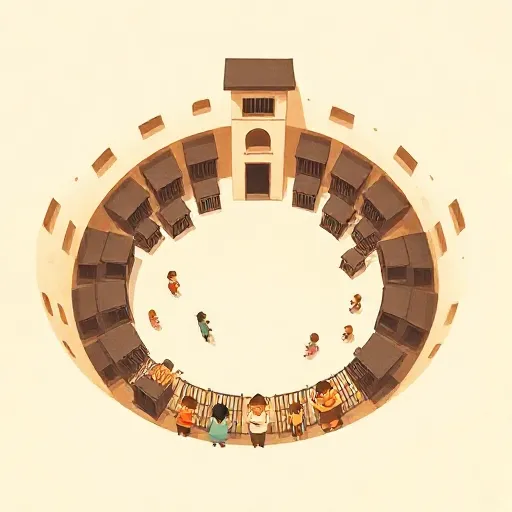
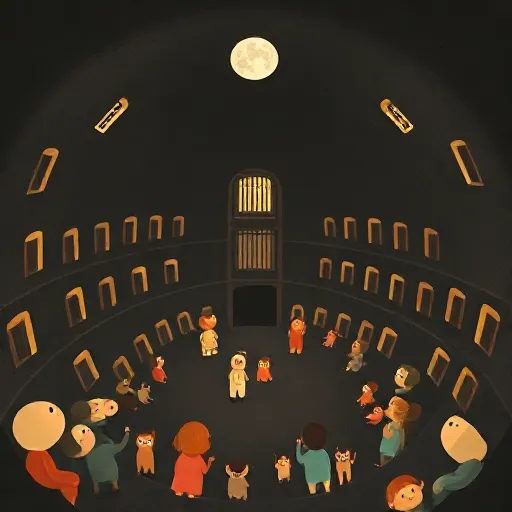
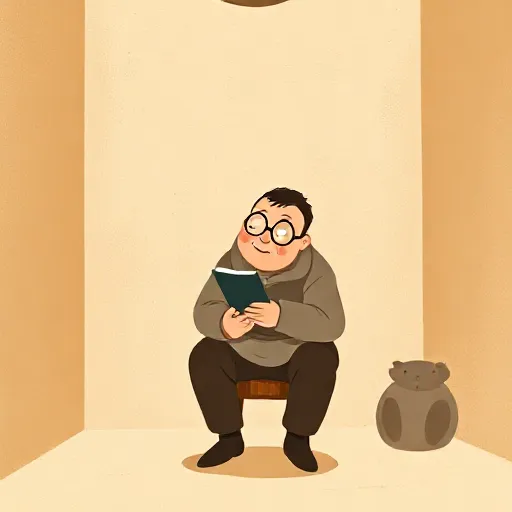
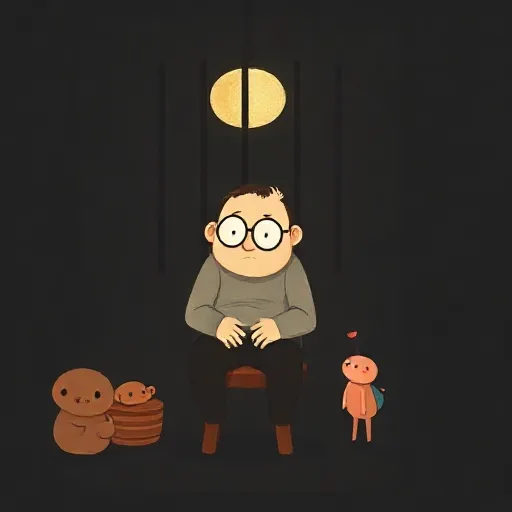
On a November night in 1926, Italian police arrested a small, hunched man with thick glasses. His name was Antonio Gramsci (1891–1937). The prosecutor declared, “We must stop this brain from functioning for twenty years.” Instead, that brain kept working. Locked away by Benito Mussolini’s fascist regime, Gramsci filled thirty‑three notebooks with thousands of pages. Those scribbled notes would turn into one of the most surprising accounts of power ever written.
Gramsci had not always been a prisoner. He grew up poor on the island of Sardinia, where a spinal illness left him with a hunched back. His father was jailed on political charges, and young Antonio had to leave school to work. Later he studied linguistics in the industrial city of Turin, surrounded by car factories and labour strikes. In 1913 he joined the Italian Socialist Party and became a journalist. When workers occupied factories during the “two red years” of 1919–1920, Gramsci wrote that the factory itself could become a new kind of government — run by the workers who actually made things.
But the occupations were crushed. Fascist gangs burned union offices and beat up workers. Gramsci helped found the Communist Party of Italy in 1921, believing a disciplined organisation was needed to fight back. He was elected to Parliament, but the regime kept tightening its grip. After his arrest, he sat in prison and asked a question that many revolutionaries had skipped: why had the uprising failed in a modern Western country when it had succeeded in Russia just a few years before? His answer started with one word — hegemony.
Hegemony: Why Consent Matters More Than Guns
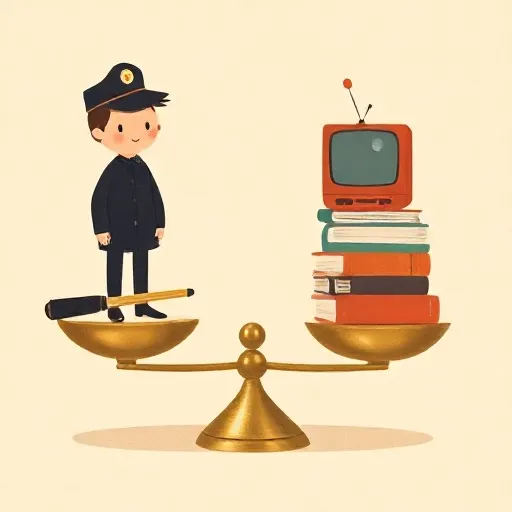
Gramsci saw two ways a ruling group stays in power. The first is force: police, prisons, and armies. The second is consent — ordinary people accept the rules because they seem natural, fair, or just how things are. He called this second way hegemony. Hegemony is not a trick; it is leadership that feels like common sense. When a class rules mainly through consent, it does not need to use force every day. The ideas that keep it in charge live in newspapers, school lessons, pop songs, church sermons, and everyday habits.
To make this visible, Gramsci cracked the idea of the state wide open. He thought the state was more than the government and police — what he called political society. It also included a thick web of civil society: schools, media, trade unions, the family, religious organisations, and even sports clubs. He summed this up with a famous formula: the state equals political society plus civil society — “hegemony protected by the armour of coercion.” Power, he argued, rests on both pillars.
This changed how Gramsci thought about revolution. In Russia, where civil society was thin, a small vanguard could seize the Winter Palace in a swift, violent strike — a war of manoeuvre. In the West, civil society was a system of trenches. You could not win by storming the palace; you had to wage a war of position — a slow, patient struggle to change what millions of people believed. Hegemony had to be built in schools, neighbourhoods, and popular culture long before anyone took control of the government.
Gramsci also invented the term historical bloc to describe how economic interests, social classes, and cultural ideas fuse together under a particular hegemony. A bloc holds together not because everyone is forced, but because enough people feel the arrangement makes sense. When that feeling cracks — during a crisis — the old bloc can collapse.
The Architects of Normal: Intellectuals and Common Sense
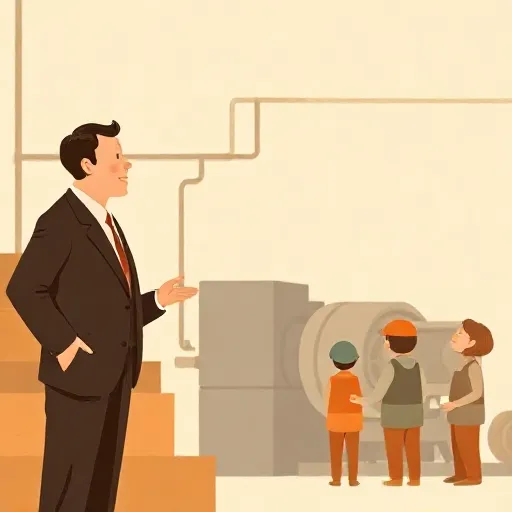
If hegemony runs on ideas, who makes those ideas? Gramsci gave an unfamiliar answer: intellectuals are not just philosophers or poets. Any person whose job is to organise, persuade, or educate performs an intellectual function — engineers, journalists, priests, managers, even shop stewards. He distinguished two types. Organic intellectuals grow out of a class and give that class a voice and a plan — think of a factory technician who explains production in a way that makes capitalist ownership seem efficient. Traditional intellectuals belong to older social orders, like priests or academics, and often present themselves as independent while quietly serving the dominant group.
These intellectuals work on a material Gramsci called common sense. Not the part of your mind that figures out a puzzle, but the grab-bag of assumptions, superstitions, sayings, and half‑digested ideas that most people carry around. Common sense is contradictory — it can hold both “everyone is equal” and “some people deserve to be poor.” It contains a “healthy nucleus” of good sense — practical wisdom born from real experience. The job of a critical mentality, Gramsci wrote, is not to sneer at common sense but to work on it, turning good sense into a coherent and active worldview.
This is how a hegemony stays intact: it seeps into the automatic pictures in your head. When a company logo makes you feel creative, or when staying quiet in class feels like “just what you do,” you are standing inside a web of consent that someone built.
A Philosophy That Bites Back: The Philosophy of Praxis

Most Marxists of Gramsci’s day treated their theory like a science that could predict history the way a chemist predicts a reaction. Gramsci rejected that. He attacked a popular Soviet textbook by Nikolai Bukharin for turning Marxism into a machine that just cranked out “laws” of social evolution. That approach, he said, left ordinary people as spectators, not actors.
He gave Marxism a different name: philosophy of praxis — a term borrowed from the Italian Marxist Antonio Labriola. Praxis means the concrete unity of thought and action. A philosophy of praxis does not stand outside the world and describe it from a distance; it enters into life, struggles with common sense, and helps build a new cultural order. It is “a philosophy which is also politics.”
Because of this, Gramsci saw truth differently. He did not throw out the idea of a real world, but he insisted that ideas can only prove their worth by becoming effective in practice. The “real critical test” of a worldview, he wrote, is whether masses of people adhere to it and act on it — not whether it matches a formula in a science textbook. That does not mean a popular lie is true. It means that knowing and doing are always tied together, and the standard of knowledge is the practical capacity it gives people to change their situation.
He called his approach “absolute historicism”: everything, including philosophy, grows out of concrete historical struggles. He borrowed from the Italian idealist Benedetto Croce, who had shown how deeply ideas shape history, but Gramsci added the ingredient Croce ignored — class conflict and the violence that creates and breaks hegemonies. The philosophy of praxis, he said, should become a modern “intellectual and moral reform,” doing for the secular world what the Protestant Reformation once did for Europe.
The Modern Prince: Building a Worldview Before Taking Power
If you want to win a war of position, you need an organisation that can fight on the terrain of culture. Gramsci reached back to Niccolò Machiavelli’s The Prince and imagined a collective prince — a revolutionary party that acts as a “collective intellectual.” He called it the Modern Prince.
Machiavelli’s prince was a solitary figure who unified a scattered people and founded a state through bold, intelligent action. Gramsci’s modern prince would do the same, but on a mass scale. Its task was to weld together a new national-popular collective will — a shared purpose that felt like it belonged to everyone, not just one class. To achieve that, the party had to transcend narrow economic interests and speak on a “universal plane.”
Organisation mattered. Gramsci advocated democratic centralism: decisions would be openly debated by rank-and-file members, but once a decision was made, everyone would obey it without question. This, he thought, kept the party from becoming either a rigid bureaucracy or a directionless crowd. The party was to be a living middle ground, constantly adjusting to real movements from below while being firmly steered from above.
He was not starry-eyed about this. He knew that ordinary members might not spontaneously run the show, and that a revolutionary elite would be necessary for a long time. Still, he believed that the very process of building hegemony would eventually reduce the gap between leaders and led. The Modern Prince would not just grab the state; it would first transform the whole cultural field in which people live.
Why It Still Matters: The Invisible Hand You Feel Every Day

Gramsci died in 1937, shortly after his sentence ended. His notebooks were smuggled out of Italy and published only after the war. Since then, the idea of hegemony has travelled far beyond communist parties. Scholars have used it to study advertising, pop culture, racial bias, and global politics. When you scroll through social media and feel that buying a certain pair of sneakers is a sign of freedom, you are living inside a hegemony Gramsci would have recognised.
His story also reminds you that power can be quiet. It works not only through the handcuffs you can see, but through the “common sense” you breathe without noticing. The same man who was told his brain had to be stopped for twenty years produced a tool kit that lets you ask: who benefits when I believe something is just the way things are? That question still rattles the walls of every classroom, newsroom, and living room today — and it was written first in a cell, on paper that could easily have been confiscated.
Think about it
- Think of a rule at your school that everyone follows silently. Who benefits from that rule, and who gets to decide that it is “normal”?
- A soft‑drink company spends millions to make you associate its product with friendship and happiness. Is that a kind of hegemony? Why might someone say yes, and why might someone say no?
- Gramsci believed that before you can change who runs the government, you have to change how people think. Do you agree, or could seizing power first work better? What might go wrong either way?