Are You Being Watched Even When Nobody’s Watching?
The Tower That Watches You
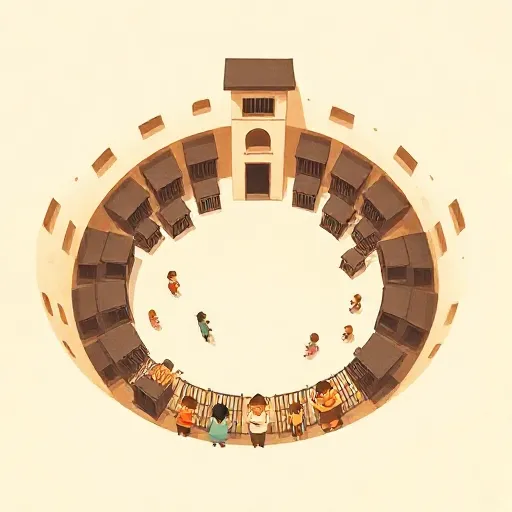
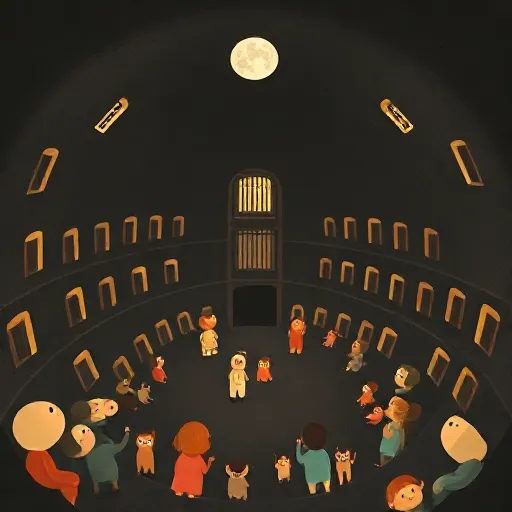
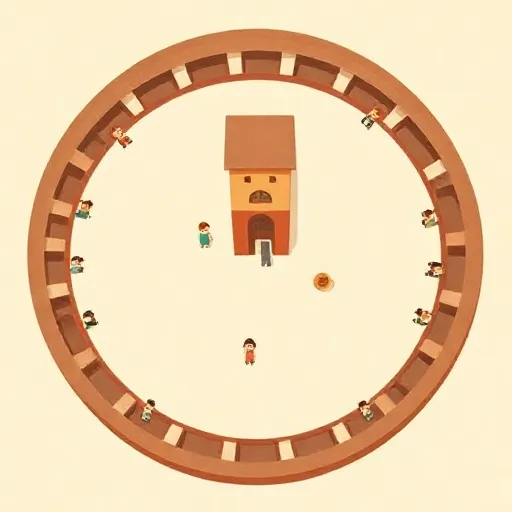
Picture a round building. Every wall is lined with cells, each with a single person inside. In the exact center stands a tall tower with dark windows. You can never tell whether a guard is watching you from that tower. But you know that someone could be. So you sit still. You follow every rule. You watch yourself.
That unsettling building is the Panopticon, a prison design dreamed up by the English thinker Jeremy Bentham (1748–1832). But it became the master metaphor for a French philosopher who was born two centuries later: Michel Foucault (1926–1984). Foucault was a historian, a psychologist by training, a political activist, and eventually a professor at the most prestigious institution in France. What he saw in the Panopticon wasn’t just a prison. He saw the secret shape of modern life.
Foucault’s big, uncomfortable idea is that many truths we take for granted — what counts as sane or insane, criminal or law‑abiding, normal or abnormal — are not timeless scientific discoveries. They are products of history, accidents, and, above all, power. And the way that power works is often invisible to us, precisely because we live inside it, like fish in water.
Digging for Hidden Rules: How Madness Became an Illness
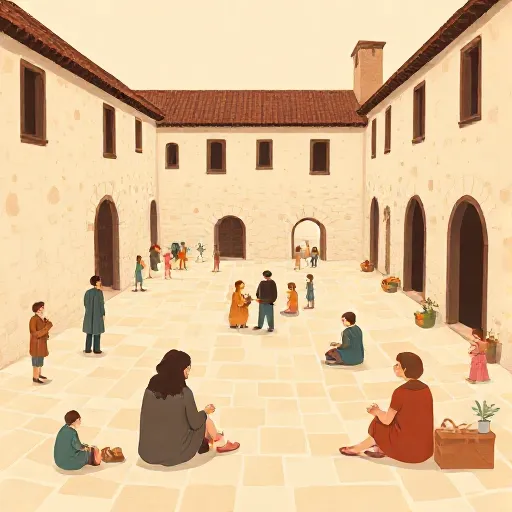
Foucault’s first major book, History of Madness (1961), began with a puzzle. We are taught that modern psychiatry liberated the mad from chains and ignorance — a story of progress. Foucault dug through old hospital records and legal documents and found something very different.
In the Renaissance, madness was terrifying but also fascinating; people thought the mad touched mysterious cosmic forces. By the 1600s and 1700s, madness was simply locked away as “unreason,” along with poverty and idleness. The real break, according to Foucault, came when doctors started calling madness a mental illness. That sounded like kindness, but it also allowed moral judgments to hide behind a white coat. The new “scientific” treatment turned people who didn’t fit bourgeois life into objects of study and control.
To uncover these shifts, Foucault used a method he called archaeology. An archaeologist of ideas doesn’t look for buried treasure; she looks for the unspoken rules that govern what can even be thought in a particular time and place. Foucault called these rule‑systems epistemes. They operate beneath the awareness of individual people, setting the boundaries of possible knowledge. The archaeologist’s job is to show that our own way of thinking, which feels so natural, is just one arrangement among many — and not an inevitable one.
This was philosophy done with a shovel. Instead of asking, as Immanuel Kant (1724–1804) had, what the necessary conditions for any knowledge are, Foucault flipped the question: among the things we think are necessary, which ones are really only historical accidents?
Punish Better, Not Less: The Secret of Modern Prisons
By the 1970s Foucault had refined a second method: genealogy. Where archaeology maps the deep rules of a period, genealogy traces the messy, unglamorous historical paths that produced them — all the struggles, accidents, and power grabs that no one puts in a museum. His genealogical masterpiece is Discipline and Punish (1975).
The story we tell about punishment is that it evolved from savage torture to humane imprisonment. Foucault agreed that something changed, but he saw that the reform was not just about being kinder. It was about being more efficient. “To punish less, perhaps; but certainly to punish better,” he wrote.
Modern prisons don’t simply hurt bodies; they train them. Foucault called this disciplinary power, and he found it in three techniques that have spilled far beyond prison walls. The first is hierarchical observation — the tiered rows of a stadium, the cameras in a hallway, the way a teacher’s desk is raised so every student is visible. The second is normalization — judging people not against a law but against a standard of “normal” behaviour, and correcting those who fall short. The third is the examination, which yokes observation and normalization together in one ritual, like a school exam or a medical check‑up.
The examination is a textbook case of what Foucault called power/knowledge. In it, knowing someone — their test scores, their health records — gives you power over them, and exercising that power produces yet more knowledge. The individual becomes a “case”: an object of scientific study and a subject of care, both at once.
The Panopticon is the pure model of this logic. You never know when you are being observed, so you learn to observe yourself. The most effective prison bars are the ones you build inside your own head.
The Truth About Sex: Why We Never Stop Talking About It

In the 1960s and 1970s a popular story took hold: our natural, healthy sexuality had been repressed by puritanical culture, and we needed to liberate it. Foucault found that story too simple. In The History of Sexuality, Volume I (1976) he argued that the Victorian era didn’t hush up sex — it talked about it obsessively, in new medical, legal, and psychological languages.
The key move, he said, was the repressive hypothesis: the idea that power mainly works by saying “no.” But Foucault proposed that modern power is, above all, productive. It doesn’t just forbid; it creates identities, categories, and desires. Through the endless confession — to the doctor, the therapist, the counsellor — we are taught that our sexuality holds the deepest truth about who we are. The sciences of sex don’t just describe us; they shape us.
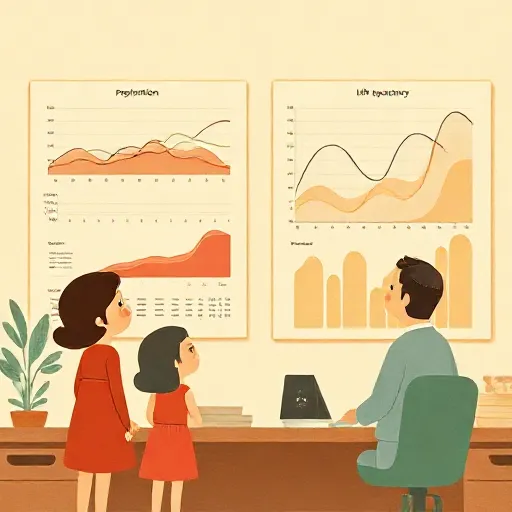
This means there is no pure, natural sexuality waiting underneath to be freed. What looks like liberation is often just swapping one set of norms for another. Even the urge to “be yourself” sexually is a demand that comes from a particular historical arrangement of power. Foucault called the form of power that manages whole populations — their health, birth rates, life expectancy — biopower. Unlike the old sovereign power, which could kill, biopower seeks to make life thrive, but it does so by charting, measuring, and regulating bodies on a massive scale.
Government of the Living: From Kings to Experts
Later in his career, in lectures at the Collège de France, Foucault widened the lens even further with the idea of governmentality. This is not just about politicians. It’s about the whole rational way a society tries to “conduct the conduct” of its people — from religious guidance of the soul to the state’s management of the economy.
In the modern world, governmentality focuses on the population as a living thing that can be steered through statistics, public health campaigns, and economic policies. Foucault called this kind of politics biopolitics. It combines a powerful, centralized state with an individualizing power — what he also called pastoral power — that cares for each person’s diet, mental health, and daily habits. The expert, not the king, becomes the emblem of rule.
In the late 1970s he turned his attention to a new form of governmentality: neoliberalism. He described it not just as an economic theory but as a whole way of producing a certain kind of human being — a subject who constantly calculates costs and benefits, invests in herself, and understands her life as a portfolio of choices. While Foucault never published these lectures in his lifetime, they have become startlingly relevant in a world of self‑tracking apps and personal branding.
Are You More Than What Power Makes You?
In the final years before his death in 1984, Foucault turned to the ancient Greeks and Romans. What surprised him was how different their ethics were. They didn’t have thick rulebooks of forbidden acts like later Christianity. Instead, they practiced an aesthetics of existence — the idea that you could shape your own life as a beautiful, chosen creation, like an artist working on a canvas.
This gave Foucault a fresh way to think about freedom. He had spent his career showing how power creates the very subjects it governs. Now he insisted that subjects also take part in their own making. We are not just docile bodies. We can refuse, reinterpret, and reshape the norms handed to us. The teenager who curates their own style, the group of friends who invent their own rituals, the person who decides that being “normal” isn’t as important as being decent — all are engaged in a quiet, everyday resistance.
The Panopticon tower still stands, in school corridors, in social media metrics, in the quiet voice that asks “Am I normal?” But knowing the tower is there changes things. Once you see how power produces the rules, you can start asking whether those rules deserve you — and what other rules you might dare to build.
Think about it
- If you found out that your school’s rules — grading, dress codes, the shape of the classroom — were originally designed for control, not just learning, would you follow them differently? Why or why not?
- We often say there is a “true self” inside us waiting to be discovered. How does that idea change if, as Foucault argued, our identities are shaped by the society we grow up in?
- Can you think of a time you changed your own behaviour because you felt you might be watched, even when no one was actually looking? Once you noticed that feeling, did it ever go away?