Why a Fake Painting Is Never Just a Fake, According to Nelson Goodman
The Emerald That Was Green Until Noon
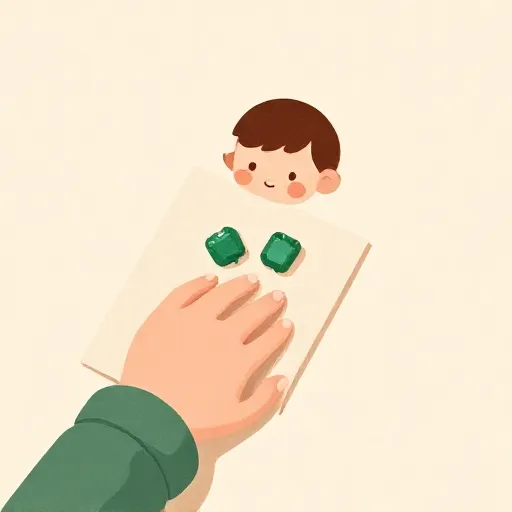
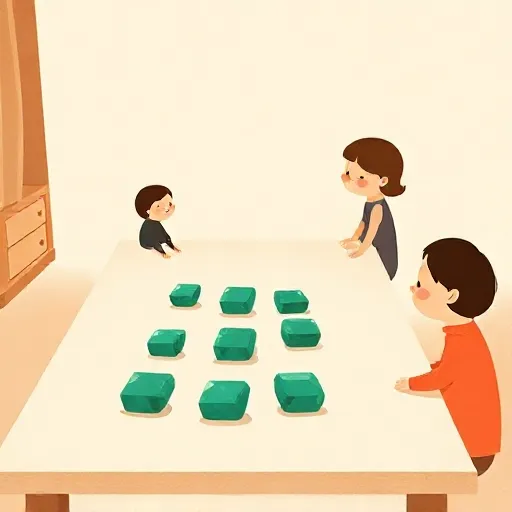
Imagine a line of emeralds on a table. A clock ticks silently next to them. You’ve seen emeralds all your life, and every one has been green. But what if you decided to use a different way of sorting colors? Call something grue if it appears green before noon today and blue afterward. Now, look at the emeralds after noon. Are they grue, or did they turn blue? According to the old color labels “green” and “blue,” the emeralds changed color. According to the new labels “grue” and “bleen” (which you’d use for things that are blue before noon and green later), the emeralds stayed the same. So which account is correct? That’s not a question the world answers for you.
The American philosopher Nelson Goodman (1906–1998) used this puzzle to show something huge: the regularities we think we find in nature depend on the labels we choose. He called this the new riddle of induction. Usually, we project familiar predicates like “green” onto the world because we’ve always done so. But logically, there’s no reason to prefer “green” over “grue.” What makes a label feel natural is simply that it is entrenched — worn smooth by habit and culture. Goodman’s point wasn’t that emeralds might really turn blue at noon. It was that what we see as a “fact” always reflects the categories we carry into experience.
This idea leads straight to constructivism, the view that we never meet reality raw. We build worlds out of the symbols we use — words, pictures, gestures, musical notes. Scientists build worlds with equations, artists with paintings and dances. Both are in the business of making sense of things by projecting labels and re-sorting them. So art isn’t just about beauty, and science isn’t the only path to truth. For Goodman, they’re two ways of making the universes we live in.
Your Labels Paint the World You See

Goodman believed that perception itself is shaped by the labels we carry. There is no “innocent eye” that just soaks up the world as it is. From the moment you open your eyes, your brain sorts, selects, and organizes what’s in front of you according to categories you’ve learned. If you grow up in a culture that uses “green” and “blue,” you’ll see a landscape one way; if you had been trained with “grue” and “bleen,” you’d carve the world differently. Neither way reveals the “real” colors — each is a system for dealing with light and surfaces.
This applies to art, too, in a surprising way. When you look at a painting, you don’t just receive an image. You interpret it using a symbol system — a set of rules, like those of a language, that tell you what the marks might mean. Goodman argued that pictorial representation is not about resemblance. After all, anything resembles anything else in some respect. A picture of a dog doesn’t look exactly like a real dog; it works because you’ve learned the conventions of that picture’s style. Realistic paintings feel realistic only because their style is familiar to you. If you’d grown up with art that flipped perspective or used cartoonish lines, those would seem just as true to life. So even “reality” in art is just a matter of habit.
That’s why Goodman could say that art, like science, is a way of building a world. When you visit a museum, you’re not just looking — you’re testing and adjusting the labels that help you structure experience. Next, we’ll see exactly how artworks work as symbols.
How Artworks Point and Show
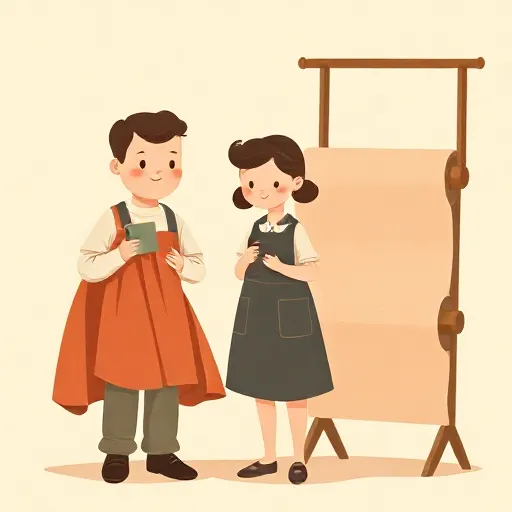
A painting of a horse denotes that horse — it stands for it, the way a name does. A picture of a unicorn denotes nothing in the real world, but it still functions as a unicorn-picture, which you can recognize. That’s denotation, the most basic mode of reference. But Goodman noticed there’s another kind of reference that’s everywhere in art and in life, and philosophers had largely ignored it: exemplification.
Think of a tailor’s swatch. The little square of cloth possesses a certain color, weave, and texture. But it doesn’t just have those features — it refers back to the label “blue” or “wool” by showing them off. That’s what Goodman called exemplification: possession plus reference. The swatch is a sample. Importantly, it doesn’t exemplify everything about itself. It doesn’t exemplify its size or its shape, because those aren’t what the tailor is using it to show. Which features a symbol exemplifies depends on the system you’re using.
In music, a sonata can’t denote a concrete object, but it can exemplify rhythmic patterns, emotional contours, or even a sense of calm. A dance performance might exemplify a feeling of weightlessness without representing a flying bird. And when an artwork seems to express a mood it can’t literally have — say, a painting that feels sad — Goodman said that’s expression, which is really metaphorical exemplification. The painting metaphorically possesses sadness, and it refers back to that label. So art doesn’t just point at things; it shows you features by making them present in the work itself.
All of this, however, depends on the symbol system at work. A poem in English follows different rules than a musical score or a charcoal drawing. And the kind of system determines what counts as the “same work” and why a forgery can matter deeply.
Why a Forgery Can Haunt You Even If You Can’t See the Difference
Goodman divided the arts into two families. In painting, drawing, and sculpture, the physical object made by the artist is the work. No copy, no matter how perfect, counts as the original. This makes the history of production essential. He called these autographic arts — where the distinction between an original and a forgery always matters. By contrast, in music, dance, and literature, you can have many genuine instances of a work. A performance of Beethoven’s Fifth from a photocopied score is just as real as one using the original manuscript; the work lives in the structure, not in any particular physical object. These are allographic arts.
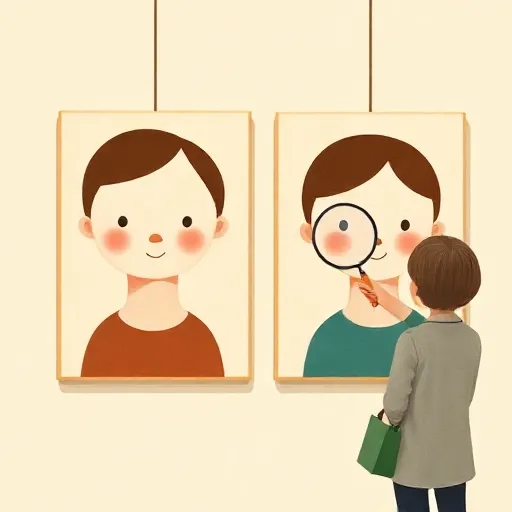
Now, imagine two paintings hanging side by side. They look identical — every brushstroke, every fleck of color. But one was painted by Rembrandt in 1638, and the other was painted by a brilliant forger last year. If you can’t tell them apart, is there really any aesthetic difference? Goodman said yes, and his reason cuts deep. The moment you learn which is the forgery, your way of looking at both paintings shifts. You start searching for tiny clues, training your eyes to notice features that were invisible before. Knowledge of the work’s history — its authenticity — guides how you perceive it. Perception is never a passive snapshot; it’s an active projection of labels, and the label “forgery” reorganizes what you see. So even before you spot a visual difference, the experience of the two paintings is not the same.
This doesn’t mean you need a certificate from an expert. It means that what a work is — a Rembrandt or a van Meegeren — is part of the symbol system that determines how it refers and what it exemplifies. The aesthetic properties of a picture include the rules for looking at it. Thus, authenticity matters in autographic arts because the physical history is baked into the work’s symbolic function. In music, there’s no forgery of a symphony — only a wrong note or a new interpretation. The notation freezes the identity while performance brings it to life.
Goodman’s theory of notation and identity of artworks is detailed, but the takeaway is simple: how a work exists depends on the kind of symbol system it belongs to. And the line between real and fake is not just a legal matter — it’s a philosophical one that shapes how we construct worlds.
Why Art and Science Are Neighbors, Not Opposites
Goodman’s boldest claim is that aesthetics is really a branch of epistemology — the study of knowledge. He wasn’t saying that a painting proves a theory like a lab experiment. He meant that artworks help us understand the world in ways that are just as important as scientific discoveries. Both science and art build world-versions by projecting symbols. A physicist devises equations that reclassify matter and energy; a novelist invents characters that give you new labels for human behavior — if you recognize yourself in a greedy character, you’ve adopted a new way to sort people. Neither the scientific theory nor the novel shows you the “one true world,” because for Goodman there is no single, ready-made world. Multiple incompatible but right versions can coexist.
The difference between art and science is not about feeling versus fact. Both involve emotion and intellect. Instead, Goodman suggested that art tends to have certain symptoms of the aesthetic: density (every tiny detail can matter), repleteness (many features are relevant at once), and a heavy use of exemplification. But these are just clues, not definitions. A scientific diagram might show exemplification; a poem might be highly articulated like a mathematical proof. The boundary is blurry and that’s exactly the point.
So what does this mean for you? Every time you listen to a song that makes the hallway feel different, or you argue with a friend about whether a movie character “was good,” you’re engaged in worldmaking. The labels you project — “cool,” “boring,” “kind,” “unfair” — aren’t just private opinions. They shape what you notice and how things appear. Goodman’s philosophy invites you to become aware of the categories you use and to play with new ones. You can learn to see a forest through grue-and-bleen glasses just as an experiment. You’ll never see the world raw, but you can choose which worlds to build. And that’s a power worth having.
Think about it
- If you discovered that your favorite painting at home was actually a copy made by a machine, would it still mean the same to you? Why or why not?
- Imagine that from tomorrow everyone in your town agrees to use the words “grue” and “bleen” instead of “green” and “blue.” After a month, what might look different when you walk through a park?
- When you watch a movie, does the story give you a new way to understand people in your own life, or does it just entertain you? Can it do both?