Emeralds Are Green—But Will They Stay That Way?
Can You Trust Your Own Eyes?
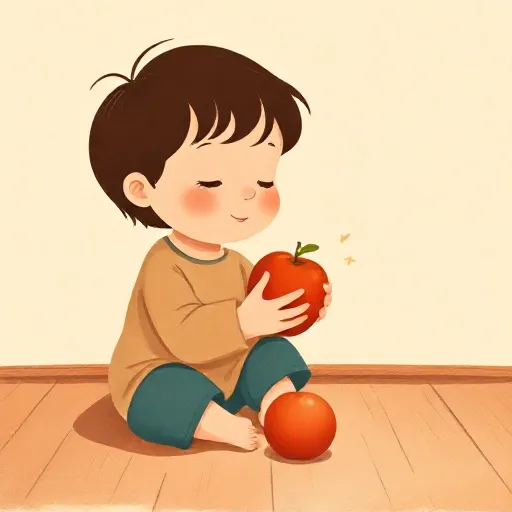
You stare at an apple. You swear you see a bright red patch in the center of your vision. Your friend says, “It’s definitely red.” But then you remember you are wearing red‑tinted sunglasses. Would you still call it a real red patch? Nelson Goodman (1906–1998) believed that even the simplest observation—like “there is a red spot in my visual field”—can be revised when new evidence appears.
His teacher C.I. Lewis (1883–1964) thought some sensations are given and absolutely certain. You might be wrong that an airplane is in the sky, Lewis said, but you cannot be wrong that a red spot is in your visual field. Goodman disagreed. If later you notice light conditions shifted or another witness recalls a blue spot, you might change your mind about what you saw. Nothing is beyond correction, not even your own sense-data. It is like remembering yesterday’s lunch color—you feel sure, but if a photo shows a green dish, your memory can flip.
Goodman also questioned another supposed sharp line: the split between analytic truths (true just because of what words mean) and synthetic truths (true because of facts in the world). A classic example is “All bachelors are unmarried men,” which many philosophers called analytic. Goodman, working with W.V. Quine (1908–2000) and Morton White, argued that no two different words ever have exactly the same meaning. Because meanings slide and overlap, there is no clean, absolute analytic‑synthetic boundary. With no unshakable sensory given and no pure meaning‑based truths, Goodman’s message is clear: there is no unchallengeable foundation for knowledge. That raises a huge question about how we can ever predict anything at all.
An Emerald Puzzle: Green vs. Grue

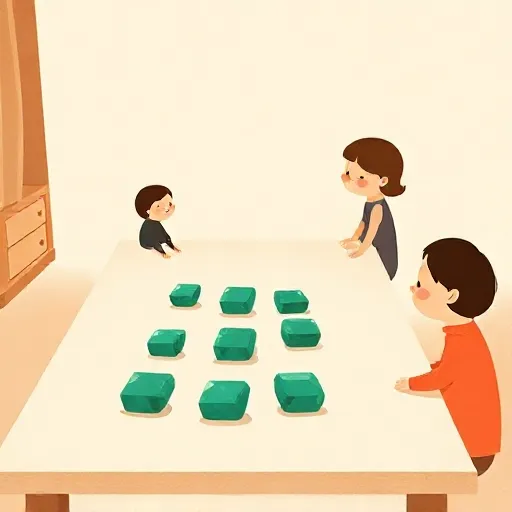
Imagine you are a gemologist, collecting emeralds across the globe. Before January 1, 2050, every emerald you examine is green. Your notebook is packed with entries like “Emerald found on May 3, 2049 — green.” Naturally, you conclude, “All emeralds are green.” That seems like solid induction—reasoning from past observations to a general rule.
Now meet a new predicate: grue. An object is grue if and only if it is examined before 2050 and is green, or it is not so examined and is blue. Every emerald in your notebook was examined before 2050 and is green. So each one is also grue. Therefore, your notebook supports the hypothesis “All emeralds are grue” just as strongly as “All emeralds are green.” What will the first emerald you find after 2050 look like? If all emeralds are green, it will be green. If all emeralds are grue, it will be grue—but for an object not examined before 2050, grue means blue. The same past evidence predicts two contradictory outcomes: the next emerald will be both green and blue!
Goodman called this the new riddle of induction. The old riddle, posed by David Hume (1711–1776), asked why we should believe the future will resemble the past. Goodman’s riddle goes deeper: even if we trust that pattern, which words we use to describe the pattern changes the prediction. “Green” and “grue” are perfectly symmetric; there is no logical rule that tells us to prefer one over the other.
Why Do We Choose “Green” Over “Grue”?
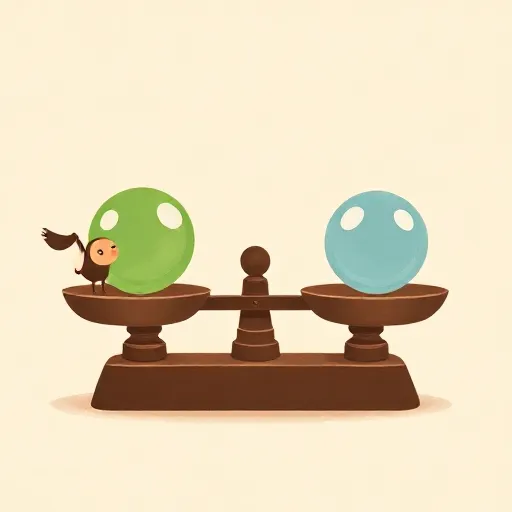
If logic does not help, how do we decide which predicates to use in induction? Goodman looked at what we actually do. He said we build inductive rules by adjusting our intuitions and our principles until they fit each other. We notice which inferences seem plausible, then we write rules that capture them. Those rules then lead us to reconsider some intuitions, and we adjust again. This back‑and‑forth process is called reflective equilibrium.
But the real engine of the system is entrenchment. A predicate like “green” is projectible—suitable for making predictions—because we have used it successfully many times before. “Grue” is new, odd, and has no history of successful projections. Our language community has racked up centuries of green‑predictions, so “green” trumps “grue.” This is not because “green” cuts nature at its joints. Imagine a community that spoke a language where “grue” and “bleen” (examined before 2050 and blue, or otherwise green) were the basic color words. For them, “green” and “blue” would seem artificial and positional. The two languages are logically equal. Goodman’s solution is deeply pragmatic: we stick with what has worked, and there is no deeper foundation.
The Earth Moves and Stays Still—at the Same Time
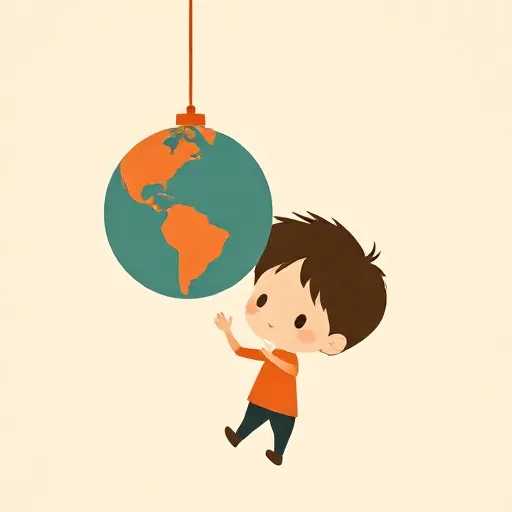
Goodman’s suspicion of absolutes reaches far beyond induction. He thought that even our whole descriptions of the world can conflict while both are true. Take two statements: “The Earth is at rest” (a geocentric view) and “The Earth moves” (a heliocentric view). A single object cannot be both at rest and in motion. Yet each statement can be correct inside its own system.
Goodman’s radical proposal: they describe different worlds. He did not believe in one ready‑made Reality sitting out there waiting to be discovered. Instead, we make worlds by constructing world versions—descriptions, theories, stories, paintings. He called this view irrealism. When a version hangs together logically, fits with other accepted versions, and uses entrenched predicates, it counts as a true version, and thereby creates a world.
Think of the Big Dipper. The stars exist, but the constellation is a pattern we projected onto the sky. Another culture might connect the same stars into a different figure, creating a different star‑world. There is no single correct way to carve the heavens. The same goes for scientific theories: heliocentric and geocentric versions each carve up motion and position in their own consistent way. We do not find a bare reality; we build it with our concepts.
Art Builds Understanding, Too
Goodman believed that art and science are partners in worldmaking. In his book Languages of Art, he showed that paintings, music, and literature use symbol systems just as equations and graphs do. A portrait does not copy reality; it selects, emphasizes, and organizes features—exactly what a physics model does. Both are tools for understanding, not mirrors.
He founded Project Zero at Harvard to study learning in the arts. Goodman insisted that aesthetic experience is cognitive, not just emotional. When you draw, compose, or interpret a piece of music, you are constructing a version of the world, just as a scientist does with a theory. No system—neither art nor science—has a privileged grip on truth. There are only better and worse versions, judged by how well they fit together and serve our understanding.
You Are Already Making Worlds
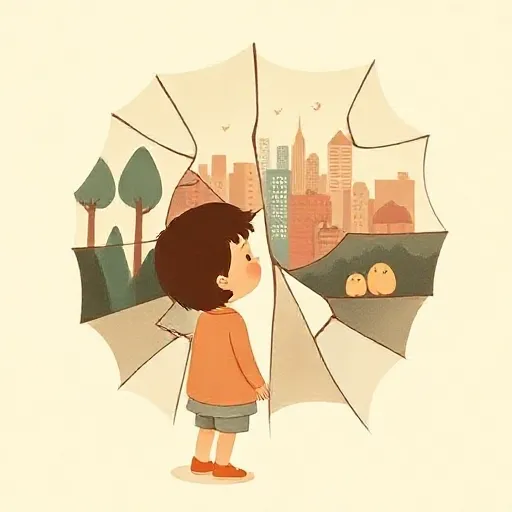
So what does this mean for you? Every time you describe a friend’s mood, a historical event, or the color of your room, you are offering a version, not a raw copy. There is no view from nowhere. This is not a free‑for‑all: a good version must be consistent, respect other things you know, and use predicates that have earned their keep. It is like drawing a map—you can make a political map, a topographic map, or a transit map. Each is correct, each selects different features, and none captures everything.
Goodman’s lesson is that our words and symbols actively shape what we call reality. When someone sees the same events differently, they might not be wrong; they might be operating with a different world version. Next time you argue about what “really” happened, ask yourself: are we using the same predicates? Have these predicates proven themselves before? Nelson Goodman’s emeralds remind us that even the simplest fact is laced with choices—and that is an invitation to think carefully, not to give up.
Think about it
- If you and a friend described the same emerald—you using “green” and your friend using “grue”—could you both be right? What would make one version better than the other?
- Imagine a society that used only “grue” and “bleen” instead of “green” and “blue.” How would their art, science, and everyday talk differ from yours?
- Goodman said there is no single reality, only versions. Does that mean if enough people believe something (like a made‑up historical fact), it becomes true? How could you still tell a good version from a bad one?