William Godwin's Dilemma: Save the Archbishop or Your Mother?
The Fire and the Unthinkable Choice
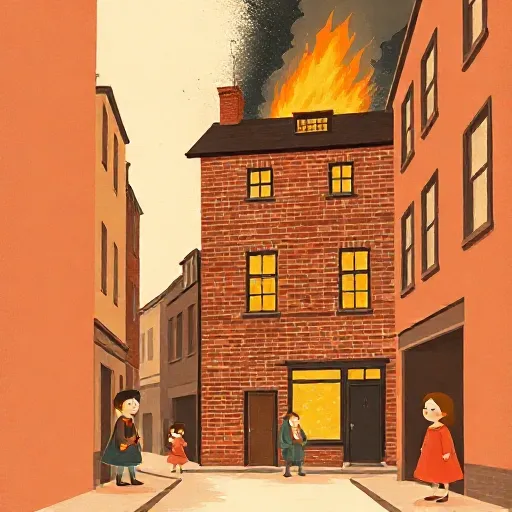
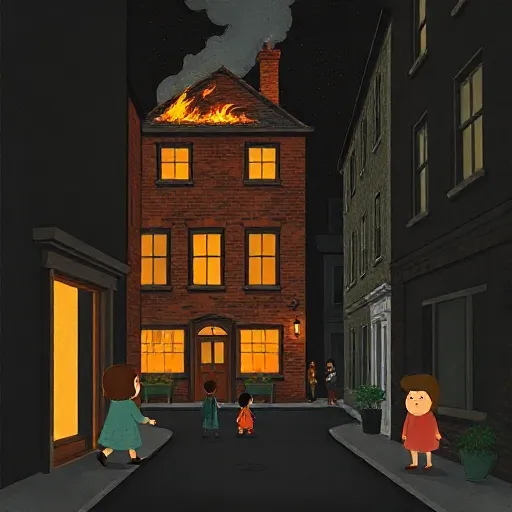
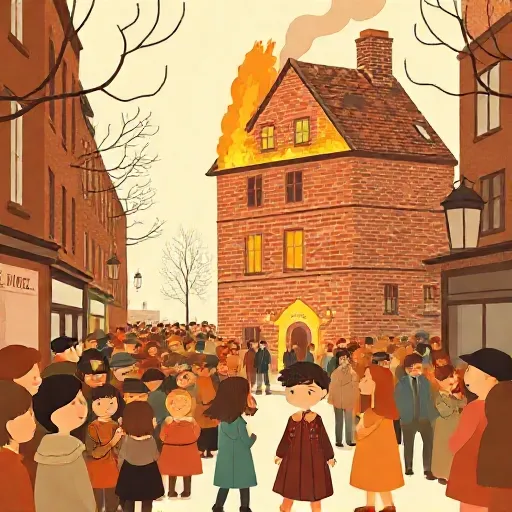
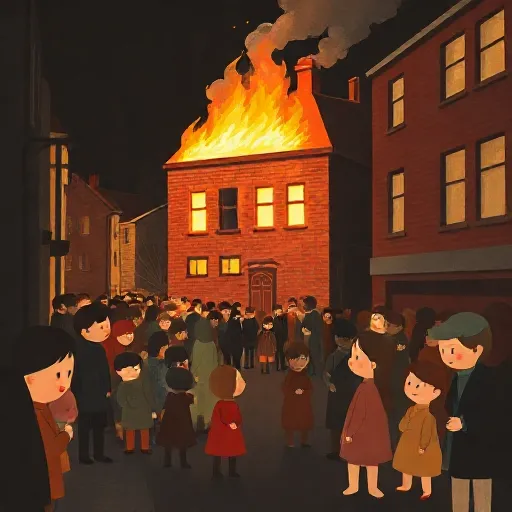
London, 1793. A house is on fire. Through a window you see two people trapped. One is a famous archbishop, François Fénelon, a wise man whose ideas could make the whole world better. The other is your mother (or your father — Godwin changed the example). You can rescue only one. Who do you grab?
William Godwin (1756–1836) gave an answer that shocked everyone. He said: save the archbishop. Why? Because if we want to be truly fair, we must help the person who can do the most good for everyone — even if it rips our heart out. This thought experiment, now called the Famous Fire Case, became one of the most unsettling moral puzzles in the history of philosophy. It revealed Godwin’s fiery belief that justice demands we treat all people with complete impartiality, putting the greater good above personal feelings.
Who Was William Godwin?
Godwin grew up in a deeply religious family. His father was a minister, and young William dreamed of preaching. He studied hard, learned ancient languages, and was sent to a college for Dissenters — Christians who refused to join the official Church of England. But there, under a strict teacher named Samuel Newton, Godwin absorbed a harsh form of Calvinism called Sandemanianism. This creed taught that God saves or damns people based purely on their understanding of truth, not on faith or feeling. It left Godwin with a lifelong belief: reason, not emotion, should rule our lives.
In his twenties, however, Godwin’s views began to crack. A parishioner handed him books by French thinkers like d’Holbach, Helvétius, and Rousseau. He read them and turned away from religion toward deism — the idea that a creator set the world going but does not interfere. He moved to London to write, and in 1793 he published a fat book called An Enquiry Concerning Political Justice. The book became an instant sensation. It argued that all governments are corrupting and that society would be far better if we each followed our own reason.
Godwin’s fame soared. He moved in radical circles, befriended poets like William Wordsworth and Samuel Taylor Coleridge, and fell in love with the feminist writer Mary Wollstonecraft, whom he eventually married. But when she died shortly after childbirth, Godwin was devastated. In the years that followed, his own thinking about feeling and reason began to change — a shift that would force him to rework his most famous ideas.
The Perfect Society? No Government Needed
Godwin’s starting point was radical. He believed that every human being possesses private judgment — the ability to think and decide for yourself. For an action to be truly moral, he insisted, it must come from your own understanding, not because a king, a priest, or a law told you to. If someone forces you to do good, it doesn’t count as virtue. So any system that overrides private judgment is wrong.
This led him straight to philosophical anarchism, the view that government is always a dangerous evil. Sure, society is natural and good — people help each other, trade, and form friendships. But government rules by force and commands obedience, which trains us to stop thinking for ourselves. Instead of obeying, Godwin argued, each person should work out the right thing to do by reasoning toward justice — doing whatever produces the greatest benefit for all.
He also held a sweeping belief in human progress. Because minds can learn and improve forever, Godwin thought that one day we would no longer need laws, armies, or even marriage. He even speculated that as our knowledge grew, we might conquer aging and live indefinitely. This utopian streak gave his first edition a heady, almost science-fiction energy.
The Famous Fire Case: Saving the Archbishop Over Your Mother
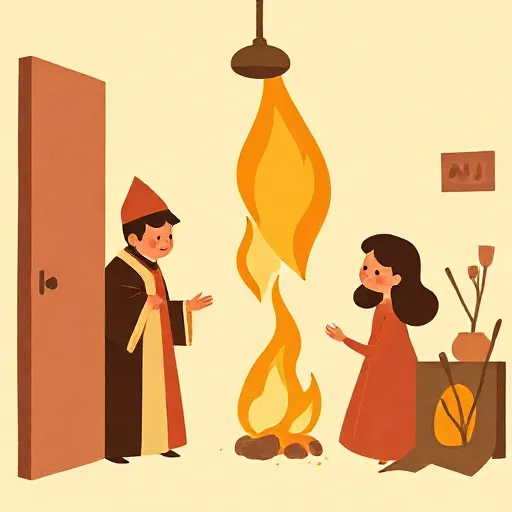
How does all this apply to a burning building? The fire case tests whether you can live as a true impartial agent. Godwin’s principle of utility said: the right action is the one that brings the most good to all people. Fénelon, an enlightened thinker, could potentially improve the lives of thousands — maybe millions. Your mother, however beloved, cannot produce nearly as much benefit. So duty commands: rescue the archbishop.
Godwin knew this felt monstrous. But he compared it to a judge sentencing their own child to prison. A fair judge must ignore family ties and look only at the facts. So should we all. He even pointed to an ancient Roman hero, Brutus, who ordered the execution of his own sons for plotting against the republic. That, Godwin thought, was a model of how justice must overcome personal affection.
His critics erupted. The clergyman Samuel Parr delivered a blistering sermon in 1800, accusing Godwin of trampling the natural bonds of gratitude, family, and love. If we follow this cold logic, Parr argued, we turn into heartless machines. The ordinary warmth that holds families and communities together would be destroyed.
Godwin’s reply was careful. In a fiery pamphlet, he stood by the fire case but made a distinction: extraordinary dilemmas like fires and criminal trials are rare. In everyday life, our feelings and attachments are not only acceptable — they guide us helpfully. Your love for your parents can teach you how to care for others and gives you a powerful motive to do good. But when the stakes are enormous and you must choose, impartiality must win.
The Great Revision: Feelings Fight Back
Here’s where it gets really interesting: Godwin himself began to doubt his own hardline stance. After reading the Scottish philosopher David Hume’s Treatise of Human Nature, he realized he had been making a big mistake. In 1800 he listed three errors that had marred the first edition of Political Justice.
First, he had been too Stoic — he had ignored that pleasure and pain are the real foundation of morality. Second, his Sandemanianism had led him to overvalue judgment and undervalue feeling. He now saw that sentiment, not pure reason, is what actually moves us to act. A person might know what is right but still feel no pull to do it unless their emotions are engaged. Third, he had unfairly condemned private affections — the love we feel for specific people. Those attachments, he conceded, are a vital source of moral motivation.
The second and third editions of his book, appearing in 1796 and 1798, soften the rationalism dramatically. Godwin still believed in working for the greatest good, and he never abandoned private judgment. But he now allowed that ordinary caring relationships help us become better, more benevolent people. He also dropped the most fanciful predictions, like conquering death. The cooler, more humbled Godwin was less utopian, but his core challenge remained: how do we balance fairness to all with our deepest personal loyalties?
Why a 1790s Fire Still Matters

Godwin’s thought experiment won’t go away. We face miniature versions of it all the time. When a parent has to choose between donating money to a global charity that saves lives or paying for their child’s piano lessons, they’re nudged toward Godwin’s dilemma. When you decide whether to share your lunch with a stranger who forgot theirs or save it for your best friend, you’re weighing impartial good against personal tie.
His anarchism also raises a live question for any twelve-year-old: when should you obey rules just because an authority said so? Godwin urges you to use your own mind. Think for yourself, test the reasons, and never hand over your judgment to someone else — not even a government. That idea has echoed through democratic movements ever since.
Godwin’s greatest insight is that fairness is hard. It asks us to imagine a world where everyone, not just our inner circle, counts equally. Yet he also eventually admitted that our feelings and relationships give life its shape and meaning. The debate between head and heart, between impartial rules and personal love, is one that each generation must figure out again. And it all started with a fire in a London street and a book that asked: who are you really loyal to?
Think about it
- If you could save only one person from a burning building — a famous scientist on the verge of a cure for a deadly disease, or your best friend — who would you save and why? Is your answer different if you swap best friend for a classmate you barely know?
- Godwin thought governments corrupt us by telling us what to do. Can you think of a time when following a rule felt wrong because you hadn’t thought it through yourself? When is it okay to trust an authority without questioning?
- Imagine a world where everyone always chose the action that helped the most people, even if it hurt their own family. Would that world feel just or cold? What would be lost if no one gave special love to their own children?