
Is There a Most Real, Most Valuable, Most Freeing Thing?
Staring into the vastness

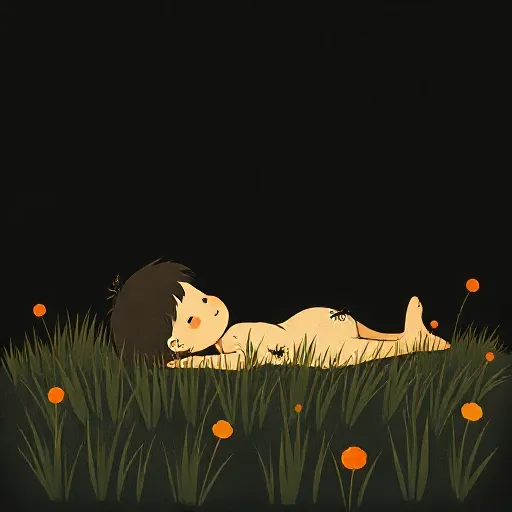
Imagine you are lying on a hill, staring up at a billion stars. The sky feels endless, and a thought pops up: Is there anything behind all of this? Something that is more real than everything else, more important than anything, and the secret to feeling truly free? That is the question of ultimacy — the search for what is ultimate.
The contemporary philosopher John Schellenberg (b. 1959) gave a helpful way to think about it. He suggested that if something is ultimate, it must be ultimate in three ways:
- Metaphysically ultimate: the most fundamental fact about how everything hangs together. It’s the rock-bottom reality.
- Axiologically ultimate: the thing that has unsurpassable value — the best there is.
- Soteriologically ultimate: the source of the deepest fulfillment or liberation people desperately long for (like nirvana, union with God, or absolute peace).
Some philosophers say something needs all three to be really ultimate. Others think having just one or two of these is enough. This looser view makes “the ultimate” more like a family — different members share some traits, not all. That’s helpful, because across the world, people have imagined the ultimate in wonderfully different ways, and not all of them fit a strict checklist.
So what have people actually pictured? Let’s look at three famous ultimates from living traditions: Brahman in Hinduism, God in the Abrahamic religions, and the Dao in Daoist thought. They come from different times and places, but they all try to capture what is most real, most valuable, or most freeing.
Brahman: the world as God’s body

The idea of Brahman was first written down in India more than 2500 years ago. In the Vedanta school of Hindu philosophy, almost everyone agrees that Brahman’s core nature is sat-chid-ananda: existence, consciousness, and bliss. They also think of Brahman as a theocosm — a single reality that includes both God and the cosmos. The real disagreement is about the link between the two.
At one extreme stands the Dvaita (dualist) school. It says God and the cosmos are two utterly distinct things. God is like a divine dweller who builds a house from something else and then lives inside it, watching over everything.
At the other extreme is the Advaita (non-dual) school. The famous philosopher Adi Shankara (788–820 BCE) is often connected with the most startling Advaita view: the cosmos is just an appearance, like mistaking a rope for a snake in the dark. The only reality is God, which is impersonal consciousness-bliss. The world isn’t really there. That’s a pantheism — everything is God, but “everything” turns out to be just God.
Right in the middle are the many Bhakti devotional schools. Their best representative is Ramanuja (ca. 1017–1157). He argued for a panentheism — the world is in Brahman, but Brahman is more than the world. He used the metaphor of a body and a soul: the cosmos is Brahman’s body, and Brahman is the cosmos’s soul. The world is real, just as your body is real, but it lives and breathes only because the soul is animating it. In this picture, Brahman builds a house out of itself and dwells inside it forever.
Later, Ramakrishna (1836–1886) claimed to experience all these views as true at once. He said Brahman must be infinitely complex, because each path catches a different aspect. His open-mindedness is a powerful response to the sheer diversity of models.
One surprising feature runs through all these Brahman models: while Brahman is obviously metaphysically and soteriologically ultimate, it’s not clearly the best thing in a moral sense. If everything is Brahman, even terrible things, then Brahman might not be all good. Yet people still find deep, blissful contact with it. That challenges the idea that an ultimate must also be the best.
God: the perfect Being remixed

The idea of God in Judaism, Christianity, and Islam stretches back into the ancient Middle East. The most influential model is perfect being theology: God is that than which nothing greater can be conceived — unsurpassably powerful, knowing, and good. Many perfect being theologians think God created the universe from nothing, making it completely distinct from Himself. That’s a dualism: two different kinds of reality.
But this view ran into trouble early. If God is perfectly unchangeable and cannot suffer, how can God care deeply about our lives? Some thinkers split into two camps. Classical theists protect God’s unchangeability and greatness, even if that makes God seem less personal. Neoclassical theists (like the open theists) emphasize God’s living relationship with the world, maybe giving up some absolute timelessness to do so.
Outside the dualist box, other models push God right into the world. Pantheists say the universe itself is God. The contemporary philosopher Peter Forrest, for example, suggests the whole cosmos might be a single conscious Self. Karl Pfeifer imagines the universe filled with divine mental states, like an intentional field. Both try to show how the physical world could also be divine.
At the other end, a rare but fascinating view is merotheism: God is a proper part of the world, not the whole thing. The 20th-century philosopher Samuel Alexander thought God would one day emerge from the growing complexity of the universe — like a new level of life springing from simpler stuff. Paul Draper, a philosopher alive today, argues that the universe always contains one immaterial mind, God, and our brains tune into it like prisms diffracting sunlight.
The most popular middle ground is panentheism (the world is in God, but God is more than the world). The philosopher Charles Hartshorne (1897–2000) built a process theology: the world is God’s body, and God feels every flicker of change, then lures things toward better possibilities moment by moment. Contemporary philosophers John Bishop and Ken Perszyk go further: they say God is the very activity of perfect love breaking into the world — both the source and the goal of everything. In that model, a moment of genuine kindness is literally divinity showing up.
Like Brahman, God doesn’t always get three checks on Schellenberg’s list. A classical perfect being easily earns all three. An emerging deity like Alexander’s might end up valuable and fulfilling, but it isn’t the most fundamental fact yet. That doesn’t stop people from thinking these models capture something real about God.
The Dao: the Way that is no thing
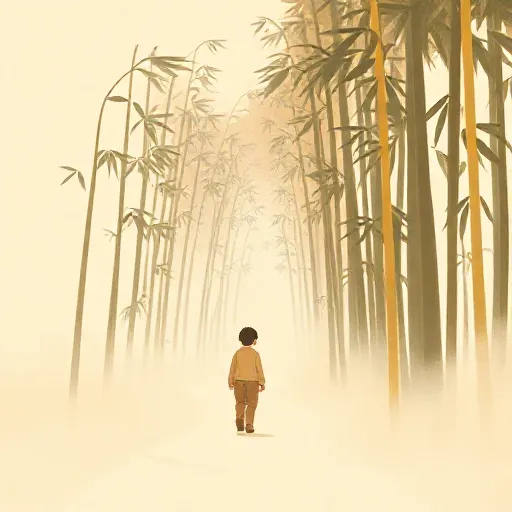
Around the fifth century BCE, during a time of war in China, some thinkers shifted their attention from a personal heaven (Tian) to the constant, impersonal patterns of the natural world. These early Daoists glimpsed a single force behind it all and called it the Dao — the Way. The classic texts, like the Daodejing, treat the Dao not as a thing, but as the source of all things.
Most Daoists agree on several striking claims. First, the Dao is immanent: it’s in everything, even in “tiles and shards … in the piss and shit,” as the Zhuangzi bluntly puts it. Second, it is ziran — spontaneous, self-so. It doesn’t need a reason to be; it just is, like a flame that keeps burning. Third, it is nonbeing — not a being at all. The Dao is not an invisible giant; it is no thing. That makes it ineffable, which is why the Daodejing opens with “the way that can be spoken of is not the constant way.”
How does no thing give rise to the ten thousand things of the universe? Through wu wei, often translated as “non-action.” The Dao doesn’t push or force. It provides a gap, like a mother providing space for a baby to emerge. Daoist cosmogony pictures a four‑stage unfolding: from nonbeing (0) to unity (1), duality of yin and yang (2), multiplicity of heaven, earth, and humans (3), and finally the myriad things (4). Eventually everything returns to nonbeing, and the cycle repeats — like waves rising from and sinking back into an ocean.
This picture makes the Dao a clear metaphysical ultimate: the most fundamental fact about everything. It is also soteriological: Daoist practice, such as walking the ritual pattern of bugang or cultivating wu wei in daily life, aims to return to the Dao — to dwell in the gap between being and nonbeing, bursting with creative power. But is the Dao axiologically ultimate, the best of all? Probably not. The Dao is not kind or unkind; it treats all things like “straw dogs,” as the Daodejing says. Yet its followers do not care. They are seeking what is true and real, not what is morally perfect. Being near the source of reality turns out to be deeply fulfilling, even if that source has no moral face.
What do you do with all these models?
Faced with thinkers who say Brahman is a pantheistic void, others who say God is a loving person, and still others who say the ultimate is an impersonal spontaneously unfolding Way, it’s tempting to throw your hands up. Some people walk away, convinced that if the truth were clear, people wouldn’t disagree so wildly.
But many philosophers and religious thinkers do the opposite. They lean into the diversity. Ramakrishna, whom we met earlier, saw each model as a different path up the same mountain — because reality is infinite, it needs infinite descriptions. Comparative theologians borrow insights from foreign traditions to deepen their own. A newer movement called Theology Without Walls treats all these models as data, a giant puzzle that might reveal a global ultimate none of them fully captures.
John Schellenberg himself suggests a different move: instead of placing your trust in any specific model (Brahman, God, or the Dao), you could trust in the more general idea they all share — the axiological, soteriological, and metaphysical ultimate. That general ultimate is more likely to exist, because it exists if any one of the models points to something real. It’s a way of staying committed without nailing down all the details.
Why does any of this matter for you? Because asking what is ultimately real, valuable, and freeing shapes how you see your own life. You don’t have to settle on a final answer to notice when a view of the ultimate makes kindness feel pointless (if the Dao doesn’t care), or makes every good moment feel sacred (if God is the activity of love itself). The models are not dusty museum exhibits. They are live options that can change what you think is worth working for, hoping for, and paying attention to — right now, under the same stars that inspired those ancient thinkers.
Think about it
- If you could only keep one part of Schellenberg’s three (the most real, the most valuable, or the most freeing), which would you choose for something to count as ultimate? Why?
- The Dao is not morally good, yet Daoists still think returning to it brings deep fulfillment. Can you imagine something that isn’t good still making you feel free and whole?
- If every culture has very different models of the ultimate, does that make you more skeptical that anything ultimate exists, or more sure that something does — just too big for one description?