Are There Things That Never Change? (And Other Metaphysical Mysteries)
A Librarian’s Label That Shook the World

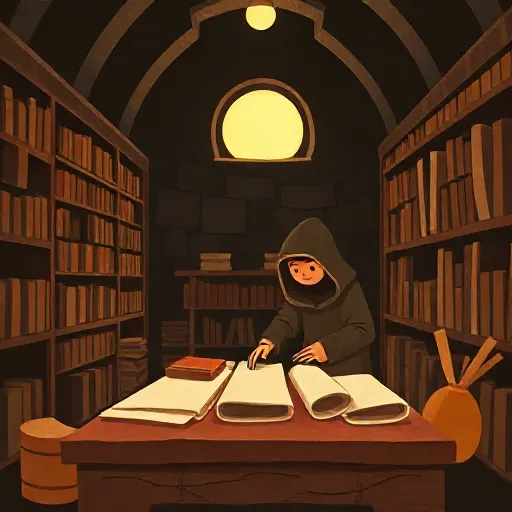
Over two thousand years ago, a librarian named Andronicus of Rhodes (1st century BCE) was sorting the scrolls of the philosopher Aristotle (384–322 BCE). He put aside a group of fourteen books that didn’t belong with the ones on nature—what we now call Aristotle’s Physics. He placed them on the shelf after those physical works and gave them a title that stuck: ta meta ta phusika, “the ones after the physical ones.” That phrase became our word metaphysics.
Aristotle himself would have called this subject “first philosophy” or “wisdom.” It studied things that do not change—being as such (what it means for anything to exist), the first causes of things, and unchanging realities. For centuries, that was metaphysics: the science of the permanent, the ultimate.
But in the 1600s, something shifted. New puzzles appeared: How does the mind connect to the body? Do we have free will? These questions didn’t fit neatly into physics or ethics, so they were thrown into the “metaphysics” basket. The word became a catch-all for problems no one knew how to classify. Even today, a metaphysician is anyone who asks about the ultimate nature of reality—whether they believe in God or not, whether they think everything changes or nothing does. Denying a metaphysical claim is still doing metaphysics. As Jean-Paul Sartre (1905–1980) pointed out, you can deny God’s existence and still be a metaphysician, just like Leibniz who affirmed it.
What Exists? The Puzzle of Being
The most basic question metaphysics asks is: Why is there something rather than nothing? This is the study of being as such. Philosophers have argued for centuries about what it means to exist.
Parmenides (c. 515–450 BCE) insisted that being is, and non-being is not—we cannot even genuinely think about nothing. Avicenna (980–1037) claimed that a thing’s essence (what it is) comes before its existence: you can describe a unicorn even if no unicorn has ever lived. Anselm (1033–1109) argued that a being that exists in reality is greater than one that exists only in the mind, so the greatest conceivable being must exist. Descartes (1596–1650) said existence is a perfection. But Immanuel Kant (1724–1804) pushed back: existence isn’t a property you can add to a thing, like a coat of paint. A real hundred coins is not the same as an imagined hundred coins plus the property “existing.”
In the twentieth century, W.V.O. Quine (1908–2000) boiled it down to a slogan: to be is to be the value of a variable. He meant that what exists is whatever our best scientific theories need to refer to. All these claims—and even debates about whether imaginary objects have some shadowy being—belong to ontology, the branch of metaphysics that studies what there is.
The War of Universals: Is “Whiteness” Real?
Look at a white dog, a white cat, and a white sheet of paper. They all seem to share something—what we call “whiteness.” But is there really a single thing, a universal, that they all have? Or do we just use the same word for a bunch of separate objects?
Plato thought universals—he called them Forms—exist independently, in a timeless realm. The Form of Whiteness is real, and white things get their color by participating in it. Aristotle disagreed: whiteness exists only in actual, individual white things. He said universals are in rebus (in the objects), not ante res (before the objects).
Realists believe universals really exist. Nominalists say they don’t—only individual things and the words we use are real. This debate matters because it asks what kinds of things the world contains. If “humanity” is a real universal, then what makes you a person isn’t just your body but something shared by every human. The fight between realists and nominalists continues to this day, and even those who believe in universals argue about where they live—in a separate world, in objects, or in our minds.
Substances: The Things That Stand Alone
Some things exist only in other things: a smile needs a face, a hole needs a ground. Substances, by contrast, exist in their own right. Aristotle called them prōtai ousiai—primary beings. Socrates is a substance. His ironic smile is not.
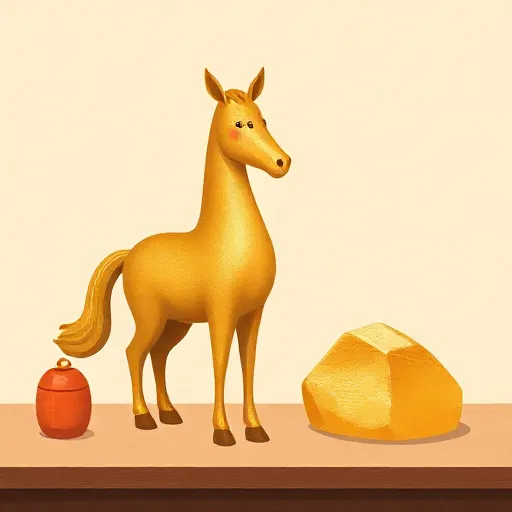
This idea of substance leads to puzzles that are very much alive. Consider a gold statue. There seems to be a lump of gold and a statue made from it. The lump existed before the statue was shaped; if you melt the statue, the lump survives but the statue is gone. They have different properties: the lump can survive being squashed, the statue cannot. Yet they occupy the same space at the same time and share all their momentary qualities. Are they two different objects? If so, how can two things be in the same place? This is the problem of material constitution, and it shows that even the objects on your desk raise deep metaphysical questions about identity and what it means to be a single thing.
Could You Have Done Otherwise? The Free Will Tangle
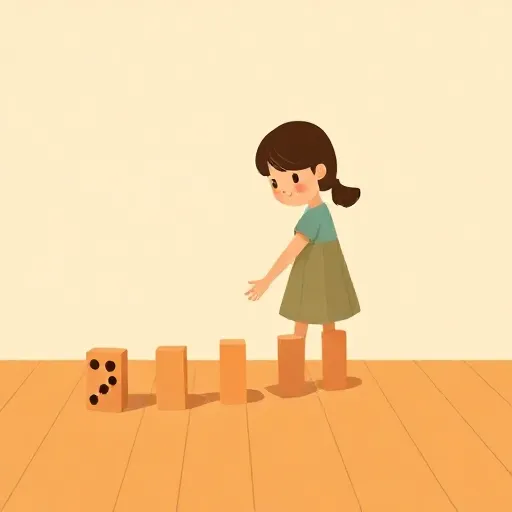
Imagine every event in the universe is caused by prior events and fixed by laws of nature. That picture is determinism. If determinism is true, there is only one physically possible future—the one that those laws and past states produce. But then how could you ever have acted differently? Your choice would have been inevitable from the start of time.
Now suppose determinism is false—some events are uncaused or random. Then what you do might be a matter of chance. And if it’s just chance, can it really be “up to you”? Either way, free will seems impossible. This dilemma has haunted philosophers for centuries.
To make sense of choices, metaphysicians talk about modality de re—the possibility and necessity belonging to things themselves, not just our descriptions. You might have the property “speaks English” only accidentally, while “is human” might be essential. Quine attacked such ideas with a famous puzzle: if cyclists are essentially bipedal and mathematicians only accidentally so, what about a mathematical cyclist? He thought the whole notion collapsed. Saul Kripke (1940–2022) and Alvin Plantinga (1932–) answered by using possible worlds: a complete way reality could be. In some possible world, you make a different choice, even if in this world you could not. Whether that’s enough to save free will is a live debate.
Why Metaphysics Refuses to Disappear

You might think metaphysics belongs to dusty libraries, but you do it all the time. When you ask whether a video game character exists (as code, not flesh and blood), whether money is real (a social invention, yet it buys real things), or whether you stay the same person as you grow up, you’re stepping into metaphysics. Some philosophers—like the logical positivists in the early 1900s—claimed that metaphysical statements are meaningless because they can’t be tested by experience. But their own principle (“the meaning of a statement is how you test it”) cannot be tested by experience either—it seems to refute itself. So the big questions won’t go away. Every time you wonder what’s real, you join a conversation that stretches back to Aristotle’s librarian, and you catch a glimpse of how strange and deep the world really is.
Think about it
- If a scientist could predict every choice you’ll ever make, would you still feel free? Why or why not?
- Imagine you step into a teleporter that destroys your original body and builds an exact copy somewhere else. Are you the same person after traveling? What makes you you?
- If every material object in the universe were destroyed, would the number 7 still exist? What about the color red?