Why Does an Onion Have Five Times More DNA Than You?
A Giant Onion and a Tiny Surprise
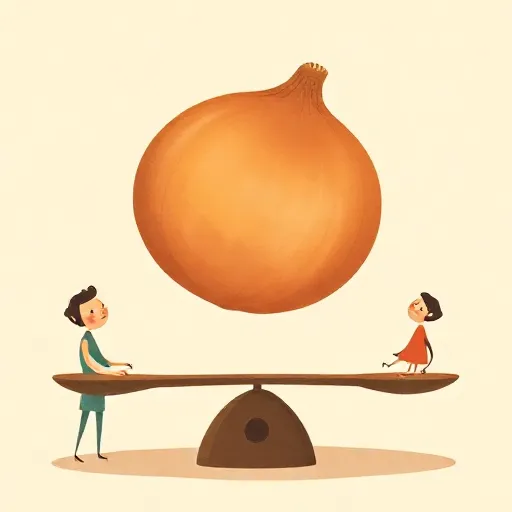
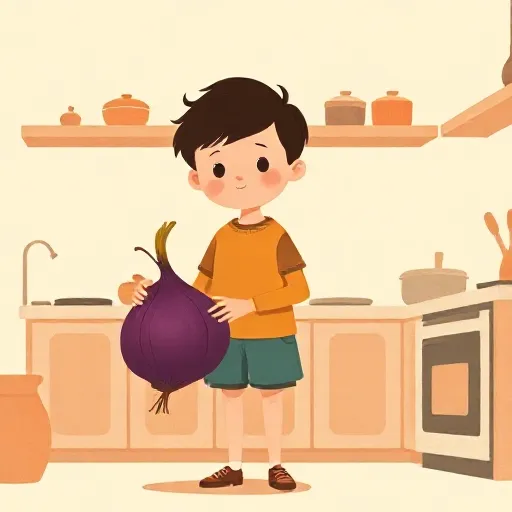
If you crack open a biology textbook, you might read that your genome is the complete set of instructions for building you. It is stored in long molecules of DNA inside almost every cell. That sounds orderly. But then you learn a fact that scrambles the picture: an onion has about 16 billion DNA letters in its genome. Yours has only about 3.2 billion. An onion—a vegetable that does not write poetry or solve puzzles—carries five times as much DNA as you do. Even some single-celled amoebae have genomes far larger than ours. Why?
Biologists first noticed this mismatch in the 1950s. The term genome had been invented a few decades earlier, in 1920, by the German botanist Hans Winkler (1877–1945). He used it to mean the set of chromosomes that one parent passes on, which together with the other parent’s set forms the material foundation of a species. At first many scientists assumed that more complex organisms would need more DNA, just as a more complicated machine needs more detailed blueprints. The onion and the amoeba refused to cooperate. Scientists gave this puzzle a name: the C-value paradox. “C-value” just means the amount of DNA in a single set of chromosomes, and the paradox is that this amount has no clear relationship to how complex an organism appears. An onion is not five times more complicated than you.
So what is a genome, really? And why is there so much of it in some places and not others? To start answering, we have to look at what came out of one of the biggest science projects in history—and at what that project didn’t see coming.
When the Instruction Book Turned Out Full of Gibberish
By the late 1980s, scientists were dreaming of reading every letter of the human genome. The Human Genome Project (HGP) launched in 1990, with the goal of sequencing all 3.2 billion DNA base pairs. In 2000, a draft was announced; in 2003, a nearly complete sequence was finished. Headlines promised that we would finally read the “book of life.”
Instead, the book turned out to be mostly pages full of scribbles nobody could understand.
Before the HGP, researchers guessed that humans might have 50,000 to 150,000 genes—the stretches of DNA that code for proteins, the workhorses of the cell. After the first draft, that number dropped to around 30,000. Today the best estimate is only about 20,000 genes. That is fewer than a simple roundworm, and only a fraction of what was expected. Even more startling, genes make up only a tiny slice of the DNA inside your chromosomes. A huge portion of the human genome (roughly 45 percent) consists of repetitive sequences, including bits that can copy and paste themselves around, called transposable elements. And a great deal of the rest has no obvious function at all.
Already in 1972, the biologist Susumu Ohno (1928–2000) had given this extra DNA a blunt name: junk DNA. His reasoning was straightforward. If an onion or a human has far more DNA than it has genes, and if most of that extra DNA does not code for anything useful, then it must be something like junk—evolutionary leftovers that just accumulate. The HGP seemed to confirm that we are carrying around a massive pile of DNA with no clear purpose. But that raised a deeper philosophical question: what does it even mean for DNA to have a “purpose”? And is the genome best understood as a string of letters that store information, or as something more physical?
The Secret Life of Your Chromosomes (Beyond the Letters)
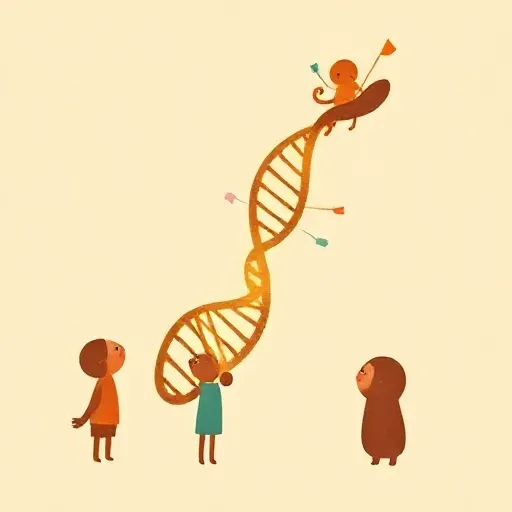
If you define the genome only as a sequence of nucleotide letters (A, T, C, G), you get a tidy digital file. Many textbooks and websites do exactly that. The U.S. National Library of Medicine, for example, says the genome is “an organism’s complete set of DNA, including all of its genes,” which contains “all of the information needed to build and maintain that organism.” This sounds clean and powerful.
But it doesn’t survive contact with real biology. A purely informational definition ignores what actually happens in the cell. Your DNA does not float around as a naked strand of letters. It is wrapped around protein spools called histones, and the whole structure, together with its proteins, forms the chromosomes. More importantly, chemical tags get attached to the DNA or to the histones. These tags are studied in a field called epigenetics. One of the best-known tags is methylation: a tiny chemical group (a methyl group) attaches to the DNA base cytosine. When that happens, the shape changes and the gene next to it may be silenced. The sequence of letters hasn’t changed, but the function has.
So consider the letter “C” in a DNA sequence readout. In reality, that spot might be an ordinary cytosine or a methylated cytosine (5-methyl cytosine). The two versions behave very differently, but a pure sequence does not tell you which one is there. If the goal is to capture what the genome does, the sequence alone fails. The epigenetic state of the genome—its physical condition—determines which genes are actually used. The genome also does things that have nothing to do with genes at all. It acts as a scaffold for other molecules, helps organize the nucleus, and uses mechanical forces to help the cell stay stable.
For these reasons, philosophers of biology like John Dupré (b. 1952) and his colleagues argue that the genome should be defined as a material object: the actual set of chromosomes, including all their proteins and chemical modifications. On this view, the genome is a dynamic, constantly changing thing. Its DNA sequence is maintained only by continuous repair machinery inside the cell, and its epigenetic marks shift in response to the environment. It’s not a static, immortal instruction book; it’s more like a bustling workshop that reads and rewrites its own notes.
The HapMap and the Race Puzzle
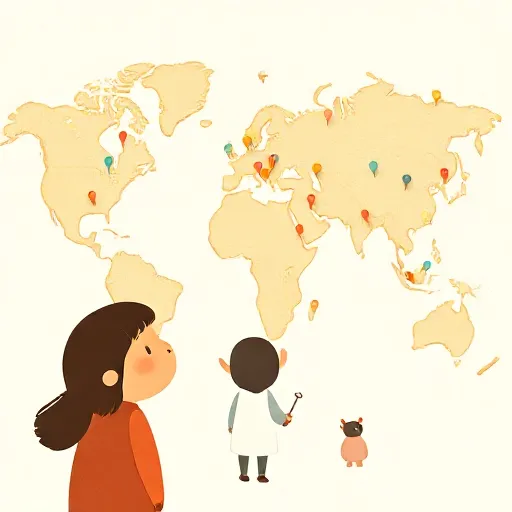
Once the human reference sequence was in hand, researchers wanted to understand the tiny differences that make each person’s genome unique. In 2002, scientists launched the International HapMap Project. Their goal was to map common genetic variations called single nucleotide polymorphisms (SNPs)—places in the genome where one letter differs between people. On average, your genome differs from a stranger’s at about one in every 1,000 letters. Some of these SNPs tend to be inherited together in blocks called haplotypes, and the HapMap catalogued which haplotypes are found in which populations.
The project was partly about disease: if a haplotype appears more often in people with a particular illness, that can hint at which genes might be involved. But the HapMap also reignited a huge philosophical debate: does our DNA prove that human races are biologically real?
Some geneticists looked at the clusters of SNPs from different parts of the world and argued that they fall into patterns that roughly match traditional racial categories—African, Asian, European, and so on. They suggested that race could be a useful, if rough, shortcut in medical research. A person’s self-identified race might give some clue about their genetic risks, at least until we know the precise genes involved.
Many philosophers and biologists pushed back hard. They pointed out that human genetic variation is clinal—it changes gradually across geographic space, not in sharp jumps. And traits do not cluster together in neat packages: skin color, hair type, and enzyme variants all vary in different, non-matching patterns across the globe. The computer program most often used to find clusters, called Structure, can be told to look for any number of groups you like. If you tell it to find five, you get five; if you tell it seven, you get seven. The results depend on the decisions of the researcher, not only on nature.
This matters because ideas about biological race can affect how people are treated, how medicines are developed, and who is included in studies. The HapMap, for all its scientific power, showed that genomics does not deliver simple answers about identity. Instead, it hands us a set of complicated data and forces us to ask what we are really looking for.
You Are a Walking Ecosystem
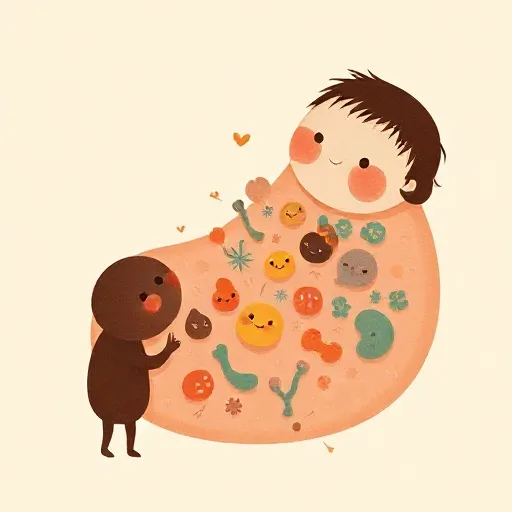
The story gets even more mind-bending when you zoom out from a single organism. A new field called metagenomics allows scientists to scoop up a sample of soil or seawater, extract all the DNA from the microbes inside, and sequence the whole lot at once. Instead of studying one genome, they study a community’s collective DNA.
Early metagenomics projects examined the nutrient-poor Sargasso Sea and an extreme acid-drain biofilm in California. They revealed that microbes swap genes constantly, across species lines. A bacterium can pick up a stretch of DNA from an unrelated neighbor and gain a new ability, like antibiotic resistance. This has led some thinkers to argue that the real biological unit is not the individual organism or its genome, but the community and its shared gene pool—what some call a “genome of communities” rather than a community of genomes.
And you are part of this story. Inside your gut, on your skin, and in your mouth live trillions of microbes with their own genomes. Those microbes help you digest food, train your immune system, and even influence your mood. Your personal genome is only one ingredient in the ecosystem that is “you.” The DNA instructions that matter for your health are partly your own, and partly borrowed from a living cloud of tiny companions.
So what is a genome? It is not a blueprint waiting to be read. It is a physical, flexible, chemically modified thing that responds to its environment. It is full of odd leftovers whose roles we still debate. And it is only one voice in a noisy community of genes that you carry around all day. The onion’s giant genome isn’t a mistake. It’s a reminder that life’s complexity doesn’t fit into a simple instruction book. It’s a conversation—and you’re right in the middle of it.
Think about it
- If an onion has more DNA than a human, does that mean the onion is more “complex”? What should “complex” even mean here?
- Suppose a computer program can group people into genetic clusters based on DNA samples. Does that prove there are biological races, or could the same data support a completely different story?
- Each of us carries microbial cells that outnumber our own cells. If those microbes affect your health and even your moods, where does “you” end and the community begin?