Your Genes: Destiny, Blueprint, or Just a Part of the Story?
A Monk, Some Peas, and a Hidden Pattern
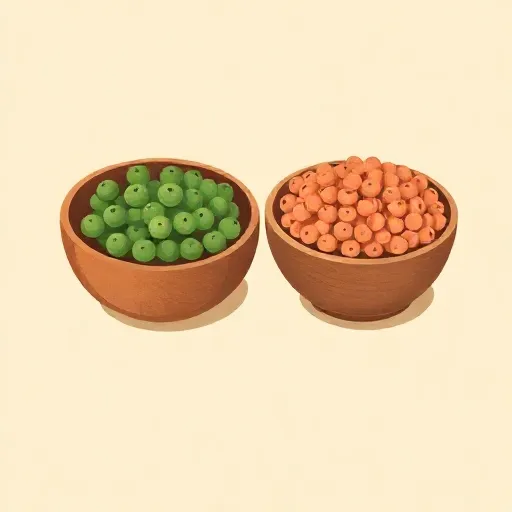
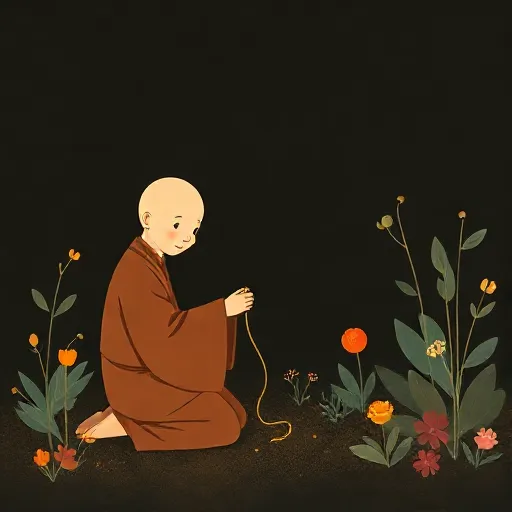
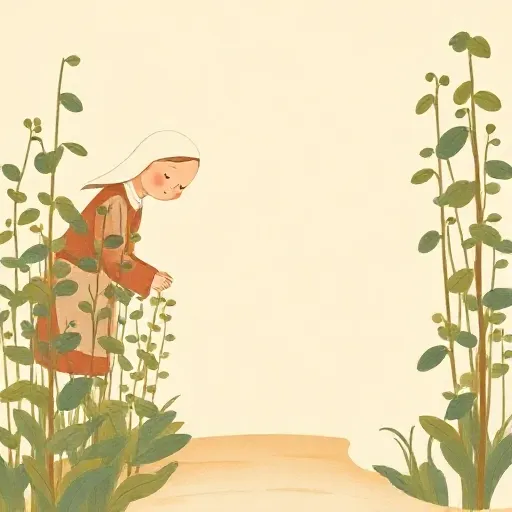
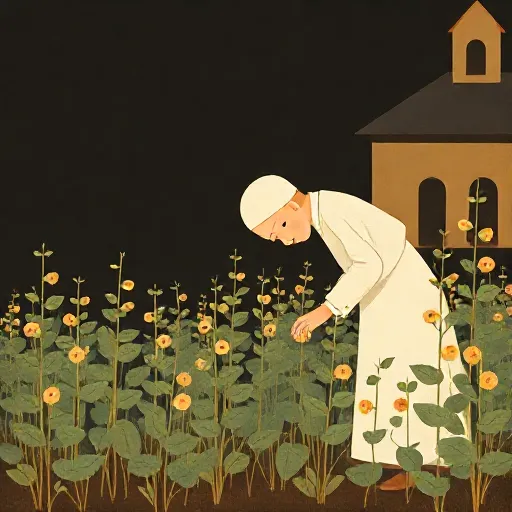
In 1865, an Austrian monk named Gregor Mendel (1822–1884) spent years cross-breeding pea plants in his monastery garden. He tracked traits like round versus wrinkled peas or purple versus white flowers down through generations. Mendel noticed a hidden pattern: traits seemed to be passed along independently of one another, and some traits dominated others. He called them “factors.” He died thinking his work was forgotten.
In 1900, three other botanists rediscovered those factors and connected them to Mendel’s old experiments. Suddenly the rules of heredity had a name. British biologist William Bateson (1861–1926) called the new science genetics, and the inherited factor became the gene. Bateson and a team of young scientists—many of them women—showed that Mendel’s principles worked across the plant and animal kingdoms.
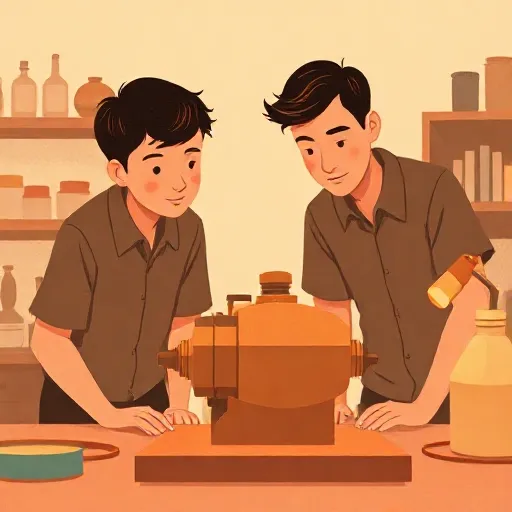
Meanwhile, across the Atlantic, Thomas Hunt Morgan (1866–1945) bred thousands of fruit flies at Columbia University. He and his students discovered that genes live on chromosomes, the thread-like structures inside every cell’s nucleus. Genes sitting close together on a chromosome were usually inherited together. Morgan’s team built the first gene maps and found that some traits are linked to the sex chromosomes—so a fly’s eye color could depend on whether it was male or female. Genetics now had a physical home.
What Is a Gene When You Look Inside?
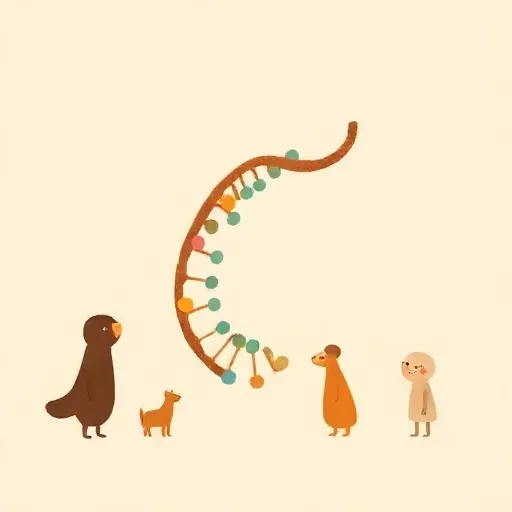
By the 1950s, scientists knew where genes lived but not what they were made of. In 1952, Alfred Hershey and Martha Chase proved that the genetic material is DNA (deoxyribonucleic acid). A year later, James Watson (born 1928) and Francis Crick (1916–2004) built a model of DNA’s structure—a twisting ladder of two strands, a double helix. Their work relied on X-ray images taken by Rosalind Franklin (1920–1958) without her knowledge. The rungs of the ladder were pairs of bases: A with T, C with G.
This discovery made the gene feel like an information molecule. DNA is “transcribed” into RNA, which is “translated” into proteins—the central dogma of molecular biology. But as researchers zoomed in, the clean picture fell apart. They found overlapping genes—the same stretch of DNA could be read in more than one way. They found split genes where coding regions (exons) were interrupted by non-coding segments (introns). And they discovered alternative splicing: a single gene could be assembled in different combinations of exons to produce different proteins.
Philosophers of science stepped into the confusion. Lenny Moss, a contemporary philosopher, proposed two gene concepts. Gene-P is the gene as a predictor—like “the gene for cystic fibrosis.” It’s a handy marker, but it doesn’t tell you how the trait develops. Gene-D is the actual DNA sequence, one developmental resource among many. Others, like Eva Neumann-Held (contemporary), argued for a process molecular gene concept: the gene is the whole recurring process that leads to a protein, from DNA to final product, including all the cellular helpers. So there isn’t one single thing “gene” means—it depends on what question you’re asking.
Your Genome Is Not a Crystal Ball
When the Human Genome Project finished reading all three billion DNA letters of the human genome in 2003, scientists celebrated. They promised that the major genes for diabetes, mental illness, and heart disease would be found quickly, and that by 2020 we would have gene-based personalized medicine. Some called the genome biology’s “Holy Grail.” Then came the surprise: humans have only about 20,000 genes—fewer than a mouse (25,000) or a rice plant (over 30,000). If genes were simple instructions, that made no sense.
Genome-wide studies soon showed that most common human traits, even something as basic as height, involve hundreds or thousands of tiny genetic nudges, not a single switch. The idea of “the gene for” something usually turned out to be wrong. Philosophers pushed back against genetic essentialism—the misleading belief that your DNA is a blueprint that fixes your fate. Metaphors like “blueprint” or “program” make it sound like genes work alone, when actually countless molecules, cells, and outside experiences shape how genes are used.
C. Kenneth Waters, a contemporary philosopher of biology, offered a more careful causal picture. In a controlled lab experiment—like Morgan’s fruit flies—you can treat a gene as an actual difference-maker for a trait. But in the messy real world, many factors (diet, stress, sun exposure) are also potential difference-makers. Genes matter, but they aren’t the only things that matter, and they rarely act in isolation.
Good Genes, Bad Genes: The Shadow of Eugenics

Even before genetics became a science, people argued about who should have children. In 1883, Charles Darwin’s cousin Francis Galton (1822–1911) coined the term eugenics, meaning “good birth.” Eugenicists worried that “unfit” people—whom they labeled criminal, unintelligent, or poor—were having more children than “fit” people. When Mendel’s rules arrived, eugenicists embraced them, wrongly assuming complex human traits were controlled by single genes. They pushed for sterilization laws, immigration bans against whole nations, and laws to prevent interracial marriage.
By the 1940s, eugenics collapsed under its own weight. The Nazi horrors of World War II showed where eugenic ideas could lead. Social scientists demonstrated that poverty and crime are shaped by environment and opportunity, not just biology. And genetics itself proved the eugenicists wrong: complex traits depend on many genes and layers of life experience, not single factors.
After the war, eugenics programs rebranded as medical genetics. Heredity clinics offered reproductive advice. Later, amniocentesis let doctors test a fetus for conditions like Down syndrome. Genetic counseling grew into a profession built on nondirectiveness—giving patients information without pushing a decision. Yet many disability rights activists and philosophers argued that the system still sent a message: that some lives are less worth living. Testing for certain traits, they said, shapes what society considers normal or acceptable, even when the final choice is left to parents.
Would You Design Your Own Child?
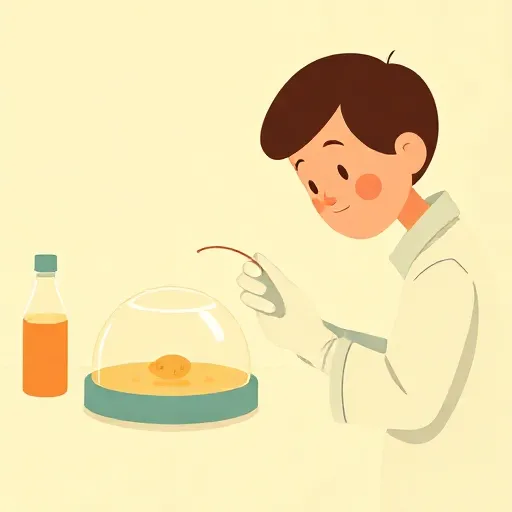
If genetics can help avoid disease, could we also add desirable traits? This is the enhancement debate. Today, a gene-editing tool called CRISPR-Cas9 makes it possible, in theory, to alter DNA in embryos. The ethical stakes are high.
Critics warn against playing designer. Philosopher Michael Sandel (born 1953) argued that striving to create a perfect child turns parenthood into a project of control, rather than accepting a child as a gift. Jürgen Habermas (born 1929) worried that genetically altering a child violates the child’s future freedom—your genome would be chosen before you could ever consent. There’s also the fear of a new social divide: genetic “haves” and “have-nots,” like the dystopia in the film GATTACA.
Defenders of enhancement point out that we already shape children through education and healthcare. Julian Savulescu (born 1963) argued that if a gene edit could increase a child’s chance for a good life, parents might even have a duty to use it. But critics reply that deciding what counts as a “good life” is a value judgment, and Savulescu’s list of desirable traits sounds uncomfortably close to old eugenic wish lists. The debate is far from settled.
Why This Still Matters
You might one day spit into a tube and get a report about your ancestry or health risks. Governments already debate using DNA databases to solve crimes. Scientists continue to push the boundaries of gene editing. The philosophical puzzles aren’t just for dusty textbooks—they’re about who you think you are and what kind of future you want.
Mendel’s garden looked like a simple rulebook. A century of digging deeper has shown that our genes are more like a rich, interactive story, with plot twists from every part of life. Your DNA matters, but you are far more than a string of letters. The hard part is deciding what to do with our power, and what limits we should set. That’s a question no microscope can answer—it’s a question for you.
Think about it
- If a genetic test told you that you had a high chance of developing a serious illness later in life, would you want to know? Why or why not?
- Suppose parents could safely edit a child’s genes to remove a risk of severe disease. Should that be allowed? What about editing for taller height or musical talent?
- Is it fair for someone to judge your potential just by looking at your DNA? Why do you think people still do that?