When You Donate Eggs or Sperm, Do You Become a Parent?
The Day Sam Found Out He Had a Sperm Donor
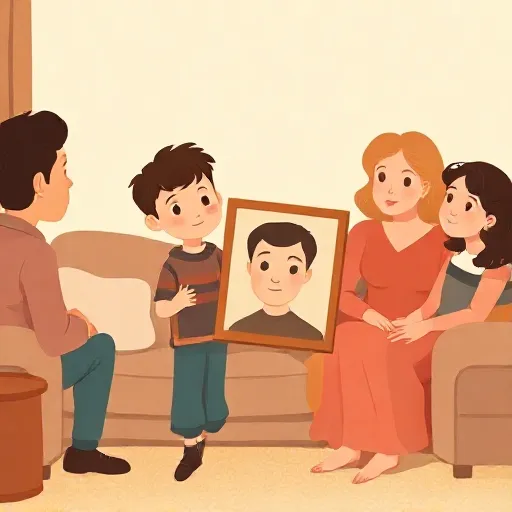
Sam was fourteen when his parents told him the man he called Dad wasn’t his biological father. They had used sperm from a donor. Suddenly Sam had a stranger somewhere in the world who was part of him. Was that stranger his dad? The question isn’t just personal drama — it’s a deep puzzle that philosophers have been studying. When an egg or sperm from a donor helps create a child, does the donor become a parent with any duties?
Many people think that if you cause a child to exist, you have parental responsibilities. This idea is called the causal view of parenthood: creating offspring in the right way gives you obligations. The philosopher James Lindemann Nelson argues that ordinary morality works this way. If your free actions lead to a baby, you’re on the hook, even if you didn’t mean to. He points out that we already hold people responsible for accidental pregnancies. Why should a sperm donor be different? After all, the donor freely chose to provide genetic material, and that material is what caused the child to exist.
David Benatar offers another angle. He thinks reproduction is special. When you exercise reproductive autonomy — the power to decide whether to help create a person — you automatically take on a duty to parent the resulting child, unless there’s a strong reason to let someone else step in. It’s like a default rule: if your actions bring a child into the world, that child is your responsibility until you hand it over responsibly.
Rivka Weinberg compares gametes to hazardous materials. If you own a pet lion, you’re responsible for any harm it causes, no matter how careful you were. She calls this the Hazmat Theory. Because gametes can create people with serious wellbeing at stake, you must care for the children that result, even if you didn’t intend to be a parent.
The “Too Many Parents” Problem
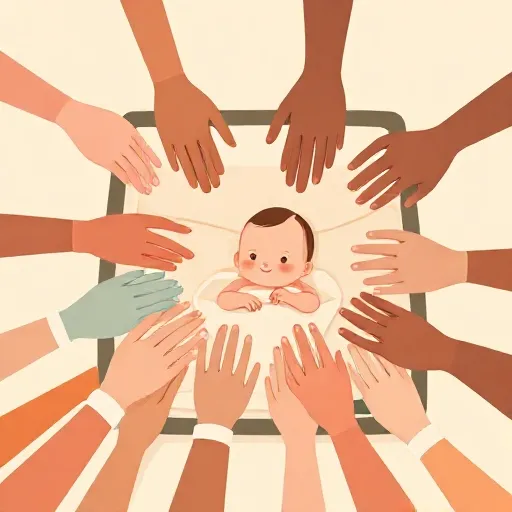
Not everyone agrees that causing a baby is enough to make you a parent. One powerful objection is the too many parents problem. If you trace back all the causes that made a child exist, you end up with an enormous family tree. The doctor who performed the fertilization, the technician who prepared the sperm, even the grandparents who gave birth to the donor — all of these are causally necessary. But we wouldn’t call them parents. Yet if the causal view is true, where do you draw the line?
The philosopher Tim Bayne first raised this worry. If we follow the logic of reproductive autonomy, then a donor’s parents (who made the donor) might have some responsibility for the grandchild they never met. Nelson tried to block this by insisting on causal proximity — only the most direct causes count. But then comes a sharper challenge from Jason Hanna. He notes that medical professionals often have more control and are closer to the moment of creation than the donor who simply gave sperm weeks earlier. If we credit control and proximity, wouldn’t fertility doctors also be parents? To escape this absurdity, many argue that the causal view must be refined. Responsibility doesn’t follow mere causation; only people who act with a certain kind of intention, or who haven’t set up a system where others have already agreed to be the parents, should count.
Can You Hand Off the Job of Being a Parent?
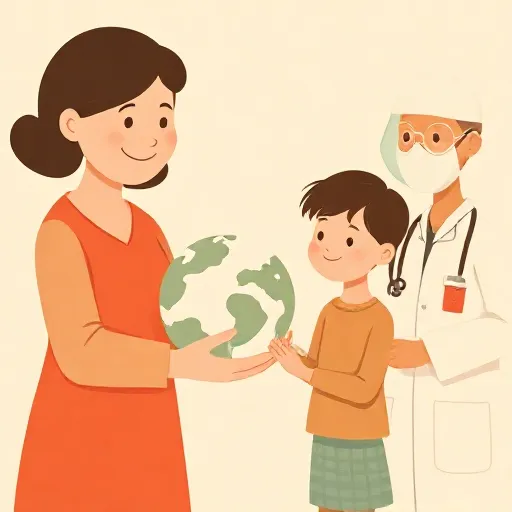
Maybe donors aren’t parents, or if they are, they can simply transfer their responsibilities to the couple who wants a child. After all, we hand over bits of parenting all the time: we let teachers educate, doctors heal, babysitters care. Some philosophers think gamete donation is just a complete handover. As long as the donor has good reason to believe the recipients will raise the child well, the transfer is fine.
But others push back. David Velleman argues that there’s something special about the biological link. He thinks children do better when raised by their genetic relatives, and that severing that tie intentionally is different from adoption in an emergency. Rivka Weinberg adds that some duties can’t be transferred at all. Loving your child, celebrating their achievements, being there at their milestones — those are intimate responsibilities that only a specific person in the right relationship can fulfill. You can’t just pay a stranger to love your child. Meanwhile, philosopher Reuven Brandt notices that what we usually call ‘transfer’ is really delegation. When you send your child to school, you still check that the teacher is doing her job properly. You can’t walk away entirely. So a complete transfer — disappearing after making a donation — might be impossible.
The Right to Know: Why Donor Anonymity Is So Fiercely Debated

Even if a sperm donor isn’t a parent in the full sense, does a child have a right to know who he is? This is the fight over donor anonymity. For decades, sperm and egg donors could remain secret. But a growing number of countries now give donor-conceived people the right to identifying information once they turn 18.
Why? One argument is about psychological harm. Some donor-conceived children experience what’s called genealogical bewilderment — a distressing sense that their identity is incomplete without knowing their genetic origins. They might obsess over what the donor looks like, what talents they inherited, or whether they have half-siblings. Studies show that some suffer real pain. But defenders of anonymity point out that not everyone feels this distress, and when families are open from early on about the use of a donor, children often adjust well. They also argue that the harm is largely socially constructed. If society didn’t treat genetic ties as so important, kids wouldn’t feel so lost. But even if the harm is socially constructed, it still hurts, and banning anonymity might inadvertently reinforce the idea that only biological parents ‘count,’ which could stigmatize adoptive and donor families.
There’s also a claim that people have a fundamental right to know their origins, tied to the right to an identity. But critics counter that you have a right to an identity, not necessarily one built on genetic facts. And some look to the history of adoption: adopted children gained the right to access their birth records, so why not donor-conceived kids? Yet adoption involves a different story — a relinquishment of a child, often with trauma — while gamete donation was never about rejecting a baby.
What All This Means for You

You might never use a sperm donor or be donor-conceived yourself. But this debate matters because it forces us to untangle what makes someone a parent. Is it the act of creating a life? Loving and raising a child? Paying for their food? Sharing their genes? The answers affect real policies — like whether donors should be anonymous, whether donor-conceived kids can sue for information, and how many siblings one donor can create. They also shape our everyday judgments about when someone is being a good father or mother. The next time you see a friend being raised by a single mom, a stepdad, or two moms, you might wonder: what makes a parent real? And that’s a question that doesn’t need egg or sperm donation — it’s about all of us.
Think about it
- Suppose a sperm donor never meets his biological child, but the child wants to find him when she’s 18. Does the donor have a duty to respond? Why or why not?
- If parents adopt a baby and later discover the baby has serious health problems, are they any less its parents than if they had created the baby themselves? What does your answer say about what a parent is?
- Should a man who donates sperm to ten families have more responsibility to those children than a man who donates to only one? Or does the number not matter?