Is That Painting Talking to You? Gadamer’s Big Idea About Art
What Just Happened in the Gallery?
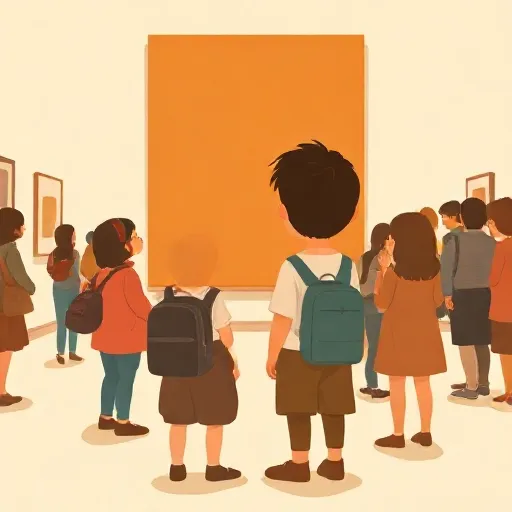
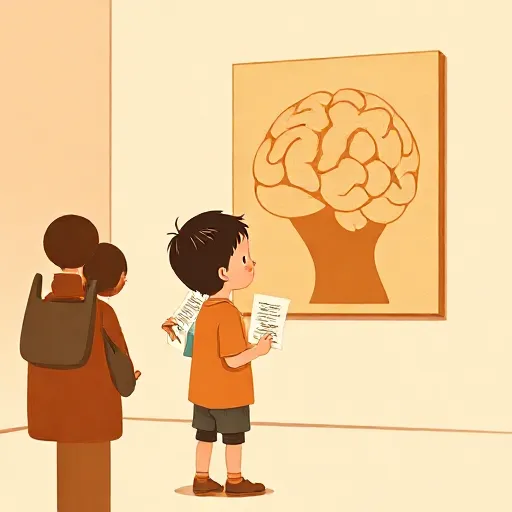
Imagine you’re wandering through a museum, not expecting much, and suddenly a painting stops you cold. You didn’t plan to stop. You weren’t told it was a masterpiece. But something about the colors, the shapes, or the face looking back at you demands your attention. You can’t just move on. It feels like the artwork has something to say, even though it has no voice.
That moment — when art seems to address you directly — was the starting point for the German philosopher Hans-Georg Gadamer (1900–2002). He spent much of his long life thinking about what really happens when we experience a work of art. His answer was surprising. For Gadamer, art isn’t just about private feelings or pleasure. It’s an event of understanding. A powerful artwork, he argued, says something to you — and part of you understands it before you can even put words to it.
Gadamer was a key figure in hermeneutics, the study of interpretation. Hermeneutics asks how we make sense of things: a poem, a law, a historical event. Gadamer insisted that understanding isn’t a cold, scientific process. It’s what happens when you’re drawn into a genuine conversation. And art, he believed, does that better than almost anything else. You don’t stand at a safe distance, enjoying a painting like a piece of candy. Instead, the artwork pulls you in, disturbs your thoughts, and makes you see the world a little differently.
This was a sharp break from an older view, championed by Immanuel Kant (1724–1804), that aesthetic experience is “disinterested” — a pleasure we enjoy for its own sake, separate from knowledge or real life. Gadamer disagreed. He argued that when you encounter art, you’re not escaping reality. You’re entering it more deeply. Meaning, not mere enjoyment, is what’s at stake.
Are You Just a Spectator? No — You’re in the Game
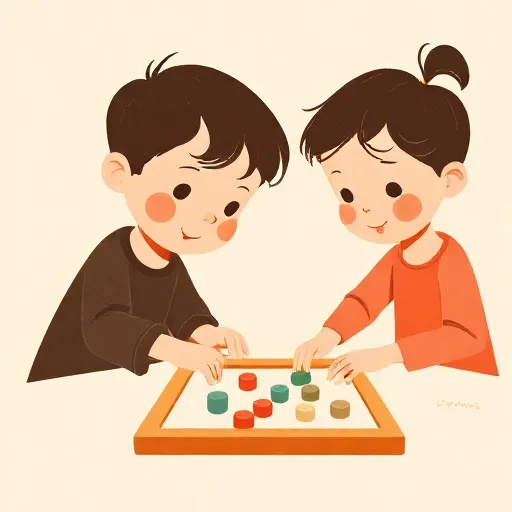
Gadamer had a favorite way to explain this. Think about a game — not a quiet puzzle you solve alone, but a game that sweeps you up as you play. Soccer, chess, a racing video game. When you’re really in it, you’re not just a spectator. The game has its own momentum. It changes you. You react, you make decisions, you feel the pressure of what’s happening, even though you didn’t plan any of it in advance.
For Gadamer, art works the same way. He called it the “play” of art, using the German word Spiel. The artwork isn’t a static object you examine from the outside. It’s more like an event that comes into being only when someone engages with it. The meaning of a song, a film, or a painting isn’t hidden inside it like a nut in a shell. It happens in the back-and-forth between you and the work — and that back-and-forth is always unpredictable. You might hear a piece of music today and feel one thing, then hear it again next year and feel something completely different. The work hasn’t changed, but the play between you and it has.
This idea also challenges the notion that the artist’s intentions are the only thing that matters. Gadamer would say that digging into what a painter was thinking is like studying a chess player’s emotions instead of watching the game itself. What truly counts is what takes place when the work meets a listener, a viewer, or a reader. The work is the playing of it. That means you, the one experiencing it, are not passive. You help bring the artwork into existence by participating in its event.
Art Makes a Community: The Festival Analogy
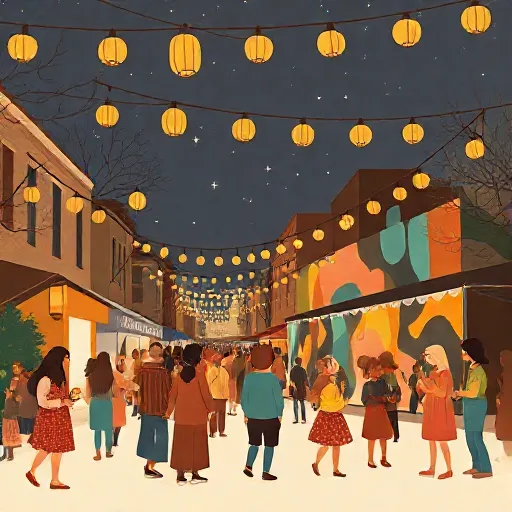
Gadamer didn’t stop with games. He also compared art to a festival. During a festival, everyday time seems to pause. Work duties and personal worries fade. People gather not as competitors but as participants in something shared. The celebration creates a special kind of fullness — what Gadamer called fulfilled time. In that time, we feel connected to others in ways we don’t during the normal rush of the week.
A powerful artwork, he argued, can do the same thing. When a film holds an entire theater in silence or a concert makes strangers sway together, something communal is happening. The artwork isn’t just a private mood-brightener. It can draw you out of your own head and into a bigger world — a world of shared meanings, traditions, and questions that goes far beyond any single person. You might feel it when a song seems to express exactly what you couldn’t say, and later you discover that thousands of others felt the same. That’s the festival-like quality of art: it reveals that you belong to a hermeneutic community — a web of people who make and share sense through language, images, and sounds.
This was another way Gadamer pushed back against the idea that aesthetic experience is purely individual. He didn’t deny that art feels intensely personal. But he insisted that the experience is always nourished by something larger than your private feelings. Even when you’re alone with a book, you’re not really alone. The words carry centuries of conversation with them, and you enter that conversation as soon as you start reading.
Why a Painting Isn’t a Copy: The Symbol and the Subject
One of Gadamer’s most challenging ideas is that art doesn’t represent meaning — it presents it. A road sign represents something: if you see a deer-warning sign, the sign itself is just a pointer. Your mind moves past it to the idea of a deer. But an artwork, Gadamer said, is not a pointer. A great novel or a sculpture doesn’t stand for some meaning hidden behind it. The meaning is in the work, and you can’t fully drag it away into a simple sentence.
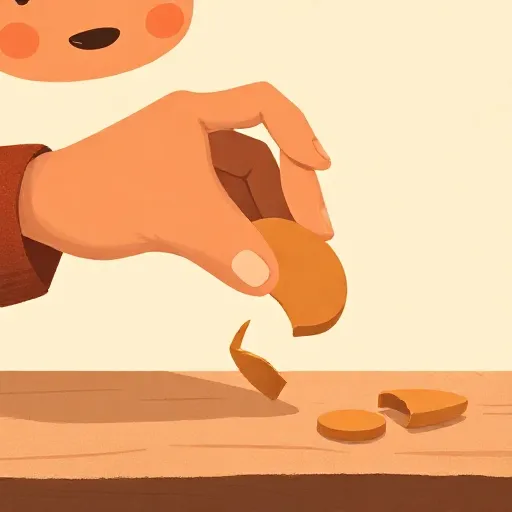
This is where Gadamer used the ancient word symbol. Originally, a symbol (from the Greek symbolon) was a token broken in two. Two friends might each keep a half. Later, when they met again, the pieces would be fitted together as a sign of recognition. The symbol points toward a wholeness that is not yet complete. For Gadamer, artworks are symbolic in this way. They always hold more meaning than any one person can grasp at any one time. They promise something richer than what’s already visible. When you look deeply, you sense a hidden abundance — what he called an excess of meaning.
This doesn’t mean the work is a code to be cracked. Gadamer rejected the idealist idea, found in the philosopher Georg Wilhelm Friedrich Hegel (1770–1831), that art’s job is to get you to a pure idea behind it, after which you can toss the artwork aside. Gadamer said that’s not how it feels. You don’t finish a poem and say, “Got it, never need to read that again.” You return to it because it remains enigmatic. It stands on its own, or as Gadamer put it, it stands-in-itself. It keeps some of its truth in reserve, and that hidden depth is what invites you back.
What This Means When You Hit Play

So why should any of this matter to you, right now? Because almost every day you step into the kind of encounters Gadamer studied. When you hear a track that catches something you didn’t know you were feeling, or when a film lingers in your mind and changes how you see your friends, you’re inside a hermeneutic event. The artwork is addressing you. It’s pulling you into a game that can shift your self-understanding. You are not just a consumer of entertainment; you’re part of an ongoing conversation that stretches back through every artist, critic, and audience that came before you.
Gadamer called this slow, cumulative growth through art Bildung — formation through learning. Each genuine encounter with art leaves a mark on who you are. The questions art asks — about love, loss, courage, unfairness — don’t get answered once and for all. They get re-explored, re-imagined, and deepened. That’s why traditions of art and storytelling matter. Not because they’re dusty museum pieces, but because they hand on the great questions you need to wrestle with yourself. And you get to pass them on in a new voice.
Gadamer’s big bet is that art tells truths, even if those truths can never be fully pinned down in words. The point isn’t to explain art away. It’s to listen more attentively — and to let yourself be changed by what you hear.
Think about it
- Can a song or a film ever tell you a truth you didn’t already know, or do you just feel something and call it “true” because it matches your mood?
- If you and a friend see the same street mural and disagree completely about what it means, does one of you have to be wrong — or can a work hold many true meanings at once?
- Think of a game, a festival, and a symbol you know in your own life. Does one of them help you understand what Gadamer meant by the “play” of art better than the others? Why?