
Can a Robot Feel Pain? The Big Fight Over Functionalism
Ouch! Did That Robot Really Feel It?

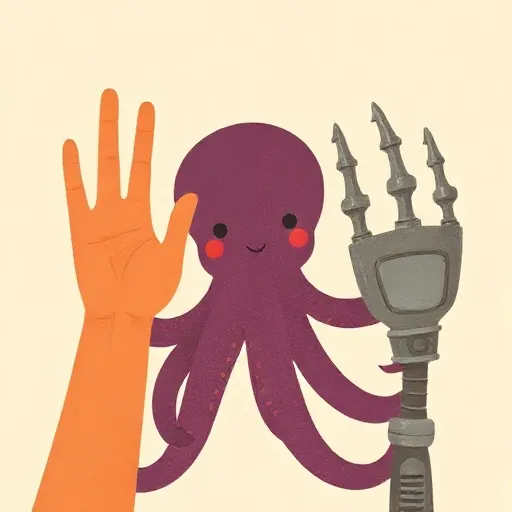
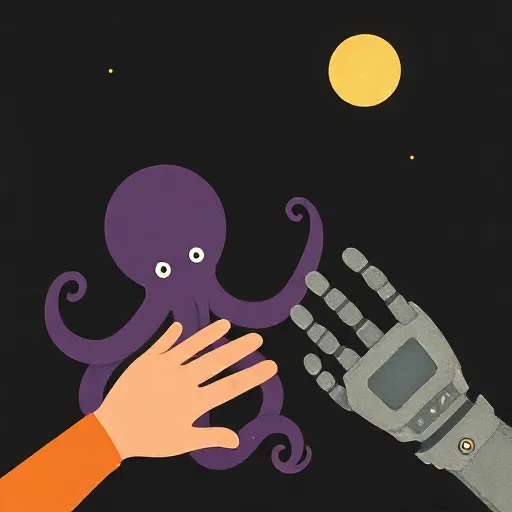
It’s your birthday party, and you’ve just been given a robot named Zeta. While playing, you accidentally step on Zeta’s metal foot. The robot yelps, “Ouch!” and rubs the dent with a look of pain. Your friend laughs. “It’s just a machine. It can’t really feel anything.” But you’re not so sure. How could you ever find out?
This question gets to the heart of a major theory in the philosophy of mind called functionalism. Functionalists argue that what makes something a mental state—like pain, a belief, or a desire—isn’t what it’s made of, but what it does. In other words, a mental state is defined by its function, the role it plays in a system’s thinking. If Zeta’s internal parts do exactly the same job as the parts inside your brain when you feel pain, then functionalism says Zeta really does feel pain. No matter that one is flesh and the other is metal.
The Brain-or-Not Game

Functionalists love to imagine creatures very different from us. Picture a Martian whose brain is made of silicon jelly, not neurons. Now imagine this Martian steps on a sharp rock, thinks “Something is wrong with my foot!”, wants the feeling to stop, gets anxious, and hops away while moaning. The internal process is chemically different from the one in your head, but it plays exactly the same role in the Martian’s thinking and behavior.
According to functionalism, the Martian is in pain—genuinely, not just pretending. This idea is called multiple realizability: the same mental state can be realized, or brought to life, by many different physical materials. The same goes for androids, aliens, and maybe even computers. The famous mathematician Alan Turing (1912–1954) proposed a test: if you can have a conversation with a hidden computer and can’t tell it apart from a human, you should treat it as thinking. Philosopher Hilary Putnam (1926–2016) took that further, comparing the mind to a computer program. Just like a program, your mental states don’t care what hardware runs them.
This view made functionalism hugely popular. Unlike older theories that said a pain just is a specific brain cell firing, functionalism opens the door to minds in all sorts of bodies. It’s more inclusive and less “species chauvinistic”—a phrase coined by philosopher Ned Block (born 1942) to poke fun at theories that only humans or creatures like us could think.
The Recipe for Pain
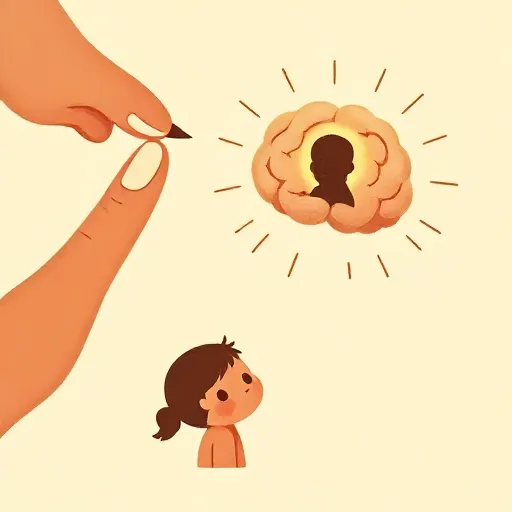
So how exactly do you define a mental state by what it does? Functionalists write something like a recipe. For pain, the recipe goes like this: pain is the state that tends to be caused by bodily injury. It also tends to produce the belief that something is wrong, the desire to be free of that state, and a feeling of anxiety. And when there’s no stronger desire overriding it, pain causes wincing or moaning.
Any creature—human, android, or Martian—that has an internal state that satisfies this whole recipe is in pain, according to the theory. You don’t need to specify what the state is physically; you just say, “There is some state X that does these things.” Philosopher David Lewis (1941–2001) refined this method. He suggested we can take all the everyday truths we know about mental states—like “pain makes you want it to stop”—and write them as a giant “if-then” story. Replace words like “pain” and “belief” with variables, and you get a functional definition of the whole mind at once.
Some functionalists, called analytic functionalists, stick to common-sense platitudes that everyone knows. Others, called psychofunctionalists, want to plug in discoveries from scientific psychology—things we learn in a lab about how memory, perception, and emotions actually work. Both agree on the core idea: a mind is what a mind does.
The Invisible Swap: Red for Green

Functionalism sounds neat, but can it capture the most mysterious part of experience—the way things feel to you? Philosophers call the felt quality of experience qualia (singular: quale). It’s the “what it’s like” to taste chocolate, see the color red, or stub your toe. Many philosophers think functionalism misses qualia entirely.
Imagine a strange thought experiment. Suppose that what you see as red, I actually see as green, and what you see as green, I see as red. But because we’ve both learned to call the sky “blue” and stop signs “red,” we act exactly the same. We both say “That apple is red,” even though your inner experience is my green. Functionally, we’re identical: the causal role of our color experiences is the same. Yet our qualia would be swapped—an inverted spectrum. If such a swap is possible, then functionalism leaves out something essential about what color experiences really are.
This worry goes back centuries, but philosopher Ned Block and others sharpened it in the 20th century. Even if our actual brains might not permit a perfect red-green swap because of how color vision connects to emotion and memory, it seems at least conceivable that some creature could have swapped qualia while behaving exactly like us. That possibility troubles functionalists.
Can a Whole Country Think?

Block went further. He asked us to imagine the entire population of China working like the neurons in a brain. Every person passes messages to others using radios, matching the pattern of signals inside your head. The whole country together plays the same functional role as a single human mind. When the system receives a “toe-stubbing” input, millions of people send messages that eventually produce a “wincing” output. The recipe for pain is perfectly satisfied.
Would the nation of China feel a toothache? Block and many others say no. The individual people already have their own minds; the giant system, they argue, would be a hollow puppet show with no inner life at all. If that’s right, then functional organization alone isn’t enough for conscious experience. This is called the absent qualia objection.
David Chalmers (born 1966) pushed the argument even further with his idea of philosophical zombies. A zombie, in his sense, is a molecule-for-molecule duplicate of you that acts exactly like you but has no inner experience—no qualia. If you can clearly imagine such a zombie, he argued, then consciousness must be something more than function or physical stuff. Other philosophers like Frank Jackson (born 1943) and Thomas Nagel (born 1937) added the knowledge argument: imagine a scientist who knows every physical and functional fact about color vision but has been colorblind from birth. When she finally sees red, she learns something new—what it’s like. That “what it’s like,” they say, is missing from any purely functional description.
Functionalists have fought back. Some argue that if a system truly matched our functional organization down to the last detail, it would have qualia—and our gut feeling that it doesn’t is just a failure of imagination. Others, like Daniel Dennett (born 1942), suggest that qualia might be a confused idea we should abandon altogether. The debate remains fierce and unsettled.
Why We Still Argue About Robot Feelings

This isn’t just a dusty academic debate. It’s about the virtual assistant in your living room, the characters in your favorite video game, and the animal at the shelter. If advanced AI one day passes every functional test for having emotions, does it deserve moral consideration? If functionalism is right, harming it could be like kicking a dog. But if the qualia critics are right, even perfect imitation might be empty inside—a singing puppet with no one home.
The puzzle also cuts closer to your own life. How do you know your friend actually feels happy when she smiles? You can only observe her behavior and her functional role. If functionalism can’t fully explain what it’s like to be her, then we’re left with a deep mystery about other minds, not just robot minds. The functionalist approach remains one of the most influential attempts to crack that mystery, but it hasn’t silenced the critics. So next time you hear a robot yelp, you’ll know you’re standing on the edge of a question that the smartest thinkers haven’t settled.
Think about it
- If a computer program could hold a conversation so realistic that you truly believed it was a human, would you treat it as a friend with real feelings? What might change your mind?
- Imagine your color experiences were secretly swapped with your friend’s, but you both still call strawberries “red” and grass “green.” How could you ever discover the swap? If you can’t, does the difference really matter?
- A character in a video game cries out when injured and follows every rule of pain behavior. Do you think the character actually suffers? What test would convince you one way or the other?