Can an Octopus, a Robot, and You All Feel the Same Pain?
What if an Octopus Feels Pain Just Like You?
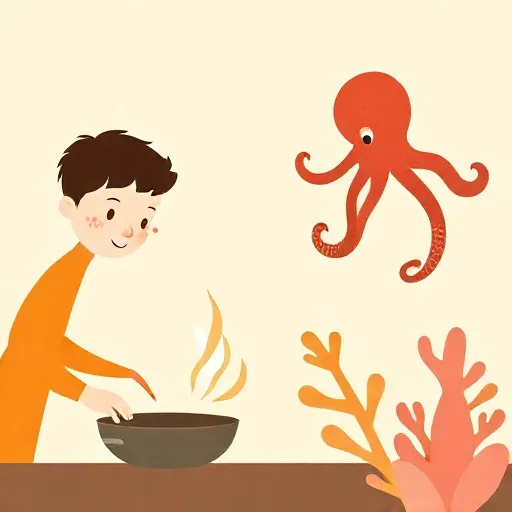
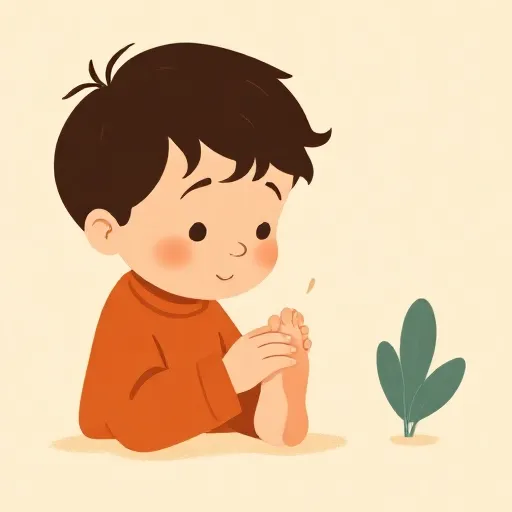
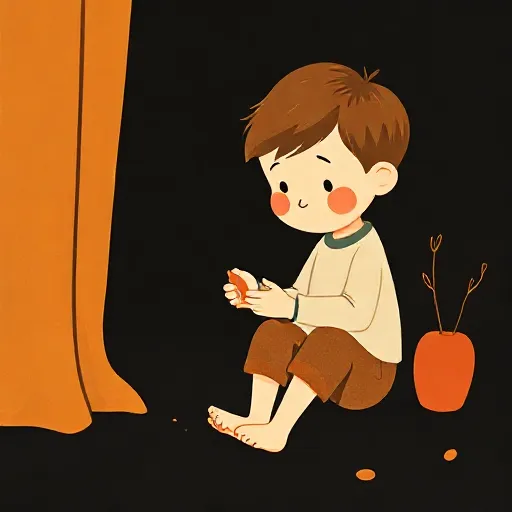
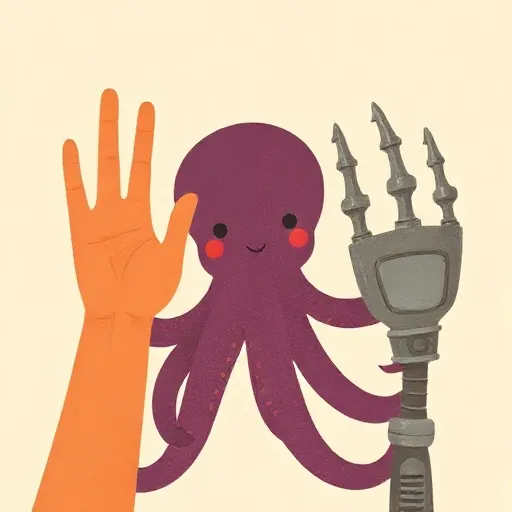
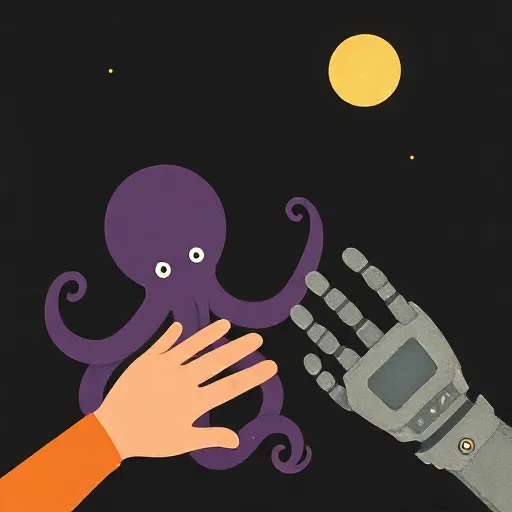
You stub your toe on a chair and shout. An octopus stubs its tentacle on a sharp rock and jets away. A robot’s sensor detects damage to its gripper, and it pulls back. All three of you seem to be in pain. But is the same kind of thing going on inside each of you? In the 1960s, many scientists and philosophers thought the answer was simple: pain just is a certain kind of brain state. The philosopher Hilary Putnam (1926–2016) challenged that view with an idea that has been shaking up philosophy of mind ever since: multiple realizability.
The Brain-State Theory vs. Many Ways to Hurt
The position Putnam attacked is called type-identity theory. It says that each type of mental state — pain, believing that Paris is the capital of France, wanting ice cream — is identical to a specific type of physical state in the brain. Just as water is identical to H₂O, pain might be identical to C-fibers firing in your cortex. If that is true, then every creature that feels pain must have exactly that physical state.
Putnam found that wildly unlikely. Think about the animal kingdom: humans, monkeys, dogs, birds, octopuses, and maybe even snails all seem to feel pain. Yet their nervous systems look completely different. A dog’s brain is not a tiny human brain; an octopus has neurons in its arms. There is no single “physical-chemical kind” that shows up in every pain-feeler. On top of that, Putnam asked us to imagine a silicon-based android or a Martian whose brain runs on green slime. If these beings can feel pain, they lack any brain state that matches ours. So pain cannot be identical to one specific physical type. This is the multiple realizability contention: the same mental kind can be realized by many distinct physical kinds.
Tokens and Types: A Subtle Distinction
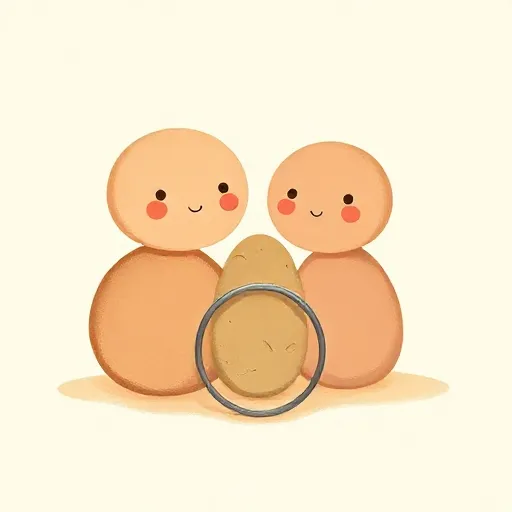
Philosophers soon sharpened Putnam’s point with a distinction between tokens and types. Consider the string of numbers: 1 1 2. There are two types of numeral (1 and 2), but three tokens (two tokens of type 1, one of type 2). A type-identity theory of mind says that every token of the mental type “pain” must be a token of the same physical type. But Jerry Fodor (1935–2017) argued that only token physicalism is safe: each individual occurrence of pain is some physical event or other, but not necessarily the same kind of physical event every time. Your pain and an octopus’s pain might be perfectly real pains, even if their physical realizers are as different as a bicycle and a submarine. Multiple realizability blocks type-identity but leaves token physicalism standing.
Functionalism: What Pain Does, Not What It’s Made Of
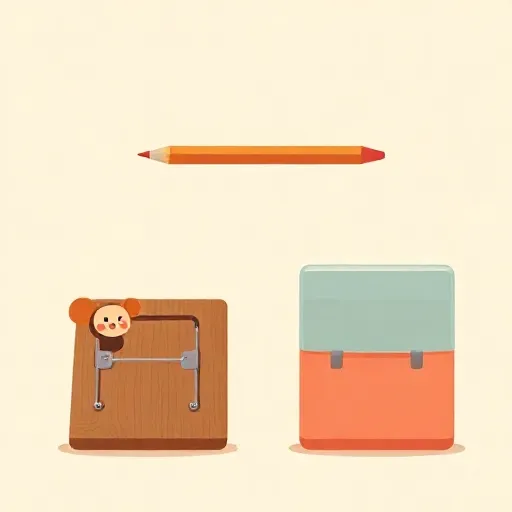
If pain can’t be pinned to one physical kind, then what makes something pain? Putnam and others proposed functionalism. A mental state is defined by its causal role — the inputs that cause it, the outputs it produces, and its relationship to other mental states. Pain, for example, is typically caused by tissue damage, causes you to believe you are hurting, makes you want to stop the pain, and leads to behaviors like crying or rubbing the sore spot. Any internal state that plays this functional role counts as pain, whether it’s made of neurons, silicon chips, or green slime. This fits nicely with ordinary objects: a mousetrap is anything that traps mice when triggered, no matter if it is wood, metal, or plastic. Functionalism seemed to be exactly the right level of abstraction to handle multiple realizability.
But Wait — Could Pain Still Be One Kind After All?
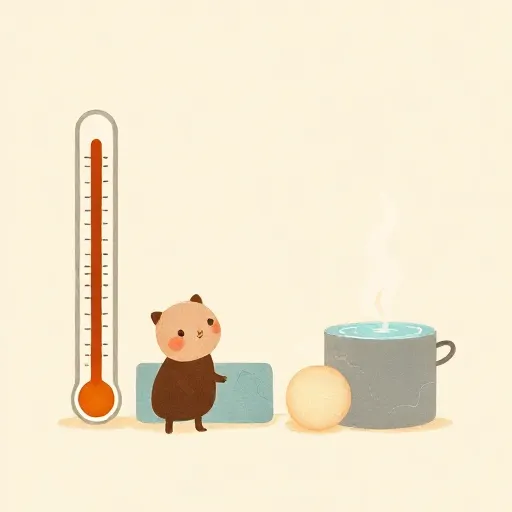
Not everyone was convinced. The philosopher David Lewis (1941–2001) showed that identity claims can be domain-specific. Saying “the winning lottery number is 03” and “the winning lottery number is 61” sounds contradictory — until you add “this week” to the first and “last week” to the second. Likewise, pain could be C-fiber firing in humans, but something else entirely in octopuses, as long as we relativize the identity to a species or a type of nervous system. Real science offers a famous example: temperature. In a gas, temperature is mean molecular kinetic energy. In a solid, it is mean maximal molecular kinetic energy (because molecules are locked in a lattice). In a plasma, it is something else again. Yet thermodynamics reduced temperature to these different physical underpinnings without losing its unity. So maybe psychological kinds, too, can be reduced to physical ones, just not across all creatures at once.
The Brain Doesn’t Vary as Much as You Think
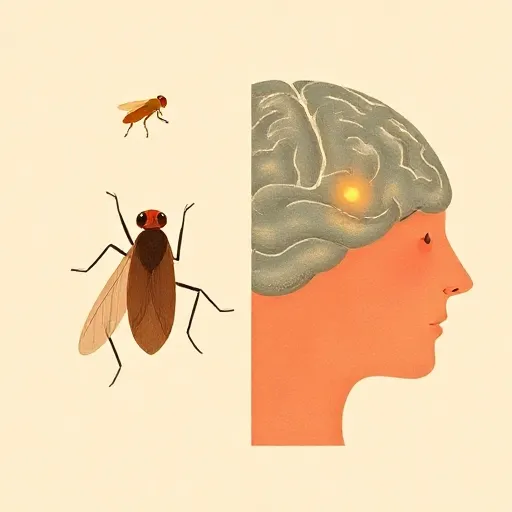
In recent decades, neuroscientists have discovered that many basic brain mechanisms are remarkably conserved across species. The philosopher John Bickle points to memory consolidation — the process that turns fragile short-term memories into stable long-term ones. Experiments with fruit flies, sea slugs, and mice all reveal the same molecular signaling pathway: a cascade involving a molecule called cyclic AMP, a protein called CREB, and other players. Tweak one part of this cascade in any of these animals, and you block long-term memory formation while leaving short-term memory intact. This sort of deep unity, Bickle argues, follows from principles of molecular evolution: evolution changes protein sequences very slowly in parts that are crucial for survival. If mental kinds are rooted in such ancient, conserved mechanisms, then the brain hardware might not be as wildly different as Putnam imagined. Multiple realizability could be rarer than early functionalists thought.
Why It Matters: Could a Robot Genuinely Feel?
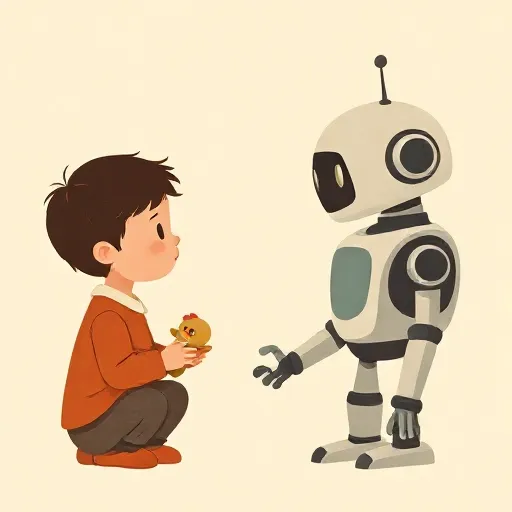
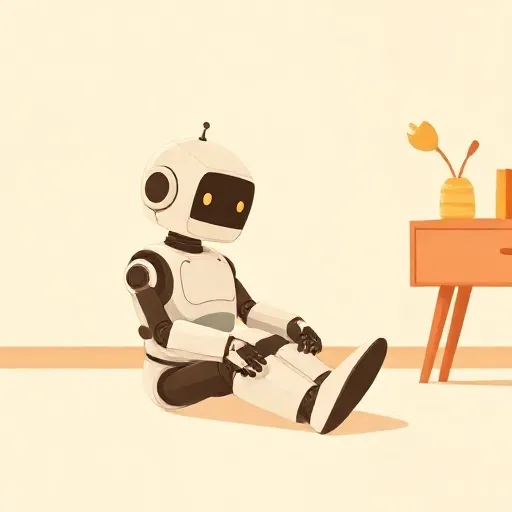
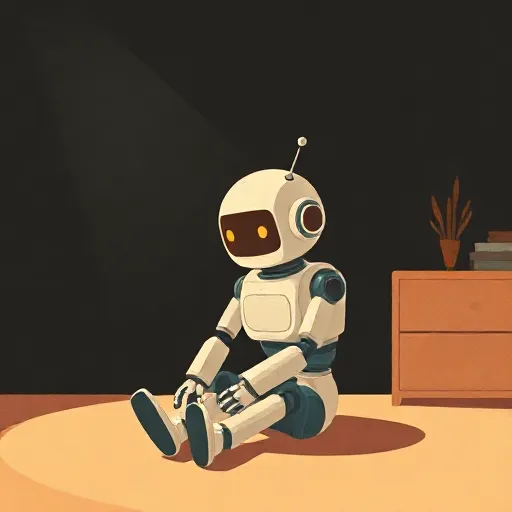
The debate about multiple realizability is not just a puzzle for scientists. It touches something you might have wondered about yourself: could a smart enough machine actually think or feel? If mental states can be realized in many kinds of physical stuff, then a computer might someday have genuine pain or joy. But if mental kinds are tightly tied to the specific biology of brains, then a robot that says “ouch” is only faking it. These questions also affect how we treat animals. If an octopus’s pain is realized differently from ours but is still real, it demands our moral attention. Philosophers are still arguing about the evidence — and that means your own hunch about a robot friend or a squirming octopus is part of a live, unsettled question. What counts as a real mind is one of the deepest mysteries we have.
Think about it
- If a scientist built a perfect computer simulation of a human brain, and it started claiming to feel sad, would you believe it? Why or why not?
- Imagine discovering that every time you feel happy, a different set of brain cells lights up in your own head — never the same pattern twice. Would that mean happiness isn’t real, or just that your brain is flexible?
- If an octopus feels pain in a completely different physical way from you, should we give it the same kind of protection from harm that we give to a human?