Can a Brain Process Feel Like a Toothache?
A bike ride you don’t remember
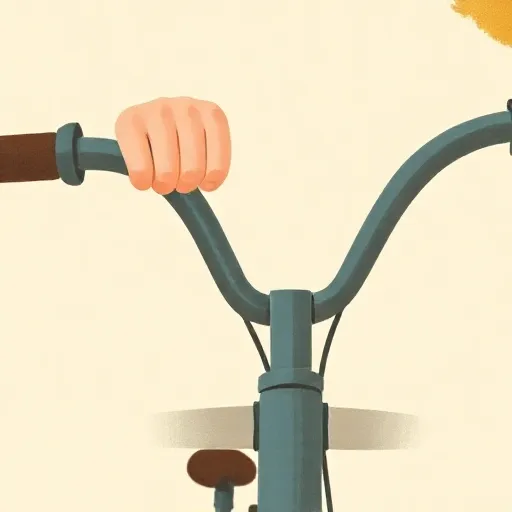
Suppose you are cycling home from school. You cross a bridge, swerve around a puddle, and wave at a friend—yet when you arrive, you cannot recall doing any of it. In one sense you were totally aware: you saw the road, balanced the bike, and avoided crashing. But in another sense you were on “autopilot.” Philosophers call this ordinary, unreflective awareness consciousness in the thin sense.
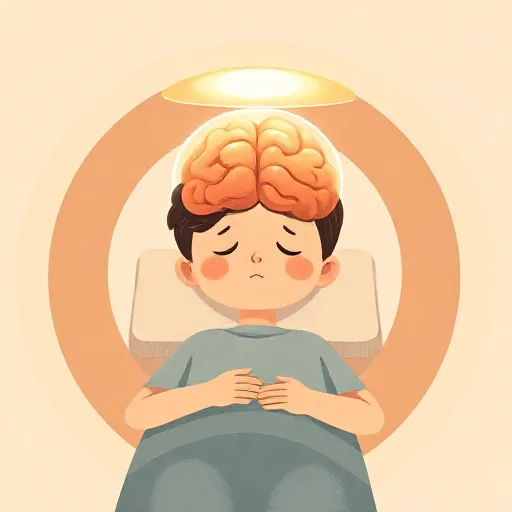
But now think of the times when you are fully conscious—when you feel a sharp toothache, notice the bright green of a leaf, or suddenly snap out of a daydream. That kind of experience feels private, immediate, and somehow more than just whirring gears. Could it be that this rich, felt consciousness is actually nothing over and above a process in your brain? That is exactly what the identity theory claims.
The identity theory says that mental states—sensations, pains, seeing colours—are identical to brain states. When you have a toothache, a certain bundle of neurons fires, and that firing is the toothache. The idea sounds simple, but it upended centuries of thinking about the mind. It was first defended in the 1950s by a British philosopher named U. T. Place (1924–2000), and soon sharpened by J. J. C. Smart (1920–2012) and Herbert Feigl (1902–1988). Their arguments still shape how scientists and philosophers think about who you are.
Lightning, packing cases, and brain processes
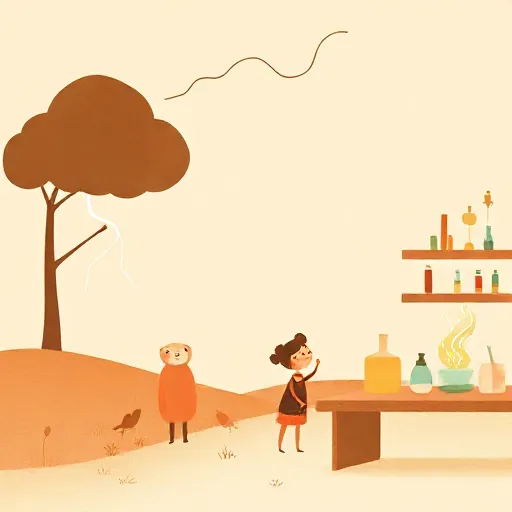
Place began with a homely example. Suppose you point to a piece of furniture and say, “This table is an old packing case.” The words table and old packing case do not mean the same thing—you discover one by looking, the other by knowing its history—yet they refer to the very same object. Place then asked: could the same be true of consciousness and the brain? He compared the idea that consciousness is a process in the brain to the fact that lightning is a motion of electric charges. We learn that a flash in the sky is lightning by seeing it; we learn that it is a rapid movement of electric charges through experiments and theory. Nothing stops the flash and the discharge from being identical, even though we talk about them in different ways.
Smart and Feigl put this in terms of meaning and reference. The phrase “the bright planet seen in the morning” and “the bright planet seen in the evening” both refer to Venus, even though you might not realise they pick out the same thing. Likewise, the words sensation and brain process differ in meaning—one sounds private and felt, the other sounds biological and public—but identity theorists argue they can refer to exactly the same chunk of reality. And crucially, the identity is contingent: we had to discover it, just as ancient thinkers once believed the brain was only a blood-cooling organ. You cannot figure out that sensations are brain processes just by sitting in an armchair and thinking hard.
Still, one worry pops up immediately. When you report “I have a toothache,” you seem to be making a statement that is practically impossible for you to get wrong. But any report about your brain—say, “neuron cluster N42 is firing”—could easily be mistaken. If the two are identical, how can one be so certain and the other so uncertain? Place replied that a sensation report is a low‑claim statement. Saying “It looks to me that there is a bent oar” makes a much smaller claim than “I see a bent oar.” Because the sensation report is cautious, it is much harder to refute. That, not some mysterious inner theatre, explains why we rarely go wrong about our own feelings.
The problem of the ‘what it’s like’

Even if a toothache is a brain process, you might still object: a brain process doesn’t feel like anything. A neuroscientist could describe every firing pattern, yet that description would miss the sharp, aching quality of the pain itself. This felt quality of experience is what philosophers call qualia (singular quale). Doesn’t qualia show that some part of the mind must be non‑physical?
Identity theorists tackle this worry with two moves. First, they warn against what Place called the phenomenological fallacy: the mistake of thinking that when you describe how things look, sound, or feel to you, you are describing literal objects on a private cinema screen inside your head. If you see a yellow, green, and purple striped flag, you might think there is a yellow‑green‑purple image floating in your mind. But, Place argued, there is no such ghostly picture—only your brain doing the same sort of thing it does when you look at a real striped flag. To say “I have a green after‑image” is really to say “we are having the sort of experience which we normally have when, and which we have learned to described as, looking at a green patch of light.” The after‑image itself is not green, and nothing green needs to be inside your skull.
Second, Smart introduced a clever linguistic tool: topic‑neutral descriptions. Words like “something is going on,” “typically caused by,” or “similar to what happens when” are neutral between physical and non‑physical accounts. For example: that seeing a yellowish‑orange after‑image involves something going on which is like what happens when one has one’s eyes open, is awake, and an orange is illuminated in good light This sentence does not smuggle in any claim that the process is physical or non‑physical—it only describes the causal pattern. So identity theorists can accept that there is something it is like to be in pain, but they insist that the “what it’s like” is fully captured by a topic‑neutral story about causes, effects, and similarities. What makes the experience the experience is its causal role—the way it is typically triggered by damage and typically leads to wincing and saying “ouch.” If a brain state plays exactly that role, then that brain state is the pain. The philosophers David Lewis (1941–2001) and D. M. Armstrong (1926–2014) developed this causal‑role approach into a detailed defence of the identity theory.
Could a zombie have your brain?

Identity theories face stiffer challenges from two modern philosophers. Saul Kripke (1940–2022) argued that if pain really is a certain brain state, then in every possible world that brain state must be felt as pain. But we can easily imagine a situation where the brain state occurs without any feeling at all. Kripke claimed this shows the identity cannot be contingent—and since it clearly isn’t necessary, the identity theory must be false.
Identity theorists reply by questioning what we are imagining. Suppose “pain” just means having a pain, and having a pain is being in a state with a certain causal profile. If you imagine someone with the exact brain state but no feeling, you are imagining away the very thing that makes the state count as pain—its typical causes and effects, including reports and reactions. The so‑called zombie scenario may be sneaking in a dualist assumption from the start.
David Chalmers (born 1966) pushes harder. He asks us to imagine a philosophical zombie: a creature physically identical to you, with the same brain and behaviour, yet completely lacking conscious experience. If such a zombie is even conceivable, then consciousness cannot be a physical process. Chalmers further proposes that qualia might be basic ingredients of the universe, made of proto‑qualia that combine into full experiences, connected to physics by fundamental laws—a position that leads toward panpsychism (the idea that everything has some tiny spark of mind).
Identity theorists counter that zombies are not genuinely conceivable. If you describe a being that shares all your physical makeup—including the brain’s own inner monitoring systems—you have already described a conscious being. The feeling of “ineffable” consciousness, they suggest, is really just the brain proprioceiving (sensing) its own state, much as you can feel the angle of your elbow with your eyes shut. One part of the brain monitors another, and that higher‑order awareness is what full consciousness feels like. There is no extra glowing stuff.
Why, then, does consciousness seem so mysterious? Perhaps because the monitoring process itself is not usually monitored—so the final step in the chain feels ungraspable. It is the same reason the word “I” can feel elusive when you try to pin it down. If that story is correct, then a robot that scans its own inner processes could genuinely be conscious. The zombie would be nothing but a misunderstanding.
So what? Robots, responsibility, and you
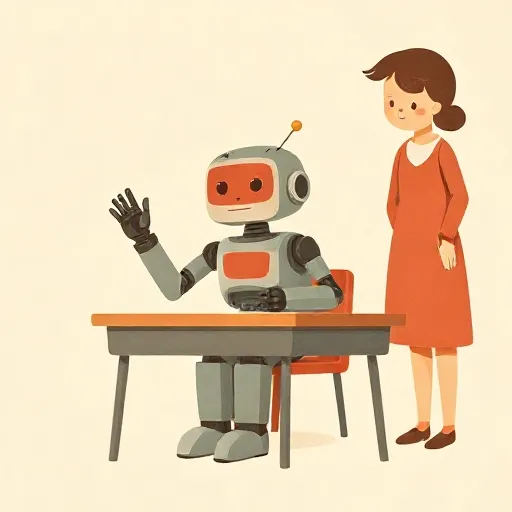
You might wonder why a debate about brains and zombies matters to someone who just wants to know what it means to be a person. The identity theory has real‑world weight. If your feelings are identical to brain states, then every emotion and decision is, in principle, predictable by a powerful enough neuroscience. That raises deep questions about free will and responsibility: if a scientist could predict that you will steal a biscuit before you even reach for it, are you still to blame? The theory also reshapes how we think about animals. A dog’s whimper after a vet’s injection might involve brain processes very like yours—token identities of the same causal type. If you accept the identity theory, the moral line between humans and other creatures becomes blurrier.
And what about artificial intelligence? If a computer can be wired to scan its own processes the way your brain does, then on the identity theory there is no magic ingredient missing. A future robot might genuinely feel a toothache—and that could change how we design and treat intelligent machines.
The identity theory does not force you to accept any of these conclusions; it is still a live, disputed position. But it forces you to ask: when you kick a football, groan over a maths test, or grin at a joke, is there something more going on than the dance of billions of cells? For the identity theorist, the dance is the whole show—and that show is already more marvellous than any ghostly cinema.
Think about it
- If a scientist could predict every choice you will ever make by reading your brain, would it still be fair to punish people for bad choices?
- Suppose a robot acts exactly like your best friend—laughs, tells stories, comforts you when you are sad—but you are told it has “no inner feelings.” Could you still treat it as a friend?
- When you listen to your favourite song, does it make sense to say the chills on your skin are just a pattern of firing neurons? Or does that leave something out?