The Slave Who Demanded to Be Seen as a Human Being: Frederick Douglass
The Day Frederick Fought Back
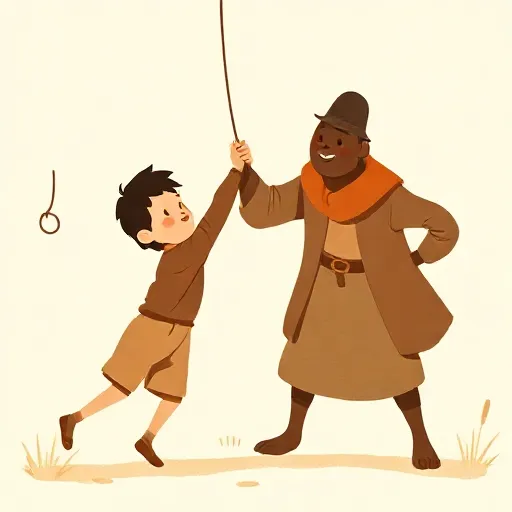
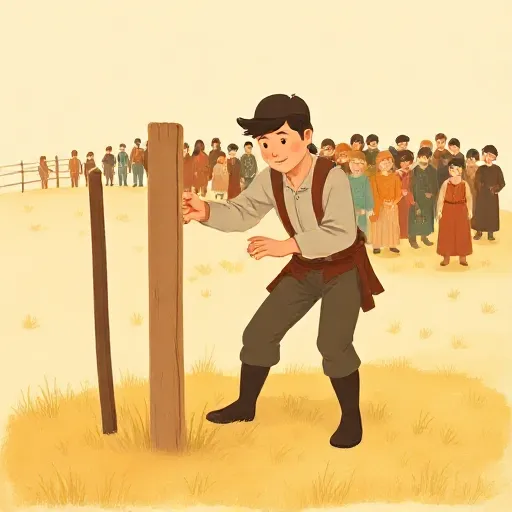
In the summer of 1833, a sixteen-year-old named Frederick Bailey stood in a dusty farmyard on Maryland’s Eastern Shore. The man facing him was Edward Covey, a notorious “slave-breaker” hired to crush the spirits of rebellious young slaves with beatings and humiliation. For six months, Covey had whipped Frederick nearly every week. But this time, when Covey grabbed a stick and swung, Frederick fought back. For two hours they wrestled, and Frederick refused to surrender. He later wrote, “I was nothing before; I WAS A MAN NOW.”
That fight was the turning point of Frederick’s life. He would later escape slavery, take the new surname Douglass, and become one of the most powerful voices against slavery in American history. But his ideas went far beyond just saying slavery is bad. He built a whole philosophy about what it means to be a human being, what rights everyone has, and why sometimes you have to fight to defend your dignity.
“A Human Being, Not a Horse”: Slavery’s Deepest Wrong
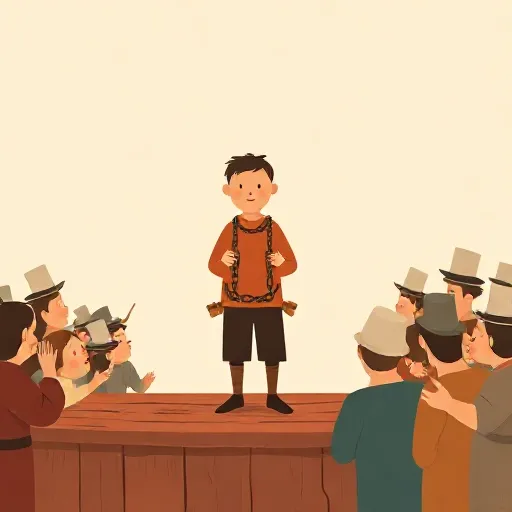
What exactly made slavery so evil? Many people in Douglass’s time said it was cruel or un-Christian. Douglass agreed, but he dug deeper. In a speech in 1846, he gave a definition that cut to the heart of the matter: A slave, he said, “is as much a piece of property as a horse.” The law treated enslaved people not as persons with their own minds, conscience, and feelings, but as things to be bought, sold, and used. When you turn a human being into a commodity — an object tradeable in the market — you strip away everything that makes them human.
This idea horrified Douglass because he believed in natural rights. Natural rights are freedoms and protections that belong to every person simply because they are human — not because a government gives them. These rights come from natural law, the idea that reason and the world’s design tell us what is morally right. Douglass, like the American founders, believed that life, liberty, and the pursuit of happiness were natural rights. But slavery smashed those rights by treating Black people as if they were beasts, not humans entitled to freedom.
To defend slavery, some apologists claimed that Black people really were subhuman, or at least so inferior that they needed white masters to care for them. Douglass mocked this. If Black people were beasts, why were there special laws to control them? Why did slaveholders fear them learning to read? Why did they work to convert them to Christianity but forbid them to gather for worship? The whole system, Douglass argued, proved that slaveholders knew full well their slaves were human. Slavery was a monstrous lie built on guilty knowledge.
Douglass drew on both reason and religion. He was a devout Protestant and believed the Bible taught that God had “made of one blood all nations of men.” He insisted on the universal human brotherhood — the idea that all people, no matter their color, are one human family and deserve equal moral respect. This wasn’t just a nice phrase; it was a thunderclap against the rising “science” of his day that tried to classify races as separate species. For Douglass, the unity of humanity was non-negotiable.
“If I Die, I Die”: Violence, Self-Defense, and Dignity
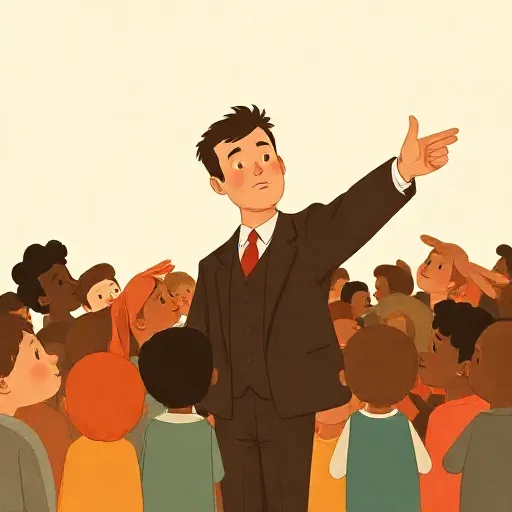
Back to that farmyard fight with Covey. Douglass’s refusal to be beaten wasn’t just a moment of teenage rage. For him, it was a philosophical act. When a human being is pushed into a corner and denied all rights, what is left? The duty to assert your own dignity, even with force.
Douglass did not think violence was always the answer. He first tried to win freedom through speech and political action. He learned to read, escaped north, and became a brilliant orator. But as the United States lurched toward civil war, he became convinced that slavery would not end without force. He defended the right of self-defense for enslaved people and their allies. He admired John Brown’s idealistic raid on Harper’s Ferry (though he thought the plan itself was doomed) and called for the Union army to recruit Black soldiers. For Douglass, if the law refused to recognize your humanity, you had a moral right to resist oppression with your fists or a rifle.
This stance grew out of his understanding of dignity. Look again at his words after the Covey fight: “A man, without force, is without the essential dignity of humanity.” By “force” he didn’t mean bullying; he meant the will and ability to stand up for yourself, to refuse to be reduced to a helpless object. Dignity, for Douglass, is a quality every human possesses innately — you are born with it. But he also believed it is something you must practice and defend. If you are trampled and you never push back, something vital is wiped away. That’s why the fight with Covey felt like a “glorious resurrection.”
This does not mean Douglass thought every enslaved person had to fight physically to be worthy of respect. He knew that circumstances made that impossible or suicidal for many. His point was about the moral crash that happens when an entire society treats a group of people as non-persons. That crime requires a response, and the response must include an active, unapologetic claim to one’s own full humanity.
Words as Weapons: Free Speech and the Constitution
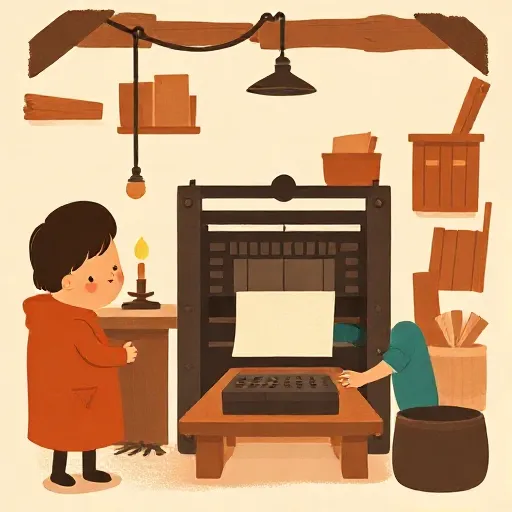
Fighting with words was just as important to Douglass as physical resistance. He cherished free speech as the engine of moral progress. After escaping slavery, he risked capture every time he stepped onto a stage to tell his story. He eventually started his own newspaper, The North Star. When a mob violently disrupted an abolitionist meeting in Boston in 1860, Douglass gave a speech defending free speech that still rings true: silencing someone “violates the right of the hearer as well as those of the speaker.” If you cannot freely speak your mind, every person is harmed, because nobody gets to hear your ideas and decide for themselves.
This passion for open debate shaped his view of the U.S. Constitution. At first, Douglass followed his mentor William Lloyd Garrison in believing the Constitution was a rotten pro-slavery document, and that free states should separate from the slaveholding South. But in 1851 he broke with Garrison. He now argued that the Constitution, read through the ideals of the Declaration of Independence and natural law, was actually an anti-slavery document. The founders, he said, had planted promises of liberty and equality that had to be fulfilled over time. The Fourth of July, he told a shocked audience in 1852, was a day of hypocrisy for the enslaved, but its principles were true. The nation just needed to live up to them.
This optimistic view led Douglass to an even bolder vision: composite nationality. He believed America should be a place where people of all races and backgrounds mix freely, intermarry, and blend into a new, richer people. He called for a nation where “Indian and Celt, negro and Saxon, Latin and Teuton” all share the same liberty and patriotism. Many found this shocking; racism was deep. But Douglass trusted that history was moving toward greater freedom, and that his job was to push it along.
Why Douglass Still Challenges Us Today
Frederick Douglass died in 1895, after decades of fighting not just for the abolition of slavery but for women’s suffrage, equal rights, and an end to the brutal convict-lease system and lynchings of Black Americans. He never stopped agitating. His philosophy leaves us with tough questions that don’t have neat answers.
When is it right to use force to defend your dignity? Douglass thought that sometimes it is not only permitted but required. But where is the line between self-defense and reckless violence? He didn’t fully answer that, and we still argue about it today — from schoolyard fights to global protests.
And what about his dream of a “composite” America, where all races blend into one? Later Black leaders, like W.E.B. Du Bois, challenged this vision. They argued that Black Americans had a distinct culture and identity worth preserving, not dissolving. The tension between integration and cultural distinctiveness remains a live debate.
Douglass’s central conviction, though, was simple and fierce: every person has inviolable worth. No power, no law, no custom can take that away. But it is not enough to just feel it — you have to live it, and sometimes fight for it. A twelve-year-old in a school hallway, standing up for a friend being bullied; a community organizing against unfair rules; anyone who refuses to be treated as less than human — all are walking in the footsteps of the boy who grabbed Covey’s arm and said, in effect, I am a man now.
Think about it
- If dignity is something everyone has just by being human, why might it need to be “practiced” or defended through action? Can someone lose their dignity?
- Douglass believed that the right to free speech protects both speakers and listeners. Can you think of a situation where silencing one person’s opinion might harm you, even if you disagree with that person?
- Douglass fought against slavery with both words and physical force. Today, when people protest injustice, is it ever acceptable to break the law or use violence to make change happen? Where is the line?