
Why Are People Still Fighting for Slavery Reparations?
A Manifesto, a War, and an Unpaid Debt
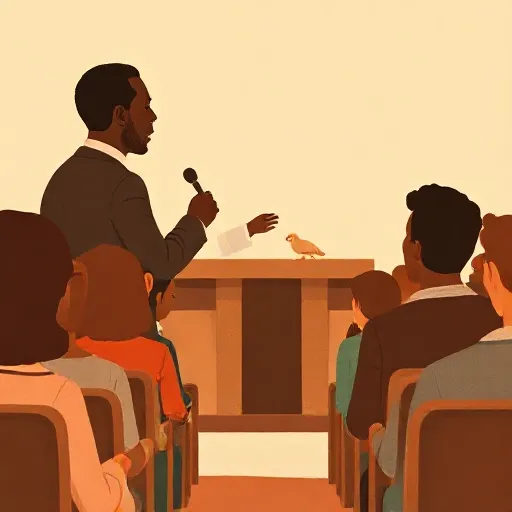
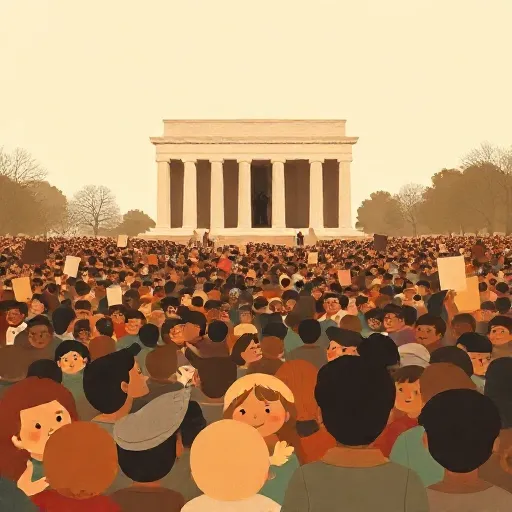
In the spring of 1969 a man named James Foreman (1928–2005) walked into a Detroit conference and later into Riverside Church in New York and made an enormous demand. He said the United States owed Black Americans $500,000,000 — five hundred million dollars — for centuries of enslavement and discrimination. Foreman called it “15 dollars per nigger,” a crude calculation meant to shock people awake. He wanted white churches and synagogues to pay up. Most people reacted with anger or silence. But his challenge planted a seed that has never stopped growing: Can living people be owed something for a harm that happened long before they were born? That question is the heart of the fight over reparations.
Foreman was not the first person to connect slavery and money. Long before 1969, Americans argued about who should pay and who should receive. Some of the earliest proposals came right from the pens of famous founders. Thomas Jefferson (1743–1826) hinted that the U.S. might have to help freed Black people start their own homeland, though his main motive was to remove Black people from the country, not to repair a wrong. During the Civil War, President Abraham Lincoln (1809–1865) urged Congress to pay Southern slaveholders for the loss of their slaves — not pay the slaves themselves. The abolitionist W.E.B. Du Bois later noted dryly that Lincoln seemed deeply concerned about the money slaveholders lost, but never thought about the stolen wages and stolen lives of the enslaved workers.
After the war, the real arguments began. Thaddeus Stevens (1792–1868), a congressman from Pennsylvania, said freedmen needed more than votes; they needed land taken from the rebels who had enslaved them. Frederick Douglass (1818–1895), himself a former slave, initially disagreed. He feared that a big government giveaway would make freed people look dependent and rob them of the chance to prove their own strength. But decades later, Douglass changed his mind. He wrote that if Stevens’ plan had won, Black Americans would be “tilling his soil in comparative independence.” The tug-of-war between self-reliance and repairing an old wound became a permanent part of the debate.
What Are Reparations, Anyway?

To understand the arguments, you need to know what reparations are not. Reparations are not the same as restitution. Restitution is simply giving back something that was taken — returning a stolen bicycle to its owner. But if the thief only returns the bike and the victim missed a week of work because she had no way to get there, restitution alone isn’t enough. She is still hurt. That extra hurt is where reparations come in.
Reparations also differ from compensation. Compensation is about making a person whole for a loss, whether a wrong caused it or not. If you buy insurance and your house burns down by accident, the insurance company compensates you; no one did you wrong. But reparations are special: they are a right that arises only when someone wrongfully harms you. They demand satisfaction from the person who caused the damage — not just money, but sometimes an apology, an acknowledgment of the wrong, or other steps to restore the victim’s moral standing.
This distinction matters because many people who support helping disadvantaged communities still resist calling that help “reparations.” They might say we should fight poverty or improve schools regardless of the past. But the idea of reparations insists that the past matters in a different way. It says that if a government or a group committed a terrible wrong, the people whose lives were shaped by that wrong may still be owed something as a matter of justice — not charity.
John Locke’s Blueprint for Righting Wrongs
One of the clearest early blueprints for reparations comes from the English philosopher John Locke (1632–1704). Locke believed that every person has natural rights, and that when someone violates those rights, two things must happen. First, the wrongdoer should be punished to discourage future crimes and to make the criminal regret his act. Second, the victim has a separate, sacred right to reparations — “satisfaction due to any private Man, for the damage he has received.” That right, Locke insisted, is so personal that even the government cannot take it away. A magistrate might forgive a punishment for the public good, but he cannot forgive the debt the wrongdoer owes the person he hurt.
Locke’s view has striking consequences. The right to reparations belongs to the victim alone and must be pressed against the offender’s goods or service. If someone murdered your father and you grew up in poverty because of that loss, Locke’s logic suggests you could claim reparations from the murderer — not for your father’s death, but for the harm his death caused you. Notice that the offender need not have become rich; he owes reparations even if hurting you made him poorer. What counts is that a wrongful injury happened and a duty to make things right was born.
Locke also separated reparations from punishment so cleanly that he opened a back door for a later argument: if a government wrongs a group over many years, the victims’ descendants might hold onto a claim even while the original criminals are long dead. That back door would become crucial when people started asking whether the U.S. still owes something for slavery.
The Harm Argument: Slavery’s Long Shadow
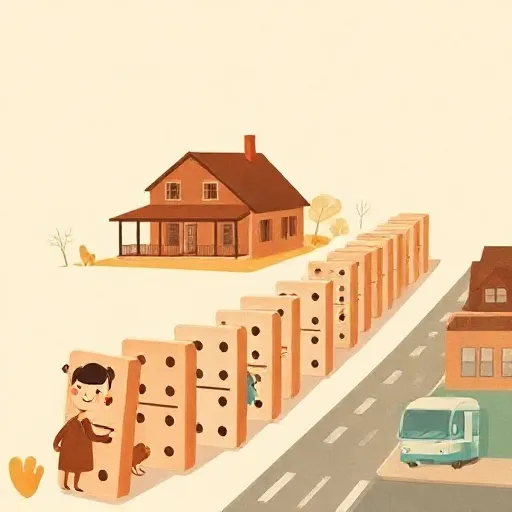
The simplest argument for black reparations says: slavery wrongfully harmed enslaved people, and many of those harms still affect their descendants today. Because the damage continues, the debt should continue too. This is called the harm argument. But its simplicity hides a thicket of problems.
First, can we be sure that today’s disadvantages really trace back to slavery? A lot has happened since 1865 — wars, economic shifts, waves of immigration. Second, even if slavery did cast a long shadow, the actual slaveholders are all dead now. How can you pay a debtor who no longer exists? The third problem is the strangest: if slavery had never happened, the Black Americans alive today would never have been born. How can you compensate someone for a harm that was part of the very cause of their existence? This puzzle is known as the non‑identity problem.
Philosophers Robert Fullinwider (20th–21st century) and legal scholar Boris Bittker (1916–2005) offered a revised version of the harm argument that dodges the first two objections and makes a start on the third. They point out that the U.S. government after the Civil War did not simply fail to end slavery; it failed to protect the rights the new amendments had given Black citizens. Had the government vigorously defended equal rights, the worst effects of slavery would have faded — perhaps almost completely — through the effort of freed people themselves. So the real cause of any lingering harm is not slavery alone, but the discrimination and broken promises of later governments. Those governments existed when many people alive today were born, and their wrongs are still recent enough to be causally traced.
Yet this revision still faces the non‑identity problem. Imagine two former slaves, Tom and Beulah, freed but then denied their rights and the compensation they were owed. Their daughter Eulah is born into poverty and ignorance because the government kept her parents poor and broken. The wrongs that hurt Eulah, however, happened after she was conceived — they are not the slavery her parents endured before her birth. She has her own claim for harms she herself suffered, not a claim that she stands in her parents’ shoes. This counterfactual approach shows that even if the non‑identity problem blocks compensation for pre‑birth wrongs, it does not block reparations for injustices that occurred in Eulah’s own lifetime. And because the U.S. government continued to discriminate long after Eulah’s birth, many Black Americans today have a parallel claim.
The Inheritance Argument: What’s Owed to Heirs
There is another path that avoids the non‑identity problem entirely. The inheritance argument says: the freed slaves had a right to reparations. That right was a kind of property — something they owned, even if they never held dollar bills in their hands. When they died without being paid, their property did not vanish; it passed to their heirs, just like a bank account. Today’s Black Americans are those heirs. The argument is simple and emotionally powerful, but critics raise two large worries. First, it assumes the freed people would have preserved the money and handed it down — that’s a guess about a different possible world. Second, and more troubling, it seems to force people alive today to pay for crimes they never committed.
John Locke’s discussion of a “lawful conqueror” offers a surprising reply to the second worry. Locke imagined a just nation that defeats an unjust aggressor. The conqueror, he said, may take reparations from the aggressor’s estate — but must leave enough for the aggressor’s innocent wife and children to survive. In other words, the children lose part of their inheritance not because they are guilty, but because the estate itself shrank the moment the wrong was committed. The debt belongs to the estate, and the heirs simply inherit what is left after the debt is paid.
If we apply this idea to slavery, it means the enslaved people had a claim against the estates of those who supported the slave system. Over generations, much of the nation’s wealth was built on land, labor, and opportunities that rightly had a mortgage on them — the unpaid debt to the slaves and their descendants. The inheritance argument does not try to put a whole country on trial. It asks: if something was owed long ago and never paid, can the person to whom it is now owed finally knock on the door?
Some philosophers object that historic wrongs can be superseded — overtaken by changed circumstances. Imagine two groups, P and Q, each owned a waterhole. Q greedily forced its way onto P’s waterhole years ago. But now all other water has dried up, and Q is sharing the only remaining source. Is Q still committing an injustice? Probably not, because the situation has changed so much that sharing is now the only decent option. Does that mean P’s original claim evaporates? Many argue it does not. Restitution — getting the waterhole back — might be impossible or even wrong now, but reparations for the original theft remain on the table. The fact that you cannot give back a stolen car does not mean you stop owing the owner for the harm you caused. In the same way, returning the whole continent to any single group may be unthinkable, but that does not cancel an outstanding debt for the injuries themselves.
Why This Fight Still Matters

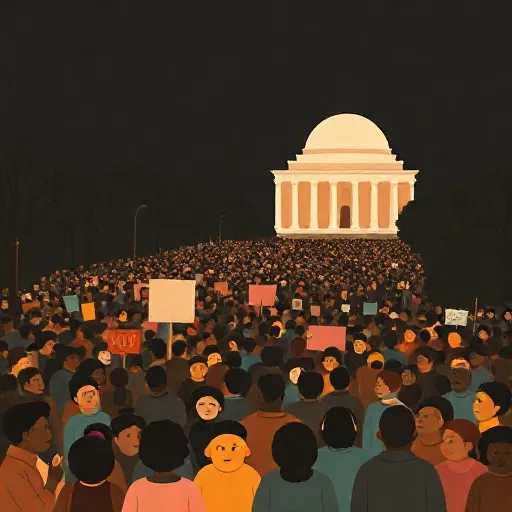
You might wonder why a question rooted in 1619 still gets people shouting. The answer is that reparations are not just about dollars; they are about what a society believes it owes its own people when the wrongs are huge, old, and tangled into every part of daily life. In 2020, California created a task force to study reparations for slavery. In 2014, writer Ta-Nehisi Coates’ essay “The Case for Reparations” stirred the country. Laws keep being introduced in Congress to at least study the idea. The conversation is moving from “Is this real?” to “If it’s real, what do we do about it?”
If reparations are ever paid, they might look like both money and something harder to measure. Money — calculated from centuries of unpaid labor, stolen land, and human rights abuses — could take the form of funds for education, health care, or direct payments. But non‑compensatory reparations matter too: removing Confederate names from public buildings, writing history that tells the full truth about massacres and lynchings, and ensuring that what was done is not forgotten or dressed up in cozy myths. These steps are not about making anyone feel good; they are about a society keeping honest books with its own past.
The puzzle you are left with is the same one Foreman put on a church lectern in 1969. If a wrong was committed before your grandparents were born, and its ripples still push against your life, does anyone still owe you something? Locke said the victim’s right never just disappears. Others say justice has a clock, and the hands have moved too far. The debate is messy, emotional, and full of what-ifs — which is exactly why it belongs in philosophy class.
Think about it
- If a friend’s great-grandparent stole your great-grandparent’s most treasured item, and you only found out today, would your friend owe you anything? Why or why not?
- Some people say that because slavery ended so long ago, we should just focus on being fair today and leave the past behind. Do you think the past can ever be truly “closed,” or does it always carry a bill?
- Imagine your family was hurt by an unjust law 50 years ago, but since then you have built a comfortable life. Does that success cancel the old debt? What if the harm still affects your family in quiet, hard‑to‑see ways?