Can You Escape the Gaze That Fixes You? Frantz Fanon’s Question
A Child’s Pointed Finger
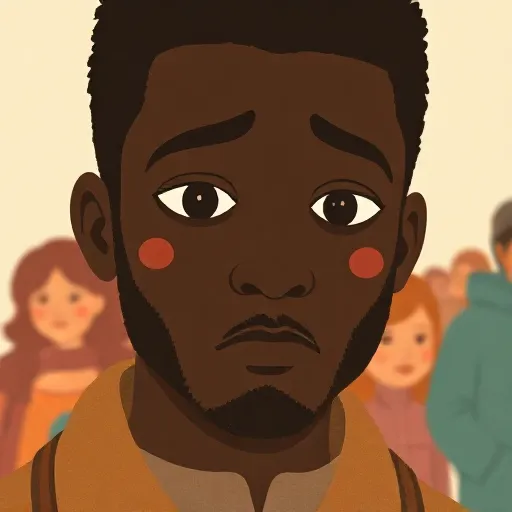
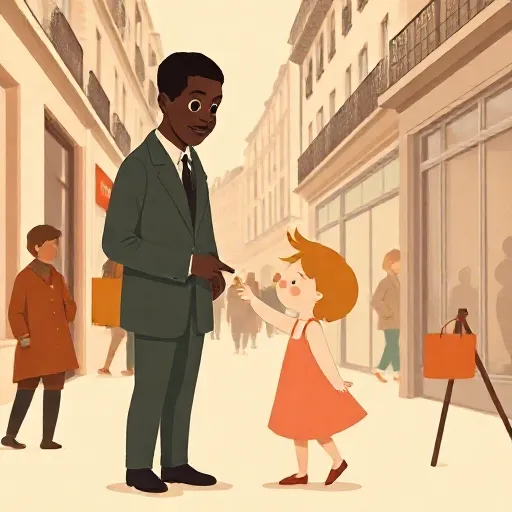
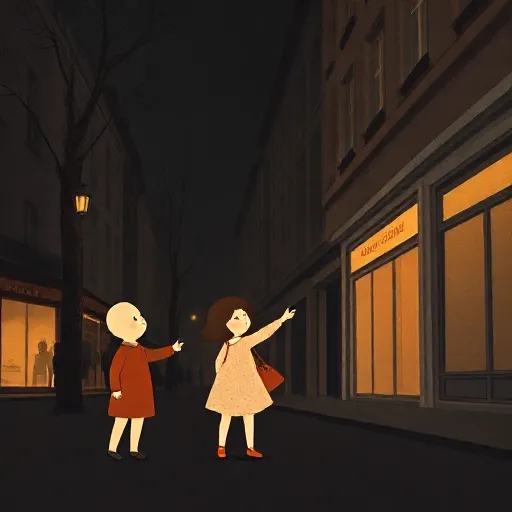
Paris, sometime in the 1940s. A young Black man from the Caribbean island of Martinique walks down the street. A white child spots him, points, and shrieks, “Look, a Negro!” The man’s body goes rigid. In that instant he feels himself shrink into a single label, a thing to be stared at, not a person.
That man was Frantz Fanon (1925–1961), a psychiatrist and philosopher. The scene burned in his mind. It became the center of his first book, Black Skin, White Masks (1952). Fanon wanted to understand what that moment does to a human being. He argued that racism is not just unfair laws or mean words. It is a total project — a system that seeps into your language, your desires, your very sense of who you are. His question was simple and terrifying: if the world decides you are less than human, can you ever truly become free?
The Zone of Non-Being
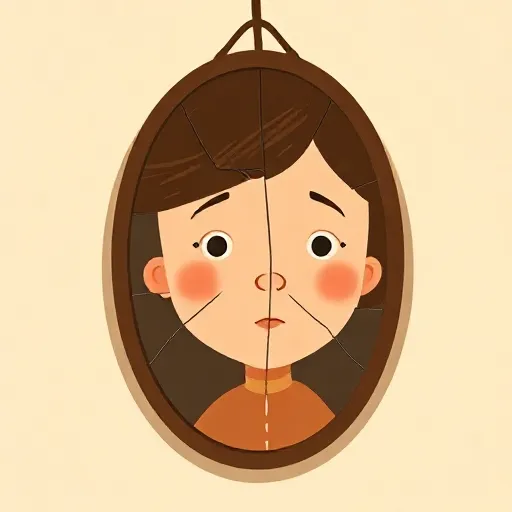
Fanon opened his book with a blunt claim: Black people are locked into blackness, white people are locked into whiteness. The zone of non-being is what he called the “hell” of confronting what it means to be Black in an anti-Black world. It is the experience of being treated as nothing, stripped of the ordinary feeling that your life naturally belongs.
But Fanon insisted that descending into this zone does not lead only to despair. It can also awaken a deep “yes” — a refusal, a vibrant claim on life that the colonial world cannot contain. That “yes” is the seed of revolutionary energy.
Take language. Fanon wrote that to speak a language is to adopt a whole civilization. For a colonized Black person, speaking perfect French seems like a path to equality. Yet Fanon exposed what he called the epidermal racial scheme: your skin determines how your words are heard. A Black person who speaks flawless French surprises white listeners. That surprise is a backhanded insult — it reminds everyone that a Black person is expected to be inferior. No linguistic polish can erase the skin that the world sees. And chasing perfect diction often alienates the speaker from their own community. Locked out of whiteness and cut off from Blackness, the person falls back into the zone of non-being.
Love and the White Mask
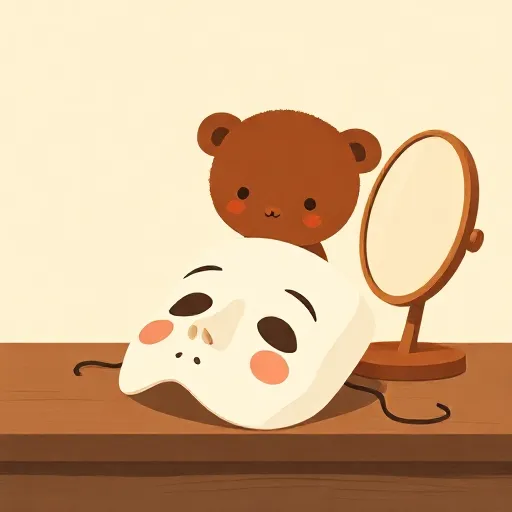
If language cannot set you free, what about love? Fanon examined interracial desire and found the same trap. Colonialism, he argued, infects even the most intimate feelings.
He described a Black woman who desires a white man, believing his body will be a bridge to wealth and higher status. He described a Black man who craves a white woman, imagining that her body offers innocence and entry into white civilization. In both cases Fanon saw not love but a kind of self-destruction — a longing to escape blackness by disappearing into whiteness. The desire is not bad in itself; it is twisted by a society that has taught Black people to despise their own reflection.
For Fanon this proved that colonialism — a system where one country dominates and exploits another land and its people — is a total project. Nothing escapes: not your words, not your body, not your longing. Psychoanalysis, which explores hidden feelings, helped Fanon diagnose these wounds. But he also argued that European psychoanalysis could not fully understand the colonial situation. New tools were needed, tools that aimed at liberation, not just adjustment.
The Shock That Creates a Self
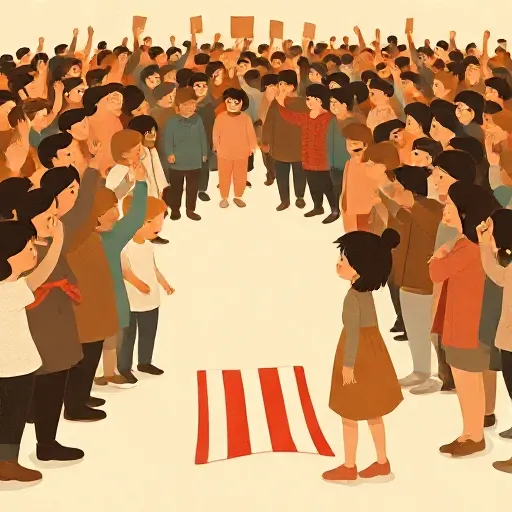
In 1953 Fanon moved to Algeria and his thinking widened. Instead of focusing only on anti-Black racism, he began to study colonialism across the global south. His last book, The Wretched of the Earth (1961), made a shocking argument: violence is a necessary part of breaking free.
For Fanon, colonial rule rests on a fantasy — the belief that the colonized are naturally weak and inferior. Both the colonizer and the colonized absorb this lie, and it becomes psychological reality. Revolutionary violence shatters the spell. When the oppressed risk their lives for a different future, the colonizer is forced to recognize their humanity. And the colonized discover, in their own courage, that they are powerful after all.
Fanon divided the colonized into three groups. The worker depends on the colonial system for a living but is ruthlessly exploited. The colonized intellectual acts as a go-between, translating local struggles into the colonizer’s language and values — usually for the colonizer’s benefit. And the lumpen proletariat, the most dispossessed — slum dwellers, displaced farmers, people with nothing to lose — are the purest revolutionary force. Violence, Fanon believed, gives them an identity and a purpose for the first time.
Crucially, this struggle must not simply copy Western politics. Fanon rejected a nostalgic return to pre-colonial traditions. The future must be a break with the past, invented through the revolution itself.
A New Human Being Is Possible
So what comes after the shock? Fanon ended his life asking a question he could not fully answer: what would a truly new humanity look like?
He warned that post-colonial nations must not become cheap imitations of Europe. Europe, he wrote, is a “spirit built on strange foundations” and characterized by “stasis”. To copy it would be to rebuild the prison you just escaped. Instead, Fanon called for “a new man” — a human being whose worth is not measured by colonial standards, and whose culture flows from the people’s own struggle.
In the very last lines of Black Skin, White Masks, Fanon made a plea: “O my body, always make me a man who questions!” To question is to refuse the identity that the world forced on you. It is to stay open, undetermined, and alive to a future you cannot yet picture.
Why It Still Matters

Maybe no one points at you on the street. But everyone has felt the weight of being labeled — because of how you look, where you come from, or who people expect you to be. Fanon’s insight is that those labels don’t just change how others treat you; they can slip inside and shape your own dreams.
His work does not tell you what the answer is. It hands you a wrenching question: can you break the mirror that others hold up to you and invent a self that is truly your own? Fanon believed that break was possible, but only through a deep rupture — a refusal that shakes the whole system. His challenge, urgent and unsettled, is now yours to think through.
Think about it
- If someone treats you differently because of how you look, does that change who you really are inside? Why or why not?
- Can a person genuinely forget the insults of the past and start over, or do painful memories always shape who they become?
- If a group is denied respect for generations, is it ever fair for them to demand that respect by force? Where would you draw the line?