Philosophy for Kids

What Does It Mean to Be a Problem? An Introduction to Africana Philosophy

Imagine walking into a room, and before you say a single word, everyone there already has an idea of who you are. Not just who you are as an individual, but what your whole group is like—what you believe, what you’re capable of, whether you’re trustworthy. Now imagine that the idea they have isn’t just wrong, but insulting. And imagine that this happens to you every single day, in ways both small and huge.

Now imagine that you start to wonder: Is it me they see as the problem? Or is the problem something inside them—or inside the whole society they built?

This is one of the starting points for a whole area of philosophy called Africana philosophy. It’s a field that asks big, strange, uncomfortable questions about what it means to be human, what it means to be Black or of African descent in a world shaped by slavery and colonialism, and whether the way we think about “knowing things” and “being reasonable” might be twisted by centuries of racism.

A Strange Starting Point

Here’s a weird fact about this field: before Africana philosophy could even get started as a serious academic subject, people had to argue about whether African people could do philosophy at all. Not whether they had done philosophy yet (like, maybe they just hadn’t gotten around to it). But whether they could—whether their brains, their cultures, their languages were even capable of the kind of abstract thinking philosophy demands.

If that sounds obviously wrong to you, good. But for a very long time, many European philosophers—including famous ones like Hegel—simply assumed that Africa had no history, no philosophy, and no real contribution to make to human thought. They claimed this while sitting in universities built with money from the slave trade, using paper and ink that came from colonial plantations, and completely ignoring the fact that African societies had been doing philosophy (and math, and medicine, and art) for thousands of years.

So the first thing to understand about Africana philosophy is that it’s a philosophy born of struggle. Philosophers in this tradition aren’t just sitting around thinking abstract thoughts because they have nothing better to do. They’re thinking about urgent, painful, real problems—problems like: How do you live a meaningful life when the world tells you you’re less than human? How do you know what’s true when the people in charge have spent centuries lying about people like you? How do you build a just society when the very ideas of “justice” and “fairness” were used to justify enslavement?

The Core Puzzle: Being a Problem

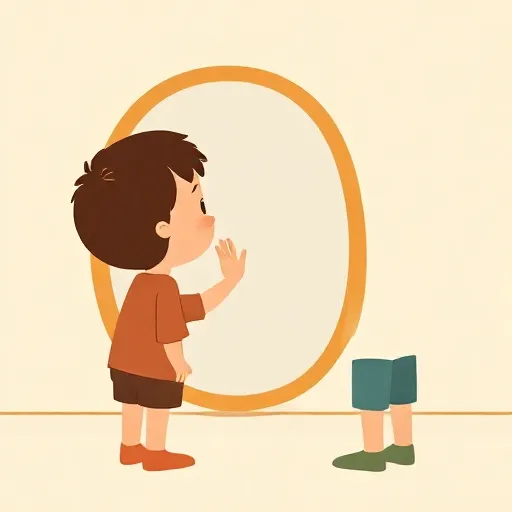
The most famous expression of this puzzle comes from W.E.B. Du Bois, a brilliant Black American thinker who wrote in 1903. He asked his readers to imagine what it feels like to be a problem. Not to have a problem—but to be one. To be the person other people point to when they talk about crime, or poverty, or ignorance. To feel like your existence is a question that other people have to solve.

Du Bois wasn’t saying that Black people are actually problems. He was describing a terrible social trick: when a society treats a group of people badly for centuries, and then blames that group for the problems it caused. It’s like someone pushes you into a mud puddle and then gets angry at you for being dirty.

This experience—being treated as a problem just for existing—runs through almost everything Africana philosophers think about. It connects to questions about:

  • What it means to be human. If some people are treated as subhuman, what does that say about our idea of “human”? Is it a real category, or just a way of excluding people?
  • What it means to know things. If the whole system of education and expertise has been built by people who assumed Black people were inferior, can we trust what that system says? How do you produce knowledge when your own testimony is dismissed?
  • What liberation means. Is freedom just about ending slavery and legal segregation? Or is there something deeper—freedom from having to prove you’re human, freedom from the constant weight of other people’s assumptions?

Three Regions, One Condition

Africana philosophy isn’t one single thing. It covers thinkers from three main regions: Africa itself, the Caribbean, and the Americas (especially the United States). And these regions have very different histories.

Africans who grew up under direct colonial rule have different questions than Black Americans whose ancestors were enslaved in the US, and different again from Caribbean people whose societies were formed by the collision of enslaved Africans, European colonizers, and Indigenous peoples.

But they share some deep common threads. All of them are dealing with the legacy of what one philosopher calls “the invention of Africa”—the idea that “Africa” as a single thing was created by European colonizers who lumped together hundreds of different cultures and called them all one. All of them are dealing with the experience of having their humanity denied. And all of them are trying to figure out what it means to build a life, a community, and a future under conditions that were never designed with them in mind.

The Danger of “Respectable” Philosophy

Here’s another weird thing. Until very recently—like, within the last 50 or 60 years—you couldn’t get a PhD in philosophy by studying Africana thought. Not at any major university. If you wanted to write your dissertation on Du Bois or Fanon or African concepts of personhood, you would be told that’s not “real philosophy.” You’d be pushed toward studying Plato or Kant or some European philosopher.

This isn’t an accident. Elena Ruíz, a contemporary philosopher, calls this “epistemic imperialism”—a fancy way of saying that the people in charge of knowledge production rigged the system so that only their kind of thinking counted. They controlled the universities, the publishing houses, the academic journals. They decided what counted as “rigorous argument” and what was dismissed as “just storytelling” or “political activism.”

This means that a lot of really important Africana philosophy was done outside the academy—in churches, in political movements, in art, in music, in everyday conversations. Some of the most powerful philosophical work about Black life wasn’t written by university professors but by activists like Ida B. Wells, or by novelists like Toni Morrison, or by musicians like John Coltrane. This raises a tricky question: Should philosophy only count if it’s written in academic books and journals? Or can people think deeply and originally in other forms?

The Riff: Transforming the Tradition

When Africana philosophy finally started to gain a foothold in universities, something interesting happened. Black philosophers didn’t just start doing the same kinds of philosophy everyone else was doing, but on Black topics. Instead, they transformed the traditions they inherited.

Think about it like jazz. When Black musicians started learning European instruments and musical theory, they didn’t just play the same songs the same way. They riffed—they took the existing forms and twisted them, bent them, combined them with African rhythms and call-and-response patterns, and created something entirely new. That’s what Africana philosophers do with the traditions of Western philosophy.

For example:

  • Critical theory (a European tradition about social oppression) gets transformed by thinkers like Angela Davis, who shows how class and race and gender can’t be understood separately.
  • Pragmatism (an American tradition about ideas as tools) gets transformed by Cornel West, who pushes it to ask about racial justice and the role of the church.
  • Existentialism and phenomenology (European traditions about individual experience) get transformed by Lewis Gordon, who asks what it means to exist as a Black person in an anti-Black world.
  • Analytic philosophy (the dominant tradition in English-speaking universities) gets transformed by Charles Mills, who rewrites the whole “social contract” theory to show it’s actually a “racial contract” that excluded non-white people from the beginning.

This isn’t just Black people doing white philosophy. It’s a creative, critical engagement that changes both traditions.

The Messy Middle of Identity

Africana philosophy has always had to deal with a tricky problem: Who counts as “Africana”?

The concept itself is fragile. People from Ghana and from Jamaica and from Texas all have African ancestry. But their cultures, languages, and experiences are wildly different. What makes them part of the same philosophical conversation? Is it just the experience of racism? Is it a shared cultural heritage? Is it a political commitment to Pan-African solidarity?

Different philosophers give different answers. Some emphasize the common experience of being racialized as Black. Others emphasize the positive cultural traditions—the proverbs, the spiritual practices, the community structures—that survived the Middle Passage and colonialism. Still others worry that the whole idea of “Africana” is too broad, that it papers over real differences and makes it harder to address specific local problems.

This gets even more complicated when you add gender and sexuality. For a long time, Africana philosophy—like most philosophy—was dominated by men. Women’s contributions were ignored or minimized. And queer Black people were often told that their experiences weren’t “authentically” Black. Contemporary Africana philosophers are working to fix this, recovering the work of Black women thinkers like Anna Julia Cooper and Patricia Hill Collins, and asking whether standard philosophical approaches need to be “queered” to capture the full complexity of Black life.

The Big Debate: Hope or Despair?

One of the most intense debates in contemporary Africana philosophy is between two camps that have very different feelings about the possibilities for Black life in an anti-Black world.

On one side are the Afro-pessimists. They argue that Blackness, in a society built on slavery, is not just a social identity—it’s a fundamental position outside of humanity. Society, they say, was built on the idea that some people are “slaves” (people who can be owned, exploited, killed with impunity) and some people are “humans” (people who have rights, dignity, a future). Black people are positioned as the perpetual “slave”—even after slavery formally ended. The social world is structurally anti-Black, not just accidentally or temporarily. So any optimism about gradual progress or eventual liberation is, they argue, bad faith. It avoids confronting the real depth of the problem.

On the other side are thinkers who resist this pessimism. They don’t deny the horrors of anti-Blackness, but they insist that Black life isn’t just suffering. It’s also joy, creativity, love, community, beauty. They point to the art, the music, the religious traditions, the everyday acts of care and resistance that Black people have created even under terrible conditions. To focus only on the suffering, they say, is to miss the point—and to give the anti-Black world too much credit.

This debate isn’t just abstract. It shapes how people think about activism, about art, about how to raise children, about whether to work within existing institutions or try to build entirely new ones.

Where This Leaves Us

Africana philosophy doesn’t have tidy answers. It’s a field full of arguments, unresolved tensions, and questions that get harder the more you think about them. But that’s part of the point. These are questions that matter, that affect real people’s lives, that won’t go away just because we find them uncomfortable.

The philosophers in this tradition share a commitment to taking seriously the experiences of people who have been told they don’t matter, and to building tools for thinking that might actually help people live better lives. That’s a pretty good reason to pay attention.


Appendices

Key Terms

TermWhat it does in this debate
AfricanaityFlags the question of what connects people of African descent across different regions and experiences
ProblematicityNames the strange position of being treated as a problem rather than just facing problems
Philosophy born of struggleMarks the idea that philosophy isn’t just a leisure activity but can emerge from urgent, painful conditions
Epistemic imperialismPoints to how powerful groups rig the system of knowledge production to exclude other ways of thinking
Afro-pessimismArgues that anti-Blackness is built into the structure of society, not just a fixable mistake
Critical ethnophilosophyA way to take seriously the philosophical ideas embedded in African cultures without treating them as timeless museum pieces

Key People

  • W.E.B. Du Bois — A brilliant Black American scholar and activist who asked, “How does it feel to be a problem?” and helped launch the modern study of Black life.
  • Lewis Gordon — A contemporary philosopher who defines Africana philosophy as the study of problems faced and raised by the African diaspora, and who has built a global community around existential and phenomenological approaches to Black thought.
  • Charles Mills — A philosopher who argued that the “social contract” Western political theory celebrates was actually a “racial contract” that excluded non-white people from the start.
  • Patricia Hill Collins — A Black feminist scholar who showed how Black women’s experiences produce distinctive knowledge that mainstream philosophy has ignored.
  • Angela Davis — A philosopher and activist who transformed critical theory by showing how race, class, and gender are inseparable systems of oppression.
  • Kwame Anthony Appiah — A philosopher who brought analytic methods to Africana thought and argued for a “critical” approach to African cultural traditions.

Things to Think About

  1. Du Bois asks what it feels like to be a problem. But what about the people who do the treating? Are they problems too? What would it mean to ask that from the other side?

  2. If the whole system of Western philosophy was built by people who assumed Black people were inferior, does that mean all the conclusions it reached are suspect? Or can you separate the method from the bias? How would you decide?

  3. The Afro-pessimist says hope can be a trap—a way of avoiding the real depth of the problem. The critic says abandoning hope is a betrayal of the joy and creativity Black people have actually created. Who’s right? Is there a way to hold both?

  4. What counts as “philosophy”? If someone thinks deeply about life through song lyrics, novels, or activism, does that count as much as a university professor’s journal article? Who gets to decide, and why?

Where This Shows Up

  • Music and art. From hip-hop to jazz to visual art, Black artists are constantly engaging with the questions this article raises—about identity, resistance, joy, and what it means to create beauty under pressure.
  • The Black Lives Matter movement. The founders of BLM explicitly drew on the ideas of thinkers like Fanon and Lorde. The movement’s debates about hope, strategy, and structural change mirror debates happening in Africana philosophy.
  • School debates. Arguments about what history to teach, whether “diversity” efforts are enough, and how to deal with racism in schools are all practical versions of the philosophical questions here.
  • Everyday life. Anytime someone is told they’re “too sensitive” about racism, or that they should just “get over it,” or that they’re “playing the race card”—they’re encountering the same dynamics that Africana philosophers analyze.