
Do Scientists Discover Facts, or Do They Build Them Together?
A Doctor, a Dreaded Disease, and a Strange Discovery
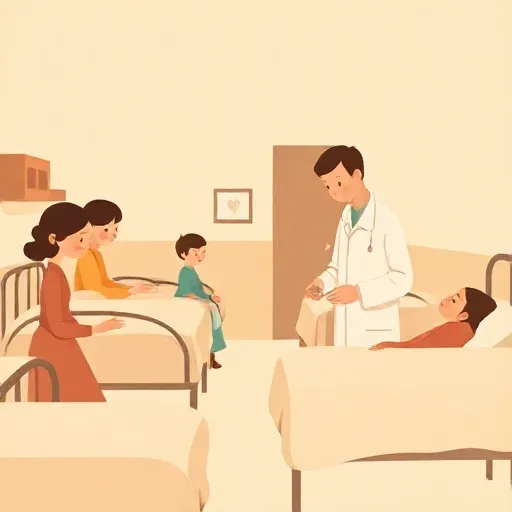
One hundred years ago, a young Polish doctor named Ludwik Fleck (1896–1961) joined a frantic race to understand syphilis, a terrifying and then-untreatable disease. Hundreds of scientists across Europe were searching for a reliable blood test. Fleck noticed something puzzling: the researchers weren’t just uncovering a fact that was already there. They were making it piece by piece, through conversations, misunderstandings, and group decisions. By the time the famous Wassermann reaction was accepted as the standard test, nobody could say exactly who had discovered what. Fleck spent the rest of his life arguing that every scientific fact — from the germ theory to the periodic table — is built by communities, not merely dug up like buried treasure.
The process he uncovered often began with what he called a proto-idea: a vague, dream-like notion that floated around long before anyone turned it into a proper experiment. For syphilis, there were several. Some people thought of the disease as a “carnal scourge,” a punishment for bad behaviour. Others defined it as something that got better when you took mercury. Still others saw it as a specific collection of symptoms. Each proto-idea steered researchers toward different experiments and made them interpret the same data in opposite ways. If you believed syphilis was a mercury-treatable illness, then a patient who got worse on mercury didn’t have syphilis — end of story. Fleck saw that the “facts” that emerged depended on which proto-idea the scientists started with and how they talked to one another along the way.
What Is a Thought Collective?

To explain all this, Fleck introduced the concept of a thought collective — any group of people who exchange ideas so closely that they develop a shared way of perceiving and thinking. You belong to many collectives already: your friend group, your science class, maybe a sports team or a religious community. In each one, you quickly absorb what Fleck called a thought style: a ready-made filter that makes certain things pop out as important and others fade into the background. Without realising it, you start to “see” like the group sees.
Every long-lasting thought collective splits into two parts. The esoteric circle is the small inner ring of specialists — the priests, the artists, the research scientists — who actively shape the thought style. The much larger exoteric circle includes everyone else who trusts and follows that style: the believers in the pews, the people who read popular science books, the patients who trust their doctors. The two circles feed each other constantly. Specialists write simplified, dogmatic versions of their work for the public, using phrases like “science has proven.” That public trust then flows back to the specialists as encouragement and funding. Fleck even saw scientists as being pushed by the “wind” of social pressure: a disease that the public finds embarrassing (like syphilis) gets far more research than one that people find romantic or saintly, and that shapes which facts ever get built.
Do We See Facts or Do We Make Them?

You might object: wait, facts are just what we observe with our senses! A microscope doesn’t care what its user believes. But Fleck turned that idea on its head. He argued that your senses only deliver chaos until a thought style teaches you what to pick out. When an untrained visitor walks into a laboratory and watches an experiment, she cannot see what the scientist sees. She notices a jumble of unimportant details and misses the crucial shift in colour or the tiny curve that the expert’s eye catches immediately. The expert has spent years learning to recognise forms — whole meaningful patterns — that the group has decided are real.
Fleck called this the difference between the active and passive parts of knowledge. The active parts are the choices the collective makes: which instrument to use, which definition of the disease to adopt, which theory to take as obvious. The passive parts are the results that flow from those choices whether you like them or not. If you decide, as a community, that the atomic weight of oxygen is 16, then the weight of hydrogen comes out as 1.008 — that’s not up for debate. But notice: the “fact” of 1.008 only exists because you accepted an active choice first. Fleck believed that even the most solid, passive-looking result was tied to a web of social decisions that earlier generations forgot they made.
Why Scientists From Different Eras Can’t Fully Talk
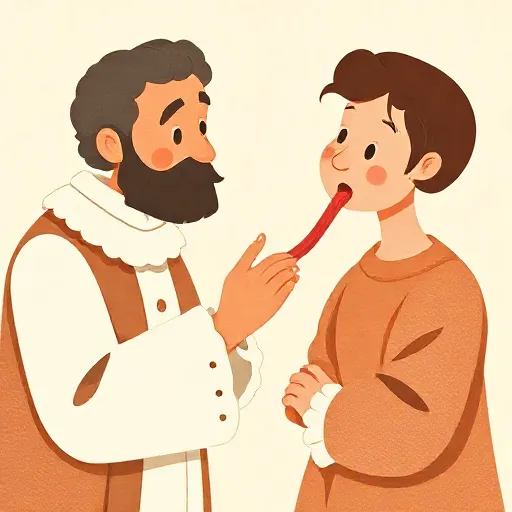
If facts are built by collectives, then changing the collective changes the facts — and not just a little. Fleck argued that thought styles are often incommensurable: you cannot fully translate one into the other without leaving something crucial behind. Take the concept of “heat.” In the 1700s, heat was listed as a chemical element, a kind of invisible fluid that flowed in and out of objects. By the late 1800s, heat had become the motion of atoms. The word looked the same, but the thing it pointed to did not exist for the earlier scientists, and the earlier thing did not exist for the later ones. If you could bring an 18th-century chemist and a modern physicist into the same room, they would not be arguing about the same phenomenon; they would literally be unable to find common ground, because their basic perceptions were trained differently.
The same happens when we read old scientific papers. We instinctively “correct” the text so it fits our own thought style, assuming the author was just a little mistaken and on the way to our current, obviously correct, view. Fleck insisted this is an illusion. Medieval physicians were not stupid; they simply inhabited a different thought collective and saw a different physical reality. Their facts were as true for them as our facts are for us. Fleck never said we should give up and believe in magic. He simply claimed that no thought style gives a picture of “the world as it really is,” independent of any group’s way of seeing.
True for Me, True for You?

This can sound like a recipe for chaos. If facts are built by people, is everything just a matter of opinion? Fleck did not think so. Inside a thought collective, truth is completely determined. If you and your lab mate belong to the same group and follow the same training, a statement will be either true or false for both of you — no wiggle room. The problem only appears when people from different collectives try to compare their truths. Then they tend to see the other side as irrational, because they can spot all the arbitrary active choices of the other group while missing their own. Fleck called this the deep source of scientific intolerance: we honestly cannot see what the other person sees as obviously true.
He therefore refused to say that today’s science is “closer to reality” than the science of a century ago. Our picture is richer in detail because more people have worked on it, and that’s a genuine achievement. But the conviction that our picture matches an independently existing world is, Fleck said, simply a sign that we have been well educated inside our own thought style. It’s a feeling, not a proof.
Why Fleck’s Idea Still Matters

You live in a world of textbooks, search engines, and “settled science.” It’s tempting to think that the facts printed in bold headings were discovered once and for all by a lonely genius. Fleck’s lifelong message was that this picture hides the true, messy, wonderfully social process that gives us knowledge. Every fact in your biology book was argued over, half‑misunderstood, pushed by public opinion, and finally made to look inevitable by a thought collective.
This doesn’t mean science is a fraud. It means science is a human achievement — one that works not because it escapes from society, but because it organises society in a uniquely careful way. Fleck noticed that scientific collectives, unlike many religious ones, try to maximise the passive, testable parts of knowledge while still being driven by shared moods and traditions. He also saw that when you realise other groups have their own, internally consistent thought styles, you might become a little humbler about claiming that your way of seeing is the only possible one. That lesson matters far beyond the laboratory. It can change how you listen to a classmate who disagrees with you, how you read news from a different culture, or how you think about the “obvious” truths of your own life.
Think about it
- Think of a time you and a friend looked at the same situation but saw it completely differently. Was one of you wrong, or did you have different “thought styles”?
- If two medical teams with different thought styles cannot fully understand each other, how should we decide which advice to follow?
- If facts change every time a thought collective changes, does that make you trust science less — or more, because you know it is always being tested and sharpened?