Why Scientists Need Troublemakers (and a Little Chaos)
A Treasure Map with No X Marks the Spot
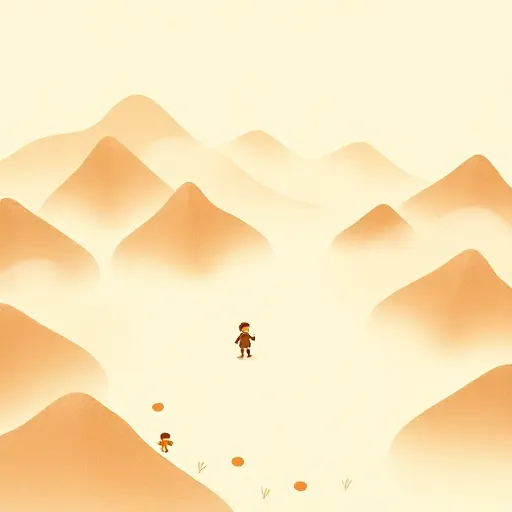
Imagine you and three friends are dropped onto a giant, fog-covered map. Hidden somewhere out there are the highest peaks — the very best ideas. You cannot see them from the start. You each have to choose a path. One friend insists on following exactly where the first person walks. Another stays glued to the group. A third dashes off alone, ignoring everyone. Which strategy will lead the group to the top?
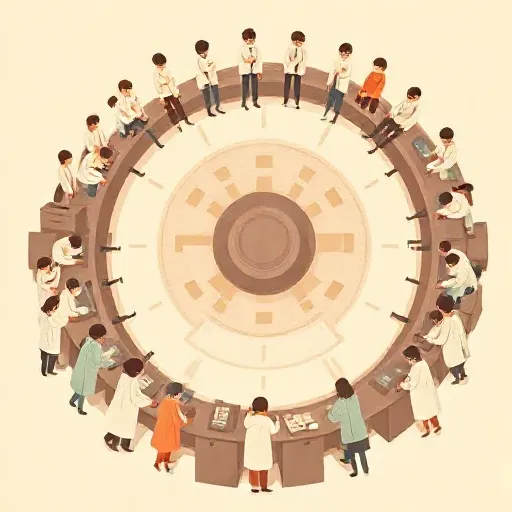
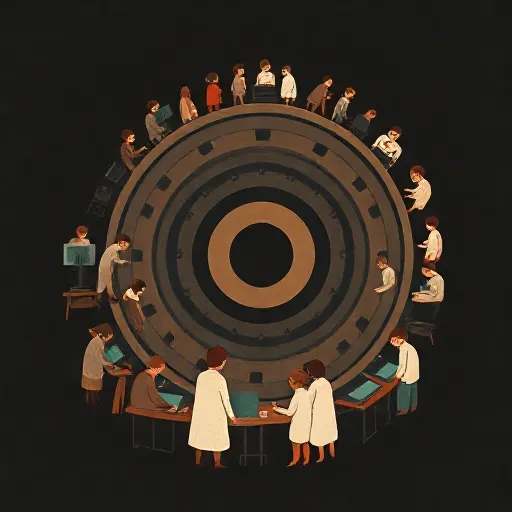
Philosophers of science ask a similar question, but instead of treasure hunters they think about scientists trying to discover how the world works. To investigate, they build agent‑based models — computer programs where you create hundreds of tiny virtual scientists (the agents) with simple rules, set them loose, and watch what happens. The programs do not try to predict exactly what a real scientist will do. Instead, they let researchers experiment with fake communities and see what kinds of behavior help the group find good answers, and what makes it stumble. The results often surprise them.
What Makes a Scientist Explore the Unknown?

You might think that if every scientist purely wanted to discover the truth, they would all rush toward the idea that looks most promising at the start. But rushing together can be a problem. If a whole community bets on the same single hunch, nobody explores the other paths — and one of those overlooked paths might actually lead to a much bigger breakthrough.
The philosopher Philip Kitcher (born 1947) wondered whether the usual rewards scientists chase — fame, credit, being first — could accidentally fix this problem. In the early 1990s he showed with a simple model that scientists driven by non‑epistemic incentives (motives that are not about truth alone) might divide up their work more wisely than a herd of pure truth‑seekers. A scientist who wants the glory of being the first to discover something might deliberately wander away from the hot topic, trying an idea that looks less popular. If it pays off, everyone benefits.
That is a neat idea. But real scientific communities are messy. Later computer simulations, such as one built by Michael Weisberg (born late 20th century) and Ryan Muldoon, found that when scientists have only limited information about what others are working on — or cannot guess how likely each path is to succeed — the “glory‑chaser” strategy often fails to spread the work out well. So good incentives are not enough on their own; other ingredients are needed.
The Maverick vs. the Crowd on the Idea Mountain
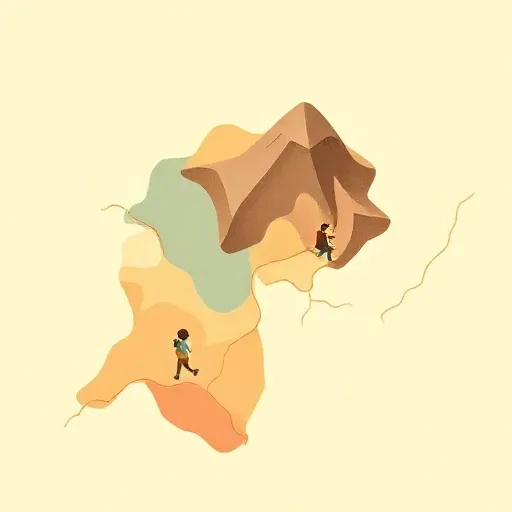
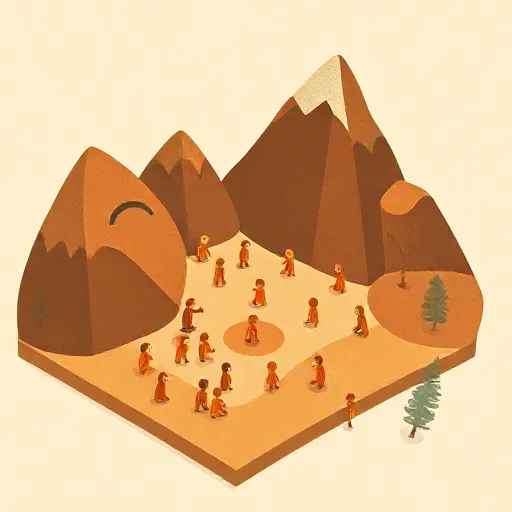
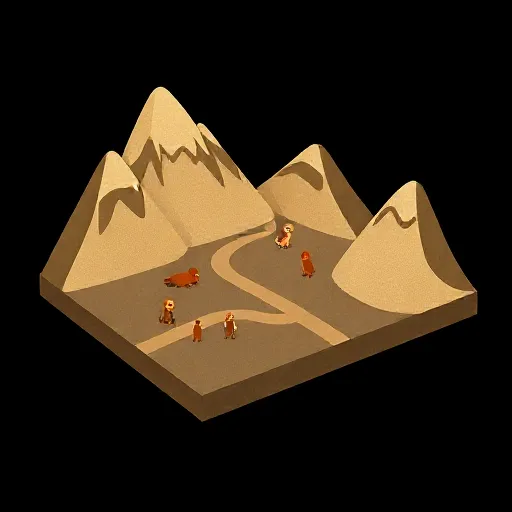
To see what else might help, Weisberg and Muldoon built a simulation that turned a scientific problem into a three‑dimensional epistemic landscape. Think of a wrinkly patch of earth. Every spot on the ground represents a possible hypothesis. The height of the ground represents how valuable or “significant” that hypothesis is — the taller the hill, the better the idea. The goal of the community is to find the highest peaks, not get stuck on modest bumps.
They programmed three kinds of explorers:
- Controls — virtual scientists who ignore everyone else and just try to climb higher from wherever they stand.
- Followers — agents who look at the spots the people around them have already reached and move to the highest one they can see nearby.
- Mavericks — scientists who deliberately trek away from the crowd, seeking out parts of the map nobody has stepped on yet.
When the model ran, the mavericks tended to sweep across the landscape and discover the tallest peaks. But running only mavericks can be slow and expensive. The sweet spot, their simulation suggested, was a cognitively diverse team: a population that mixes followers (who do the steady, careful work) with a handful of restless mavericks. Later models from other philosophers showed that the balance depends on the problem — a gentle, simple landscape might not need many mavericks, while a rugged, “fiendish” one with lots of false peaks demands more diversity.
Why Cutting Off the Gossip Can Save a Big Discovery
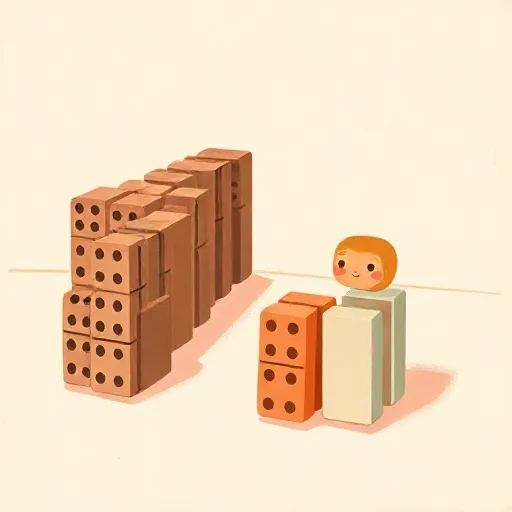
Even with a good mix of personalities, there is another danger: the communication network. Imagine you and your friends are trying to figure out which of two arcade slot machines gives a bigger payout. (In science, these “machines” are rival theories.) You cannot know the real odds — you have to pull the arms and learn. At first, you might pull both. But if machine A gives you a couple of coins and machine B gives nothing, you might be tempted to stop pulling B and stick with A forever. That is the exploration (trying new things) versus exploitation (sticking with what worked so far) trade‑off.
The philosopher Kevin Zollman (born late 20th century) programmed a community of such virtual scientists and experimented with how they share results. He found a startling effect that now carries his name. When every virtual scientist is immediately connected to every other — the group‑chat model of science — a single batch of unlucky early data can flash through the whole community. Everybody abandons the actually‑better theory before it has a fair chance to show its strength. This is the Zollman effect: networks that are too connected can kill good ideas by spreading noise too fast.
In contrast, communities that talk through slower, less linked‑up networks (like a chain or a bicycle wheel) hold onto transient diversity a little longer. Different scientists keep pursuing different theories long enough for the true picture to emerge. The trade‑off is speed: less connected communities learn more slowly. But for genuinely difficult problems, a bit of isolation — not total silence, just less frenzied sharing — turns out to protect the truth. Later models confirmed that the effect is strongest when the evidence arrives in small, tricky morsels and only a modest number of scientists are working.
What a Pixel‑World Teaches Us About Real Science
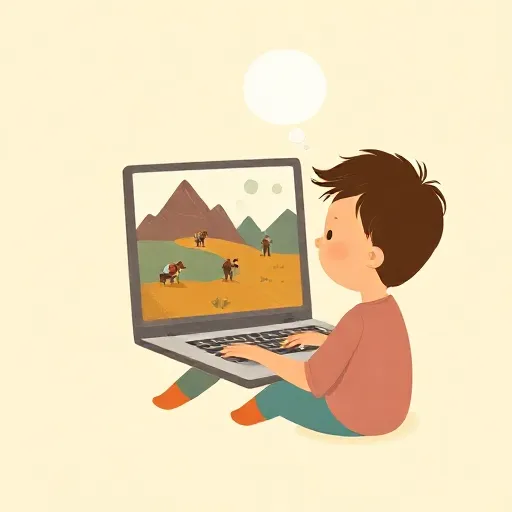
These virtual communities are built from pixels and code, not real people. They are highly idealized, and nobody thinks a simulation alone proves how actual scientists should behave. But they give us something powerful: how‑possibly explanations. They show that a certain pattern — like a maverick saving a floundering team, or a little gossip‑gap preventing a mistake — can arise from simple, believable rules. That helps philosophers and social scientists come up with ideas worth testing in real‑world teams, classrooms, or labs.
The core lesson lands close to home. Next time your group project jumps to an answer in the first three minutes, remember the maverick. Deliberate disagreement and someone who says “wait, what about that other option?” are not just annoying — they are often the reason the group ends up with a better idea. Talking with everyone all the time can be loud and comforting, yet the model worlds suggest that on tricky problems, a little distance can protect the truth. Science, it turns out, flourishes not when everyone is in lockstep, but when the right kind of chaos is given room to breathe.
Think about it
- When you are working on a group project and everyone quickly agrees on an answer, what might you do to make sure you have not missed a better idea?
- If you could build a computer simulation of your own group of friends solving a puzzle, what different “agent” types would you include, and why?
- In your experience, does sharing ideas with lots of people always help you make better decisions, or can it sometimes confuse you? When?