Is “Survival of the Fittest” Just an Empty Saying?
The Fittest Survive — But Who Counts as Fittest?

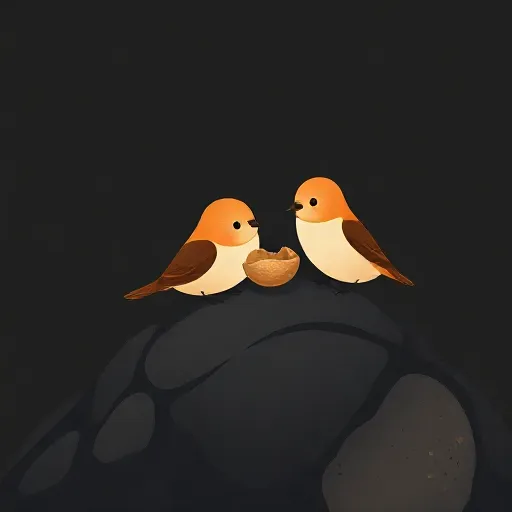
In 1835, a young naturalist named Charles Darwin visited the Galápagos Islands. He noticed finches with slightly different beaks. Some cracked seeds well. Others struggled. Darwin later argued that nature selects the organisms best suited to their surroundings. The phrase “survival of the fittest,” coined by philosopher Herbert Spencer (1820–1903), seemed to sum it up perfectly.
But almost immediately, critics spotted a problem. If you ask a biologist, “Which finches are the fittest?” you often get an answer like: “The ones that leave the most offspring.” However, if fitness means nothing more than “reproductive success,” then “survival of the fittest” turns into “survival of those that survive to reproduce.” That statement is a tautology — a claim that is true by definition, giving no new information. You could say the same thing about a game of chance: “The tickets that win the lottery are the ones that win.”
This charge stung. If the central idea of evolution by natural selection is an empty truism, it cannot explain anything. Biologists themselves sometimes fed the worry. C.H. Waddington (1905–1975) wrote that the fittest individuals are simply the “most effective in leaving gametes to the next generation.” That sounds like measuring fitness by counting babies. So the challenge became: can we define fitness in a way that is not just a record of reproductive output, yet still gives evolution real explanatory power?
Fitness as “Fit for the Environment” — The Design-Problem Idea

One natural move is to think of fitness the way you think of a key fitting a lock. A finch with a stout beak is “fit” for cracking hard seeds because its traits match a challenge in its world. This is sometimes called ecological fitness — the match between an organism’s characteristics and the demands of its environment.
The philosopher Daniel Dennett (born 1942) described ecological fitness as a matter of solving design problems. A cheetah’s spine is a solution to the problem of running fast; a cactus’s thick skin solves the problem of holding water. In this view, organism A is fitter than organism B if A’s traits solve its environment’s design problems more completely.
The trouble is, how do you measure “more completely”? There is no agreed-upon scorecard. And if you push the design-problem idea, it seems to lead right back to reproduction. After all, the ultimate “problem” an environment sets is surviving long enough to leave descendants. So the definition may only hide the original circularity instead of breaking it.
What’s more, the number of design problems is vast. Every feature of the world that affects survival — temperature, food type, predators, disease — sets a different challenge. Without a clear measuring stick, the design-problem approach does not give science the precise predictions it wants. Many biologists turned away from ecological fitness and continued to rely on counting offspring. That choice only sharpened the tautology objection.
The Propensity Solution — Fitness as a Hidden Tendency
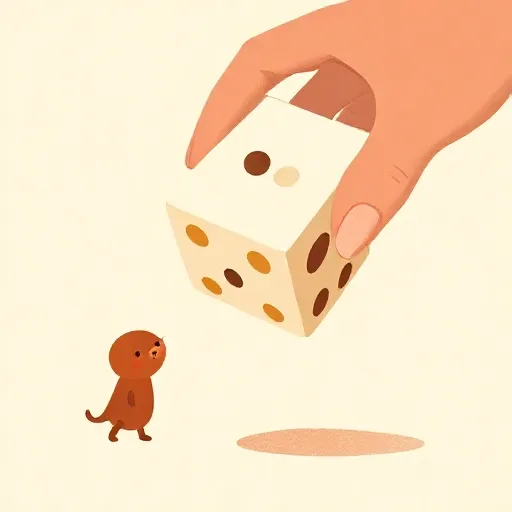
What if fitness is not about what actually happens, but about what would probably happen? Many philosophers of biology embraced a propensity interpretation. A propensity is a disposition or tendency — like a glass being fragile or a magnet being able to attract iron. A glass can be fragile even if it never breaks; a magnet has magnetic power even if no iron is nearby. In the same way, an organism could have a probabilistic disposition to leave a certain number of offspring — its fitness — even if, by bad luck, it never actually reproduces.
In the late 20th century, philosophers John Beatty and Susan Mills proposed this definition: organism X is fitter than Y in an environment if X has a probabilistic propensity greater than 0.5 to leave more offspring than Y. On this view, fitness is no longer identical to actual reproductive success. A fitter organism might get unlucky and leave fewer descendants, just as a coin might land heads less often than tails over a few tosses even though it has a 0.5 propensity. The tautology dissolves: “the fitter survive” becomes “those with a higher probability of reproductive success tend, over time, to leave more offspring.” That is a testable, informative claim.
This move also lined up nicely with the reality of evolution. Natural selection is not a perfect guarantee; drift — random fluctuations in survival and reproduction — also plays a role. A probabilistic notion of fitness fits a world where chance matters.
But the propensity idea faced a fierce obstacle. It proved maddeningly hard to pin down the exact mathematical shape of that “probabilistic propensity” in a way that always matches how we actually measure fitness.
Variance, Skew, and the Evolutionary Arms Race

The simple propensity definition ran into trouble with real evolutionary scenarios. Consider two finches, A and B. Every year, A raises exactly 2 chicks. B raises 1 chick in odd-numbered years and 3 chicks in even-numbered years. On average, both have 2 chicks per year. Yet after ten years, A will have 512 descendants and B only 243. Why? Because the variance — the spread around the average — makes B’s long-term growth slower. A steady performance wins.
John Gillespie showed in the 1970s that the temporal and spatial variance in offspring numbers can matter as much as the average. Later, Beatty and Susan Finsen demonstrated that even skew — when the distribution of possible offspring numbers is lopsided — can flip which organism is truly fitter. Sometimes, when average fitness is low, higher variance actually helps a lineage. So the definition of fitness must include a moving circus of statistical corrections: average, variance, skew, and more.
Philosopher Robert Brandon wrestled with this in the 1990s. He offered a formula for expected fitness that included a placeholder: a mysterious function depending on variance “some function of the variance in offspring numbers for a given type, (\sigma^2), and of the pattern of variation”. In other words, the definition became a fill-in-the-blank schema. Each particular situation would fill that blank differently. And because evolution is an endless arms race — one strategy sparks a counter-strategy — the number of blanks could be indefinitely large. The propensity definition seemed to dissolve into a long list of operational measurements, not one clean concept.
A Mathematical Escape — Pence and Ramsey’s Infinite Future
Could there be a single mathematical formula that captures all those complexities at once? In 2013, philosophers Charles Pence and Grant Ramsey proposed a striking new definition of individual fitness. Instead of looking only at the next generation, they imagined every possible chain of descendants stretching into the far future. Think of it as rolling a genetic die at every fork in the family tree, across infinite time.
Their definition takes the limit of the growth rate as the number of generations goes to infinity. In simple terms, it asks: across all possible futures, what is the long-term average tendency of a lineage to grow? That one number automatically folds in the effects of variance, skew, and every other odd pattern, because it considers the whole life of the lineage, not just one snapshot. If some possible paths lead to extinction, they pull the value down. If a fluctuating strategy eventually burns out, the limit captures that.
Under certain biological conditions (no chaotic population dynamics, density-dependent selection, etc.), this number is well-defined and matches the fitness measures biologists actually use. It beautifully handles the earlier counterexamples: an organism that alternates between 1 and 3 offspring will have a lower fitness than one that consistently produces 2, because the fluctuating lineage has a higher long-term chance of extinction. Pence and Ramsey’s proposal was embraced by some as a genuine solution to the tautology problem and the statistical nightmares that came before.
However, the debate did not end. Some philosophers worry that Pence and Ramsey’s definition, however mathematically elegant, may only tell us how to measure fitness, not what fitness is. And if fitness is supposed to be a real cause in nature, not just a bookkeeping number, that remains contested.
Why It Still Matters — Drift, Design, and the Finches’ Future

The definition of fitness is not just a puzzle for philosophers. It affects how biologists tell the difference between natural selection and mere drift — the random seesawing of traits that happens in every finite population. Suppose a population of finches shifts from mostly stout beaks to mostly thin beaks in a drought. Is that because thin beaks were fitter, or because of random luck? To answer, you need a measure of fitness that is independent of just counting who survived.
Ecological fitness, for all its vagueness, offers that lifeline. If you can see how a beak shape actually solves a feeding problem, you have evidence that the change was not pure chance. The propensity approach and Pence and Ramsey’s formula can help, but they cannot fully replace the need to identify what a trait does in its environment. Without that, a scientist can never be sure whether a surprising result is drift or a failure in measuring fitness. This means that ecological fitness, once pushed aside as unscientific, turns out to be indispensable after all.
So the question that Spencer’s tidy phrase invited is still alive. What does it really mean to be “fit”? If you can’t say, then the whole engine of evolution by natural selection runs on a circular slogan. That’s why philosophers keep arguing. It’s why biologists are still refining their models. And it’s why, when you look at a finch cracking a seed, you are staring at a 150-year-old riddle that is still unfolding.
Think about it
- If scientists could predict exactly how many offspring every organism will have, would the phrase “survival of the fittest” still tell us anything new?
- Imagine two lizard species in the same desert. One usually has 5 babies a year; the other sometimes has 2 and sometimes 8. Which one seems fitter? What extra information would you need to be sure?
- If fitness can only be defined by using the same outcomes it is supposed to explain, does that make evolution by natural selection unscientific, or just trickier to test than we thought?