Can Pornography Hurt Women? The Feminist Standoff
From Courtroom to Culture War
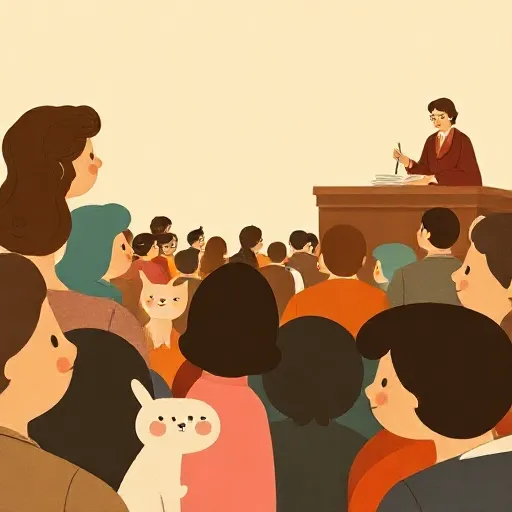
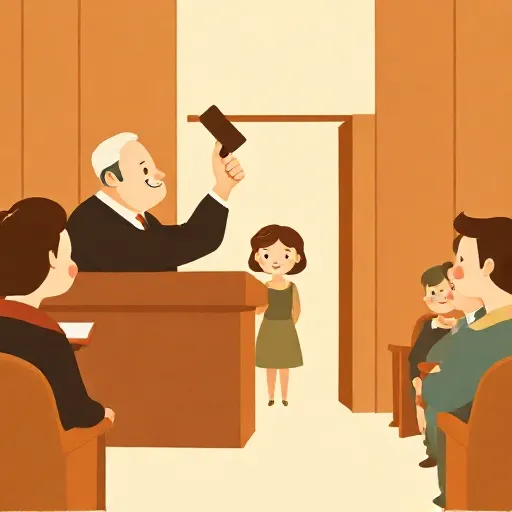
In 1984, a packed courtroom in Indianapolis became a battleground over a question most adults preferred to whisper about: Is pornography a form of violence against women? A group of feminists had persuaded the city to pass a new kind of law — the first of its kind in the United States. The law didn’t make pornography a crime. Instead, it allowed women who had been harmed by it to sue the people who made and sold it. At the center of the fight were two fierce writers and activists: Catharine MacKinnon (b. 1946) and Andrea Dworkin (1946–2005).
MacKinnon and Dworkin defined pornography as the “sexually explicit subordination of women.” They argued it wasn’t just dirty pictures; it was a weapon that kept women down. Their model ordinance treated pornography as a civil rights violation, like discrimination or harassment. But free-speech campaigners rushed to challenge it — and in 1986, the Supreme Court struck the law down. The legal battle ended, but the philosophical explosion was only beginning. Are sexually graphic images simply expression, or do they actually change our brains and our society?
Training Desire to Love Inequality

To understand what MacKinnon and Dworkin were so worried about, we have to look at how our desires are shaped. The philosopher Anne Eaton argues that some pornography — what she calls inegalitarian pornography — shows women being treated as inferiors, and makes that inequality look sexually exciting. Eaton doesn’t claim all pornography works this way, but she fears that exposure to inegalitarian material can train our brains like a bell trains a dog: it links arousal to the image of a powerless or humiliated person. If that kind of training spreads through a culture, it can reinforce the habits and myths that keep women unequal.
That fear goes back a long way. In the 1970s, Helen Longino (b. 1944) gave a philosophical backbone to the anti-pornography movement. She borrowed an idea from the 18th‑century philosopher Immanuel Kant: you must never treat a person as a mere means — a tool for your own goals without respecting their own ends. Sex, Longino thought, already makes it hard to avoid using another person. Pornography, she warned, takes that danger and magnifies it. By showing men and women taking pleasure in acts that dehumanize women, it teaches that women can be treated without moral regard.
MacKinnon pushed the point further. She claimed that pornography “conditions male orgasm to female subordination.” In other words, it wires male desire so that what arouses is the image of a woman being controlled or degraded. Even if only some pornography does this, the habit, once formed, spills into real life. Subordination — being put in a lower rank — becomes the flavor of sexual excitement. For MacKinnon and Longino, this wasn’t a harmless fantasy; it was a cultural engine that nourished sexism.
Does It Really Cause Harm? The Numbers Don’t Agree
If pornography really changes how people act, we should be able to measure that effect. But the evidence is stubbornly mixed. Some studies do hint at a connection. The sociologist Diana Scully compared convicted rapists to other criminals and found that rapists had somewhat higher use of pornography. A large survey led by Neil Malamuth discovered that among men already at very high risk for sexual aggression, heavy pornography users were about four times more likely to act aggressively. Yet a later review by Christopher Ferguson and Richard Hartley painted a different picture. They reported that evidence for a causal link — proof that pornography actually causes assault — is slim, and that rates of rape in the United States actually fell as pornography became more available.
Not all feminists were comfortable with the “pornography as cause” model anyway. Deborah Cameron and Elizabeth Frazer argued that treating men as if they are mindlessly pushed by images lets real perpetrators off the hook. It suggests men can’t think critically about what they see. Most people, they pointed out, don’t simply imitate everything they watch; they interpret, joke about, or reject it. If feminists really want to change a culture that tolerates violence, they might need to focus on widespread social norms rather than single out one kind of media as a hypnotic trigger.
So the debate is at a stalemate. Some research shows a pattern; other research shows the opposite. And even if a link exists, correlation is not causation — the two might travel together without one forcing the other. Philosophers and scientists are still wrestling with how to separate pornography’s influence from all the other sexist messages that float through our lives.
When “No” Doesn’t Mean No — The Silencing Argument
Perhaps the subtlest charge against pornography isn’t that it causes violence the way a shove causes a fall. It’s that it changes what words mean. The philosopher Rae Langton used speech act theory — the idea that words and pictures do things, not just describe them — to argue that pornography can silence women. Imagine a sign that says “Whites Only.” That sign doesn’t just report a fact; it commands and enforces racial separation. Langton suggested that in a society where women are already seen as less than equal, pornography can act like a “Women Are for Pleasure” sign. It can rank and recommend certain treatments of women, making a woman’s protest — her “no” — sound like coyness rather than refusal.
Jennifer Hornsby added another layer. If enough images teach that a woman who looks sexy secretly wants to be overpowered, then when she says “stop,” the hearer decodes it as part of the game. Her utterance loses its ordinary illocutionary force — the social act it’s supposed to perform. She isn’t silenced by having her mouth taped shut; she’s silenced because the background rules of communication have been twisted.
Not everyone is convinced. Critics like Nadine Strossen point out that people interpret the same scene in utterly different ways. Where MacKinnon sees degradation, another viewer — including many women — might see rebellion or freedom. And Louise Antony argues that pornography doesn’t have the kind of authority that a judge’s order or a stop sign has. It may influence people, but it can’t command them. The silencing claim, its opponents say, gives too much power to images and too little to the minds that encounter them.
Object or Subject? The Debate Over Being a Thing
At the heart of many of these arguments sits a single word: objectification — treating a person like a thing. Martha Nussbaum (b. 1947) broke objectification down into seven features: treating someone as a tool, denying them freedom, treating them as interchangeable, and so on. She noticed something curious. In a loving relationship, it can actually be wonderful, for a while, to be helpless or passive. What matters is whether the whole relationship is built on mutual respect, not whether any single act looks objectifying.
This opened a crack in the feminist case. Linda LeMoncheck argued that even in a pornographic fantasy that shows a woman overpowered, the fantasy still assumes she has a will to overcome. The imagined subject isn’t a mindless doll; she’s a person whose resistance makes the scenario exciting. On the other hand, Susan Bordo countered that in pornography the woman’s will is often reduced to just one thing — a desire to please the imagined male viewer. That’s not a full human being; it’s a self shrunk to fit a single role.
Nussbaum herself remained worried about most commercial pornography, which she thought treated sexual partners as trophy objects you could trade for the next attractive body. But she also believed that a well‑intentioned law could never sort harmless from harmful images safely — and that moral argument, not court orders, was the wiser path.
Why You Should Care — Screens Everywhere
The Indianapolis ordinance was struck down almost forty years ago. Yet the questions it raised haven’t gone away — they’ve climbed into your pocket. Today, the internet makes sexually explicit images available in an instant, often before a person is old enough to understand what they’re seeing. The same arguments move through new debates, from “revenge porn” laws to school dress codes. Is looking at a dehumanizing video a private choice, or does it slowly shift how you see the people around you? Can you laugh at a meme that makes someone else’s suffering look hot — and still call yourself a fair person? And if you think certain images are dangerous, who gets to draw the line, and what happens when a line is drawn against you?
The feminists we’ve met disagree on the answers. Some are convinced that leaving the pipeline of images open is like letting a slow poison drip into the water supply. Others warn that every censorship tool ever built has been used to silence the weak, not the powerful. The fight in that Indianapolis courtroom never really ended; it just moved to every screen you own.
Think about it
- If you saw a friend sharing a video that shows people being treated badly but the video is labeled “just fantasy,” would you say something? Why or why not?
- Some people argue that banning harmful images would protect people; others say it would be too dangerous because nobody can agree on what counts as harmful. Where would you draw the line?
- Can looking at certain kinds of images change the way you think about a whole group of people, even if you don’t realize it? Can you think of an example from your own life?