
Is Morality Different for Boys and Girls? The 'Voice' Debate
To Tell or Not to Tell: A Moral Puzzle

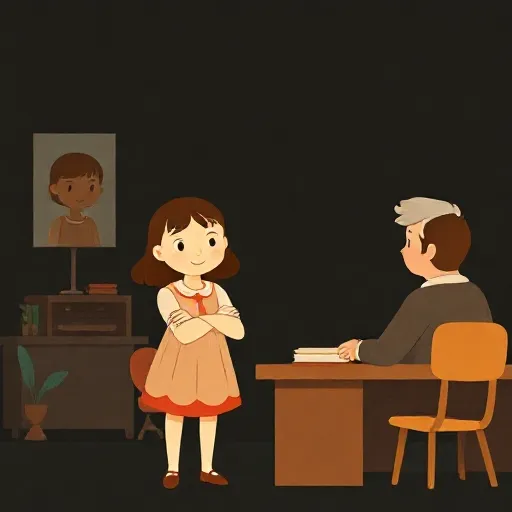
You see your best friend copying answers from a hidden note during a math test. After class, the teacher asks if anyone witnessed cheating. What is the right thing to do? You might think, “Cheating breaks the rules. I ought to tell the truth.” That approach focuses on fairness and universal rules. But you might also think, “If I report my friend, I’ll wreck our friendship and get someone I care about into serious trouble. I just can’t do that.” That approach focuses on caring and maintaining relationships. Both feel like genuine moral thinking. For a long time, though, many psychologists and philosophers believed that only the fairness-and-rules way was the truly mature moral response. Then a discovery came along that shook all of this up — and it started with listening to girls.
The Voice That Wasn’t Being Heard: Carol Gilligan’s Discovery

In the early 1980s, psychologist Carol Gilligan (born 1936) published a startling book, In a Different Voice. She had studied how people of different ages reason about real-life moral conflicts. The dominant theory at the time, by Lawrence Kohlberg, ranked moral development in stages, with the highest stage being a kind of principled fairness and respect for rules. Kohlberg’s research suggested that women often scored lower on these stages — stuck at a less advanced level.
Gilligan noticed something the earlier researchers had missed. In her interviews, many girls and women described moral problems not as clashes of rights, but as tensions between people they cared about. They spoke about responsibilities, about preserving connections, about not turning away from someone who needed them. For them, the moral thing to do wasn’t always to apply a rule impersonally; it was to pay attention to the particular people affected and to the web of relationships that held them together. Gilligan called this the perspective of care, contrasting it with the perspective of justice, which stresses rules, rights, and independence.
Neither perspective was exclusive to one gender. Girls and women often used justice reasoning too. But the care perspective — valuing intimacy, responsibility, and attachment — kept being treated as a lesser, less mature form of morality. Gilligan argued that it was simply a different moral “voice,” not an inferior one.
Philosophers quickly took up the idea. Some built a full ethical framework known as the ethic of care. Philosopher Nel Noddings (born 1929), for instance, argued that caring is not a secondary virtue but the very heart of ethics. We are born into relationships, she said, and our most direct moral experiences come from responding to the needs of those close to us. Abstract principles can never replace the tug of actual concern for a real person.
But not everyone cheered. Some feminist thinkers worried that celebrating caring as a special “women’s gift” could backfire. Philosopher Claudia Card (1940–2015) cautioned that praising women for being natural carers might end up reinforcing the very roles that keep women exhausted and undervalued. If caring is seen as essentially feminine, who gets stuck with all the dirty work — and who gets to pursue their own projects?
Why Did People Once Think Women Couldn’t Be Fully Moral?

Long before Gilligan, women thinkers had already been fighting a different but related battle. For centuries, many male philosophers assumed that women were not quite as rational as men and therefore not fully capable of moral reasoning. The forerunners of feminist ethics pushed back, insisting that women were just as capable of thinking clearly about right and wrong — if only they were given the same education and opportunities.
In 1694, Mary Astell (1666–1731) published A Serious Proposal to the Ladies, arguing that denying education to girls was not merely unfair but immoral. Since women are rational beings, she said, treating them as though their minds could not be improved was an injustice. A century later, Mary Wollstonecraft (1759–1797) renewed the fight in her Vindication of the Rights of Women. She famously wrote, “I here throw down my gauntlet, and deny the existence of sexual virtues.” Men might say women have one set of virtues and men another, but Wollstonecraft insisted that all virtues are human virtues, and the principles that guide them must be the same for everyone. Along with thinkers like John Stuart Mill (1806–1873) and Harriet Taylor Mill (1807–1858), she argued that what looked like a difference in moral capacity was really just a difference in upbringing. Give girls equal schooling, Mill argued, and they would flourish as moral agents — to the benefit of all society.
These early voices laid a crucial foundation. They did not claim that women think in a special, more caring way; they claimed that women think just as well as men. That emphasis on equal rationality would later clash with the idea of a distinctive care voice, forcing feminist philosophers to wrestle with a tricky question: if women’s moral voices sound different, is that because of an inner nature, or because society shaped them that way?
Becoming a Woman, Not Born One: Simone de Beauvoir’s Warning
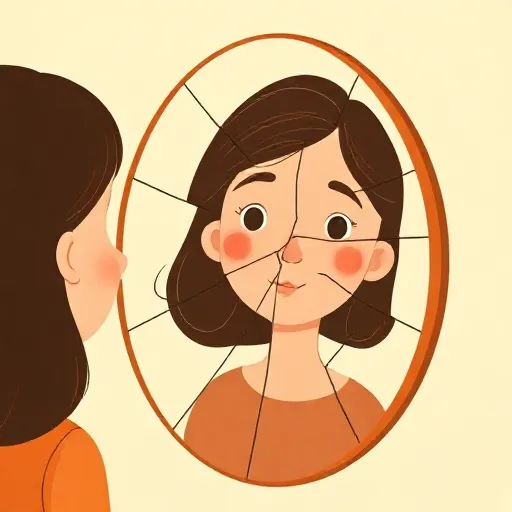
The most powerful challenge to any fixed idea of womanhood came from French philosopher Simone de Beauvoir (1908–1986). In her 1949 book The Second Sex, she delivered a single sentence that echoes through feminist thought to this day: “One is not born, but rather becomes, woman.” Beauvoir meant that being born female is a biological fact, but the whole package of traits, behaviors, and expectations that a society calls “woman” is something that culture constructs. She argued that throughout history, men had treated themselves as the standard human — the “Self” — and defined women as the “Other,” a kind of deviation from the norm.
Her point carries a deep warning for any ethics that builds on supposedly natural gender differences. If being a woman is largely something you are trained into, then the so-called “feminine” moral voice of caring may not be an innate gift at all. It could be a consequence of centuries of pushing girls toward nurturing, self-sacrifice, and attentiveness to others’ feelings. Essentialism — the belief that men and women have fixed, opposite moral natures — suddenly looked less like a discovery and more like a story that a particular society tells itself. Beauvoir urged philosophers to pay close attention to the social and economic structures that shape women’s choices, rather than assuming an unchanging female essence.
Whose Caring Counts? The Problem of a One-Size-Fits-All Woman
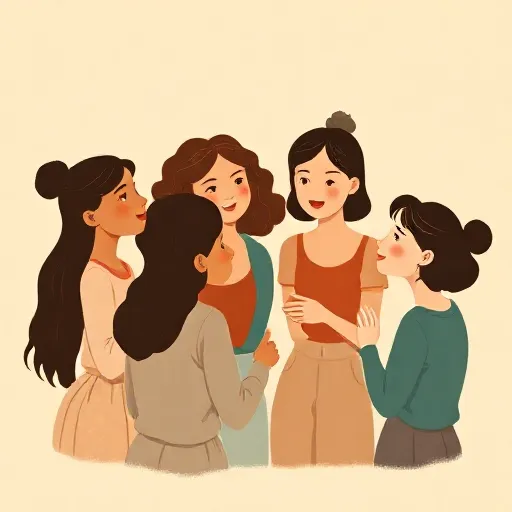
As the ethic of care developed, another crucial criticism emerged. The early conversations often spoke as if “women” were a single group, sharing the same experiences and the same moral voice. Black feminists, among others, pointed out how wrong that assumption was. Philosophers and activists like Anna Julia Cooper (1858–1964) and Sojourner Truth (c. 1797–1883) had long exposed that the women’s movement centered on the concerns of white, middle-class women, while ignoring the struggles of Black women.
In the late twentieth century, legal scholar Kimberlé Crenshaw (born 1959) gave this insight a name that stuck: intersectionality. She described a famous real-world case. At a General Motors plant, Black men were hired for factory-floor jobs, but no women were. White women were hired for secretarial jobs, but no Black people were. Black women were shut out of both — discriminated against not just as women and not just as Black, but precisely at the intersection of those identities. The law, treating race and gender as separate categories, could not even see the problem.
Intersectionality transformed feminist ethics. It demanded that philosophers stop talking about “women’s moral experience” as if that were one thing. A wealthy woman’s experience of caring is not the same as a poor immigrant woman’s. A white woman’s moral dilemmas are not the same as a Black woman’s — and imagining they are can end up erasing people rather than helping them. This does not mean people have nothing in common. But it means that building a fair ethics requires listening to many different voices, especially those that have been ignored the longest.
From the Dinner Table to the World: Why the Care Debate Matters
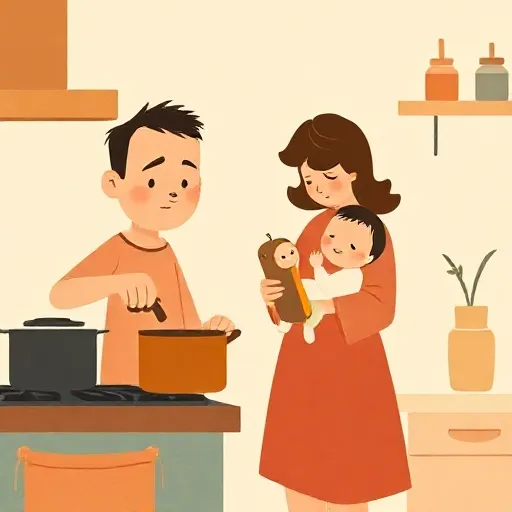
So why does this tangled debate still matter? Because the tension between justice and care shows up everywhere in daily life. When your school decides whether to discipline a student for breaking a rule, should it focus on the rule or on the kid’s difficult home situation? When your parent is exhausted from looking after a younger sibling or an aging grandparent, why is that caring work so often taken for granted — and unpaid? The ethic of care forces us to ask whether our society is built only on abstract fairness, or whether it also recognizes the enormous moral importance of tending to the people right in front of us.
Feminist philosophers have pushed these questions into medicine, education, law, and politics. They argue that a good society is not just a collection of rule-following individuals; it is a network of relationships, full of vulnerable people who need care — including you, at some point in your life. At the same time, the intersectional critique reminds us that caring is not a cozy, simple ideal. Who gets to be cared for, who is expected to provide care, and whose care is visible — these are questions about power, not just about kindness.
Next time you face a choice between following the rules and protecting a friendship, you are not just a kid in a pickle. You are standing inside a centuries-long conversation about what really matters in morality — and which voices we are willing to hear.
Think about it
- If you had to choose between a world where everyone always follows strict fairness rules and a world where everyone always puts caring for individuals first, which world would be better? What problems can you imagine with each?
- Do you think the way you were raised — as a boy or a girl — affects how you decide what’s right? Or is everyone’s moral compass shaped by the same deep-down principles?
- Some people worry that praising women for being naturally caring ends up pressuring them to do most of the caring. How could we change that without throwing away the importance of caring altogether?