How Do You Know What to Believe?
The Case of the Missing Teacher

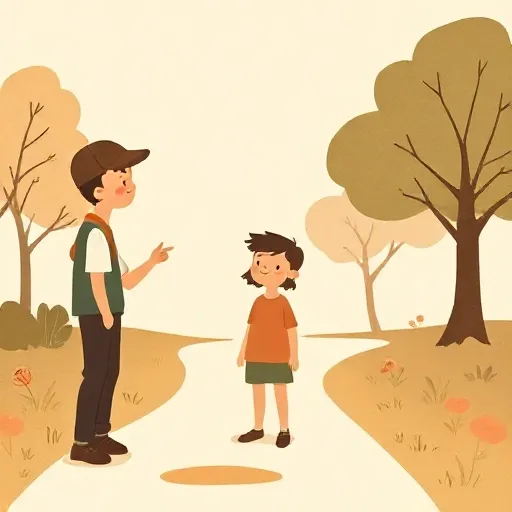
One afternoon in the hallway, your friend tells you the math teacher is leaving at the end of the week. You have no reason to doubt her — she’s usually right about these things. So you start to believe it. That belief feels reasonable.
Then another classmate overhears. She pulls you aside and whispers that the first friend is a famous prankster who just lost a bet. Suddenly you’re not so sure. The teacher might not be leaving after all.
In philosophy, the story you first heard counts as evidence — anything that gives you a reason to believe something is true. The second story is also evidence, but it works against the first one. Philosophers call that a defeater: a piece of evidence that weakens or cancels the support you had for a belief.
Defeaters come in two main types. An undercutting defeater is a reason to think your original evidence isn’t trustworthy. Learning that your friend is a prankster undercuts her testimony; even though she spoke, the connection between her words and the truth now looks shaky. A rebutting defeater directly gives you a reason to believe the opposite. If another student said the teacher just signed a new contract, that would rebut the rumor head-on.
And it gets even trickier. Later you might learn that the classmate who warned you about the prankster is actually the prankster’s sworn enemy and made the whole thing up. Now the defeating evidence is itself defeated. Your original reason to believe the rumor is restored — at least until the next twist.
This everyday dance of reasons and counter‑reasons shows how evidence works: it can justify a belief, but only when you take into account all the evidence you have, not just the part you like. Many philosophers hold a view called Evidentialism, which says that if two people have exactly the same total evidence, they should have exactly the same justified beliefs. According to Evidentialists like Earl Conee and Richard Feldman (writing in 2004), justification supervenes on evidence: the evidence dictates what it’s reasonable to think.
But what is evidence, really? And where does it live — out in the world, or inside your head?
Can a Perfect Thinker in a Fake World Still Be Rational?
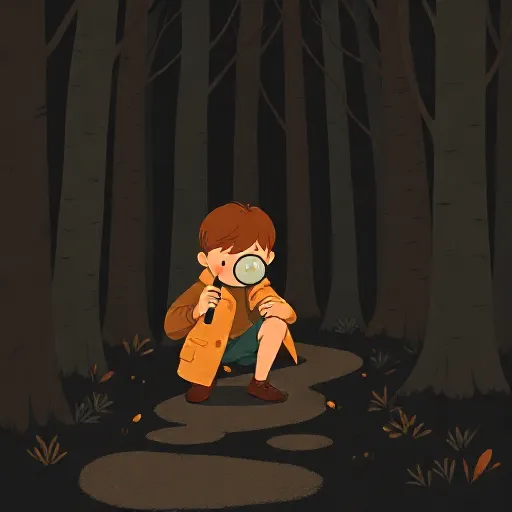
Imagine a brilliant thinker who weighs all her evidence carefully. In the ordinary world, she sees a knife with what looks like blood and forms the belief that a crime occurred. She’s right, and her belief is reasonable.
Now imagine a second thinker who is equally brilliant and careful, but lives in a world controlled by a powerful deceiver — a Cartesian demon. This demon feeds her experiences that are exactly like the first thinker’s: she too has a vivid visual experience of a bloodied knife. But in this world, the knife is a mirage, and the blood is fake. The thinker has the same evidence, as far as she can tell.
Is the second thinker’s belief about blood on the knife less rational? Many philosophers, like Stewart Cohen (1984), say no. A person shouldn’t be called unreasonable simply because she was unlucky. This intuition pushes toward the idea that your evidence is limited to your private mental experiences — what philosophers call the phenomenal conception of evidence. If the two thinkers have exactly the same experiences, they share the same evidence, and both are equally justified.
Timothy Williamson (born 1955) challenges that story. He argues that evidence is not just experiences; evidence is what you know. A known proposition, like “there is blood on the knife,” can be evidence only if it’s true. In the good case, the first thinker knows that the knife has blood and thus has that fact as evidence. In the bad case, the demon‑deceived thinker does not know the blood claim because it’s false. According to Williamson, the two thinkers have wildly different evidence. The good‑case thinker is more justified because she has far more knowledge to go on.
Williamson’s view forces a tough question: if the deceived thinker doesn’t know about the knife, what evidence does she have for her belief? Maybe she knows things like “it appears to me that there’s blood” or “I’m having a visual experience as of a red‑stained blade.” But some philosophers point out that when we look at the world, we don’t normally form beliefs about our own experiences — we just form beliefs about the objects we see. The debate about what exactly can serve as evidence is still wide open, and it ties directly to whether rationality depends on what is in the mind or what is in the world.
Smoke, Spots, and Hidden Knowledge

So far we’ve talked about evidence in a very personal way: what justifies your belief. But evidence also exists out in the world as a sign or symptom of something else.
Smoke is a reliable sign of fire. Koplik spots inside the mouth are a reliable sign of measles. In these examples, evidence is a reliable indicator — one thing points to another whether or not anyone knows the connection. This is the evidence Ian Hacking called “the evidence of one thing that points beyond itself.”
But here’s a puzzle. Suppose a doctor spots the tell‑tale spots and immediately suspects measles. She has excellent evidence for her diagnosis. Now imagine you examine the same child. You see the spots too, but you’ve never heard of Koplik spots. Are the spots evidence for you that the child has measles? Most philosophers would say no. A clue only helps you form a reasonable belief when you have the relevant background theory — the knowledge that the spots and the illness go together.
This shows that the word “evidence” can be used in two different ways. One sense, indicator evidence, is about a real connection in the world. The other sense, normative evidence, is about what makes it reasonable for a particular person to believe something. Your background theory — what you already know or justifiably believe — turns mere indicators into genuine reasons for belief.
That is why two people can look at the same data and draw different conclusions without either one being irrational. Their background knowledge differs. And it’s why when a new hypothesis comes along, it can shake up what you’re justified in believing even though no new physical fact appears. For example, before Darwin, the Design Hypothesis (that an intelligent creator designed organisms) was the only game in town. After Darwin proposed natural selection, the Design Hypothesis lost some support — not because the original facts changed, but because a new possible explanation entered the field. Your awareness of alternative explanations is part of your total evidence.
Why Science Needs Public Clues

Science has an astonishing ability to settle arguments. One reason, philosophers argue, is that scientific evidence is public — it can be seen and checked by many different observers. If a physicist reports a strange new particle, other labs can repeat the experiment and see the same particle tracks. This public character seems crucial for objectivity: letting evidence serve as a neutral referee between rival theories.
In the early twentieth century, the logical positivists — a group of philosophers including Rudolf Carnap (1891–1970) — were obsessed with this idea. They wanted to build science on a foundation of observation statements that any minimally competent speaker could verify. At first, Carnap thought these statements referred to private sense data — the colors, shapes, and sounds in a person’s immediate experience. But he and others realized that private experiences can’t be shared; you can’t literally step inside my head and see my sensation of red. That threatened the intersubjectivity of science. So Carnap eventually argued that the basic evidence statements must be about public physical objects and events, not private mental states.
This shift came with a cost. Your own headache is not a public event, yet you have direct access to it in a way no one else does. The pain seems to justify your belief that you’re hurting, but can we call that private feeling evidence? If we insist that all genuine evidence must be publicly shareable, then your headache might not qualify — a view that pushes toward behaviorism, the idea that mental talk is really about observable behavior. But most people reject behaviorism, and many philosophers now think evidence can include both public facts and private experiences, even if the two serve different roles.
The public‑private tension is also shaped by the theory‑ladenness of observation. What you notice in a laboratory often depends on your theoretical training. Tycho Brahe and Johannes Kepler might have looked at the same sunrise yet “seen” different things because they held different background theories about the solar system. If observation is soaked in theory, then even shared evidence isn’t perfectly neutral. Still, evidence does settle disputes — scientists change their minds when new data arrive. But the way evidence bridges the gap between private minds and a shared world remains one of philosophy’s deepest puzzles.
What This Means for Your Own Mind
You already live the puzzle. When a friend tells you something, you weigh her honesty. When you see a suspiciously empty cookie jar, you connect the facts to a conclusion. When you feel certain that a movie will be bad based on nothing but a poster, you’re using something your gut treats as evidence.
Philosophers don’t give you a simple rule to replace your intuition, but they offer something better: a clearer picture of the hidden structures behind “that’s a good reason.” They’ve shown that evidence isn’t one simple thing — it’s a knot of justification, reliability, background knowledge, and public sharing. The knot can’t be untied easily, which is why rational people can disagree without anyone being crazy.
Knowing this matters. It helps you ask, when you feel completely sure of something: What is my total evidence? Is there some background fact I’m missing? Could a new hypothesis weaken my confidence, even if nothing in the world changed? And it teaches respect for those who reach different conclusions from a different body of evidence.
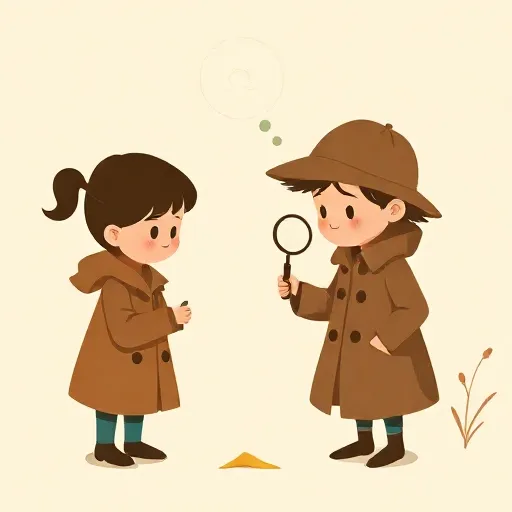
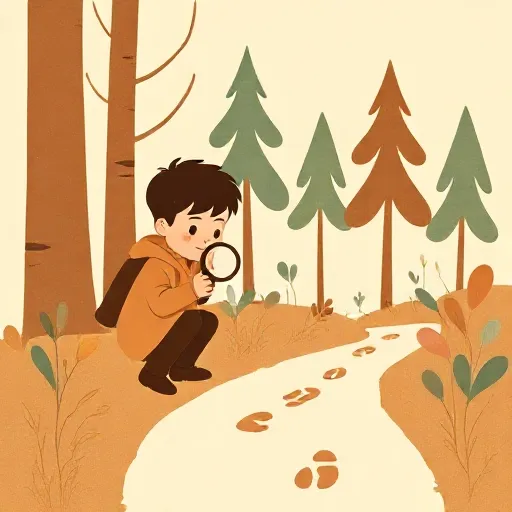
The next time you stare at a confusing clue — a weird footprint, a TikTok rumor, a classmate’s odd behavior — you’re doing philosophy. And the 2,000‑year argument about what counts as evidence is part of what makes your own thinking sharper.
Think about it
- Imagine you have a strong gut feeling that your best friend is upset with you, but you have no outward signs — no angry texts, no cold looks. Should you still treat that feeling as evidence, or is something missing?
- If two equally careful, honest scientists look at the same data and arrive at opposite conclusions, can both of them be reasonable? What would that mean for how we settle disputes?
- Suppose you’re on a jury. A witness says she saw the suspect at the scene, but you later learn the witness has very poor eyesight and wasn’t wearing glasses. Does that new information delete the earlier evidence, or just make it less important? What would a fair thinker do?