
Can You Trust What People Say Without Checking First?
A Story About Two Messages

It’s Monday morning. Your friend tells you your favorite soccer team won over the weekend. You believe her instantly — she follows the matches, her track record is good, and you have no reason to doubt her. A little later, a stranger on the bus sees your team jersey and says exactly the same thing: “Your team won!” Should you believe the stranger just as easily?
This small puzzle gets to the heart of a big philosophical question about testimony: believing something because someone told you. When you accept what a speaker says, are you automatically reasonable? Or do you need your own reasons to trust them? Philosophers have been arguing about this for hundreds of years, and the debate divides into three main camps: Reductionism, Non-Reductionism, and Hybrid Views.
Reductionism: You Need Good Reasons
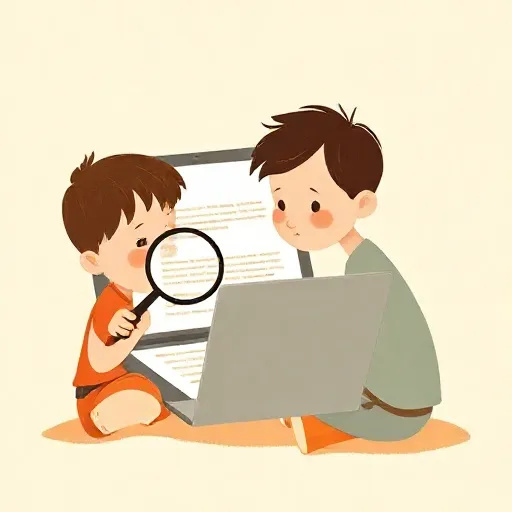
Reductionism says that to be justified in believing what someone tells you, you must have your own positive reasons for thinking that speaker is reliable. It’s not enough to simply hear the words and nod. You need evidence — something you’ve observed, remembered, or figured out — that makes it reasonable to trust the person this time.
This idea goes back to at least the Scottish philosopher David Hume (1711–1776). He thought you should only accept testimony if you have good grounds, like noticing that the speaker has been truthful in the past. Today, Reductionists still insist on a rule often called Positive Reasons: a hearer is justified in believing a speaker’s testimony only when they (a) have positive reasons for thinking the testimony is reliable, where those reasons don’t themselves come from testimony, and (b) have no undefeated defeaters — signs that the testimony is false or unlikely.
A common reason to be a Reductionist is fear of gullibility. If you could just believe whatever you heard without checking, you’d end up trusting random bloggers, strangers with wild stories, or anyone who sounds confident. To avoid that, Reductionists say you must do detective work first.
But all Reductionists aren’t in agreement about what kind of positive reasons you need. They split into two camps: Global Reductionism and Local Reductionism.
Global vs. Local
Global Reductionism claims you need reasons to believe that testimony in general is a reliable way to form true beliefs. For example, if your friend says she got a new puppy, you should run through a little mental checklist: “She said she got a puppy. When people tell me things like this, they’re usually right. So she probably did get a puppy.” You need a general reason — something you’ve learned from observing people over time — that most folks say true things.
Opponents hit Global Reductionism with a powerful objection. How could you ever get those general reasons without relying on testimony itself? To check if people usually speak the truth, you’d have to rely on other people’s reports, which leads you in a circle or an endless chain of needing more and more witnesses. And we don’t have time to verify all the facts about history, science, or distant places ourselves. So if Global Reductionism were true, we’d almost never be justified in believing what anyone says — which seems wildly out of step with real life.
Local Reductionism tries to fix this by narrowing the requirement. You only need reasons for thinking this particular speaker is reliable on this particular occasion. If your friend has a long track record of being honest about new pets, you can use that specific history. No need to prove that humans in general are truthful. This avoids the circle problem because you can check a few claims by seeing for yourself — like visiting your friend and spotting the puppy — without needing another chain of testimony.
But Local Reductionism has its own trouble. Young children, for instance, don’t have the years of experience needed to build a case that their parents usually tell the truth. A three-year-old simply can’t have those positive reasons. Yet we think children can learn huge amounts from their parents’ words. Local Reductionism seems to deny that, which many philosophers find unacceptable. Also, think about asking a stranger for directions in a new city. You know almost nothing about them, yet you’d be justified in believing their answer. Local Reductionism struggles to explain that — you lack the specific positive reasons it demands.
Non-Reductionism: Believe Unless You Have a Reason Not To

Non-Reductionism takes an opposite approach. It says that Positive Reasons is false. You don’t need to go hunting for evidence of reliability. Instead, you have a Presumptive Right to believe what people tell you — you can trust testimony unless you have an undefeated defeater, a positive reason not to.
This view traces back to another Scottish thinker, Thomas Reid (1710–1796). Reid argued that we’re built with a natural disposition to tell the truth and to believe what we’re told, unless something alerts us to trickery. Just as you’re allowed to trust your eyes unless you have reason to think your vision is wonky, you’re allowed to trust a speaker’s report unless you have reason to doubt it.
One strong motivation for Non-Reductionism is that it avoids the problems that harry Reductionists. Since you don’t need positive reasons, young children can justifiably learn from parents, and you can accept a stranger’s directions in good conscience. It also seems to fit how we actually live: we often accept testimony first and only question it when red flags appear.
However, Non-Reductionism faces a sharp objection: it makes us too gullible. Imagine you read a blog post by an anonymous writer on an obscure website claiming your school is secretly closing. You have no special reason to doubt the claim, but you also have no reason to trust this person. Is it rational to believe it? Many would say no — doing so would be foolish. But Non-Reductionism seems to say yes, because you lack a defeater. Or picture a stranger who drops a notebook from a spaceship; the notebook says hungry tigers have eaten some of the aliens’ friends. You have no clue if this is true, and no specific sign it’s false. Non-Reductionists would be forced to say you’re justified in believing the scary tiger story — which feels wildly irrational. So Non-Reductionism may protect children and strangers, but at the cost of making us too easy targets for nonsense.
Mixing Both: Hybrid Views
Seeing strengths and weaknesses on both sides, some philosophers have tried to blend Reductionism and Non-Reductionism into Hybrid Views. The goal is to capture what’s promising in each while avoiding the worst objections.
One hybrid idea, suggested by philosopher Elizabeth Fricker (b.1954), is that adults might need positive reasons but young children in the developmental phase do not. That way, you explain how toddlers can justifiably trust their parents without needing evidence, while adults still need to be careful. Another hybrid, defended by Jennifer Lackey (b.1973), proposes that the hearer and the speaker both have roles to play. The hearer needs some weaker positive reasons — just enough to make relying on the speaker not irrational — but also the speaker must actually be a reliable reporter. So you don’t need airtight evidence, but you can’t just believe anyone blindly; the person across from you has to be the real deal.
Hybrid views are attractive, but they aren’t a sure solution. Critics worry that some hybrids simply inherit the problems of the camps they borrow from, or create brand new puzzles. The debate remains wide open.
Why This Matters for Your Everyday Life
Every day you face an avalanche of testimony. A friend tells you what another classmate said, a news alert announces a political scandal, a website claims a new scientific discovery, a TikTok user insists a certain food is dangerous. When you accept any of these, you’re making a decision — maybe without realizing it — about whether you have good reasons to trust the speaker.
The philosophical clash between Reductionism and Non-Reductionism lives inside those moments. If you lean Reductionist, you’ll want to pause and check sources before believing. If you lean Non-Reductionist, you’ll tend to accept what is said unless a warning bell goes off. Understanding the strengths and risks of each approach can make you a smarter consumer of information, even if no one has proven which side is ultimately right.
And there’s a further twist. Some philosophers ask whether you can ever get knowledge from someone who doesn’t know the fact themselves. Imagine a biology teacher who personally doesn’t believe in evolution, but faithfully teaches the correct science from the textbook. Even though the teacher lacks knowledge (because they don’t believe what they’re saying), the students who listen can still come to know the science. If that’s possible, then testimony doesn’t just transmit knowledge from one mind to another — it can sometimes generate new knowledge in the hearer. So the question isn’t only “Should you trust this person?” but also “Can good ideas come through an unreliable speaker?” That makes the whole puzzle even richer.
Think about it
- A new kid at school tells you a wild story about their old school. You have no way to check any of it. Would you believe it? Why or why not?
- If your best friend, who has never lied to you, tells you something that seems impossible, should you believe it? What would finally make you doubt?
- You read an anonymous comment online that a certain park is dangerous after dark. No one else you know has mentioned it. Is it ever okay to believe a claim like that without checking further?