
Can You Be Reasonable and Still Believe in God?
A Rule for All Beliefs?
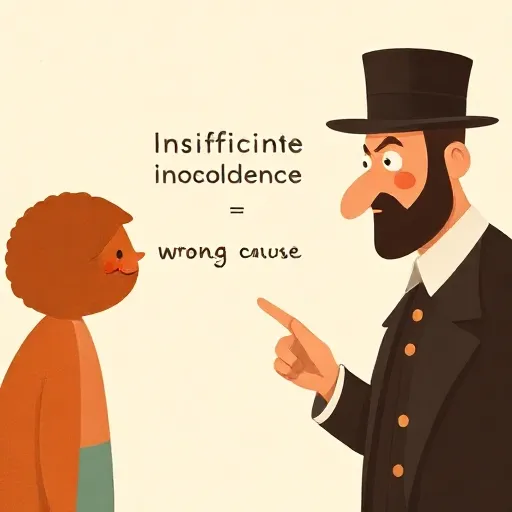
In the 1870s, the British thinker William Kingdon Clifford (1845–1879) drew a bold line. His rule: “It is wrong always, everywhere, and for anyone, to believe anything upon insufficient evidence.” For Clifford, if you can’t point to solid proof—something you see, a logical demonstration, a reliable memory—you should stop believing. He treated it as a moral duty, not just a thinking error. This position, called evidentialism, says a belief is justified only when it matches the strength of your evidence.
Many atheists have used evidentialism to challenge religious faith. They note that beliefs about God, miracles, or an afterlife rarely come with the kind of evidence you’d bring to a science lab. Some even invoke Ockham’s Razor, the principle that you shouldn’t multiply invisible beings beyond necessity: if there’s no proof, the simplest view is that God doesn’t exist. Philosopher Antony Flew (1923–2010) called this the “presumption of atheism”—until positive evidence turns up, the reasonable person simply lacks belief.
Theists didn’t stay silent. Their first move was to meet evidentialism on its own turf by building rational cases for God’s reality. That project is called natural theology.
Building a Case for God: Natural Theology

For centuries, thinkers have practiced natural theology—reasoning from what we observe to the existence of a divine being. The medieval philosopher Thomas Aquinas (1225–1274) offered five famous arguments, such as the notion that every event needs a cause, so there must be a First Cause. In our own time, Richard Swinburne (born 1934) uses probability theory. He argues that the beauty and order of the universe, the fine-tuning of physical laws, and the fact that so many people report religious experiences together make God a better explanation than chance. It’s a cumulative case: no single piece is decisive, but the pile of clues raises the likelihood.
Cardinal John Henry Newman, a 19th-century thinker, added a key insight. He noticed that in everyday life we often reach certainty from a swarm of small, imperfect hints. If several independent arguments for God each have some weight, their combined force can be staggering. Yet trouble remains: even a highly probable argument can be dented by a strong counter-argument, like the existence of terrible suffering. So natural theology rarely delivers the airtight, 100-percent proof that strict evidentialism demands. That led some believers to ask whether evidentialism itself is the right measure.
What If You Don’t Need Evidence?

American philosopher Alvin Plantinga (born 1932) helped start reformed epistemology, a view that throws out the demand for evidence altogether. Plantinga points out that we believe many things without proof: that other people have minds, that the past happened, that our senses mostly work. These are properly basic beliefs—they’re reasonable not because we have arguments for them, but because they are immediately grounded in experience. Plantinga says belief in God can be properly basic too. When someone feels a deep sense of awe in nature or a sudden rush of being loved unconditionally, that experience might directly cause the belief “God is here.” If their mind is functioning as it should, the belief is warranted.
Other philosophers, like William Alston (1921–2009), compare this to perception. Just as seeing a tree justifies your belief in the tree, a mystic’s experience of God’s presence could justify their belief. Not everyone agrees. Religious experiences are more private and variable than ordinary perception. Critics also point to psychology: humans seem to have a built-in hypersensitive agency detection device (HADD). Evolution may have wired us to suspect a mind behind every rustling bush, which could explain religious belief as a natural glitch rather than a contact with God. A theist can reply that maybe God gave us that tendency to make faith easier. The result is a stand-off: if naturalism is true, religious belief is a quirk; if God exists, the belief is properly grounded.
Faith as a Different Kind of Game

What if the whole project of using evidence and arguments for religion gets things wrong? That is the road of fideism. In its boldest form, fideism says faith is a special gift from God and doesn’t need to follow ordinary thinking rules. A more subtle version comes from Ludwig Wittgenstein (1889–1951) and his followers. They claim that religious talk belongs to its own language game, tied to a “form of life.” Inside the faith-game, saying “God forgives my sins” has meaning and is judged by its own standards—like asking whether a chess move is legal, not what the knight is made of. You wouldn’t demand scientific proof because religious language isn’t in the science game.
This Wittgensteinian fideism has a certain appeal: it respects the idea that faith is more about living a life than filling out a checklist of facts. But it faces a big objection. Historically, most Jews, Christians, and Muslims have meant their claims as descriptions of reality—as factual as “There is a star ten times bigger than the sun.” If you treat those statements as moves in a self-contained game, you change what most believers think they’re saying. So while fideism might fit some mystical traditions, it doesn’t match the mainstream Western religions that make robust metaphysical claims.
When Smart People Disagree

Enter the puzzle of religious disagreement. Picture a Hindu who is certain Krishna is divine and a Catholic equally certain that Jesus is the Son of God. Both are bright and sincere. In philosophy, this is a case of epistemic parity: neither side is obviously less capable or informed. Some thinkers, called conciliationists, argue that in such a situation each person should suspend judgement. After all, if you can’t show you’re more reliable, clinging to your opinion looks stubborn.
Others push back. They say you might have private evidence—a vivid mystical experience, a sense of transformation—that the other person can’t access, and that can justify your belief even if they don’t share it. Philosopher Peter van Inwagen says sometimes you just “see” a point that your opponent doesn’t, and that isn’t necessarily arrogant; it’s a real cognitive difference. But if both sides say that, the debate stalls. Worse, identifying an expert on religion is often circular: a Christian authority will point to the Bible, a Muslim to the Qur’an. So the loop of disagreement tightens, and the question of who is reasonable remains wide open.
Why This Matters for You

You probably don’t spend your days weighing arguments for God, but you already act like a part-time evidentialist. When a friend spins a wild tale, you ask, “What’s your proof?” When you suspect a lucky charm really helps, you test it in your head. Clifford’s rule sounds like common sense. Yet you also believe a mountain of things without rock-solid proof: that your parents love you, that the sun will rise tomorrow, that hurting other people is wrong. You trust these on a blend of experience, emotion, and community—not so different from what Plantinga or even fideists describe.
So the debate isn’t just for armchair philosophers. It’s about how strict you should be with your own mind, how you react when someone sees reality totally differently, and whether some of the most important beliefs can be reasonable even when you can’t put them into an equation. The cliffhanger is that no single answer has won. The struggle between Clifford’s evidentialism, Swinburne’s probabilities, Plantinga’s basic belief, and the stand-off of disagreements is still unfolding. And you get to be part of it every time you wonder, “What makes a thought truly okay to hold?”
Think about it
- If a friend says they’ve had a powerful religious experience, but you haven’t, is it reasonable for them to believe because of it? Why or why not?
- Clifford said it’s always wrong to believe without evidence. Can you think of a belief you hold that you can’t prove with clear evidence? Is it wrong to hold it?
- When two people from different faiths both claim that their own experience proves their religion is true, how could they fairly settle who is right?