Is It Okay to Believe Without Proof?
The Shipowner Who Closed His Eyes
In 1877, a mathematician named William Kingdon Clifford (1845–1879) told a story that would spark a philosophical firestorm. It goes like this.
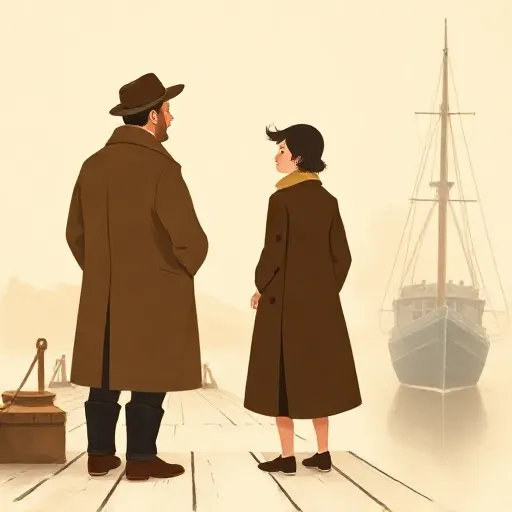
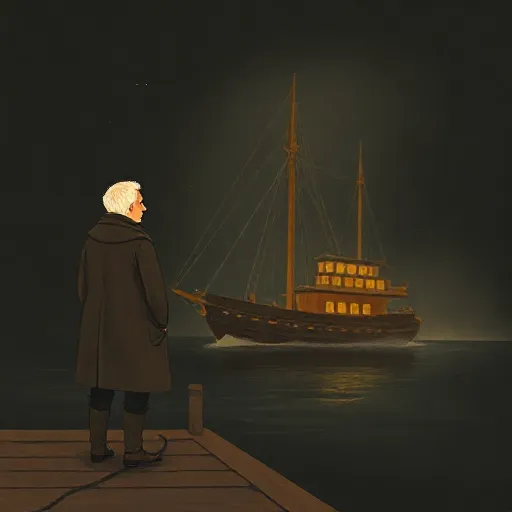
A shipowner is about to sell tickets for a transatlantic voyage. Looking at his vessel, he notices it seems rickety and old. The boards creak. The joints look questionable. A full repair would cost a fortune and delay the trip for weeks. So the shipowner does something very human: he pushes the worries out of his mind. He convinces himself, sincerely, that his ship is perfectly seaworthy. He sells the tickets. He waves goodbye to the passengers.
Then the ship sinks in the middle of the ocean. Everyone on board drowns. The shipowner quietly collects the insurance money.
Clifford, who had himself survived a shipwreck, found this story monstrous. But here is the twist: he asks us to imagine the ship had not sunk. Imagine it sailed smoothly into New York harbor, the passengers cheering, the owner’s pocket full. Does that happy ending make the shipowner innocent?
Clifford’s answer: not one bit. The owner is verily guilty either way. His crime was not that the ship sank. His crime was believing something he had no right to believe.
One Rule for Every Thought
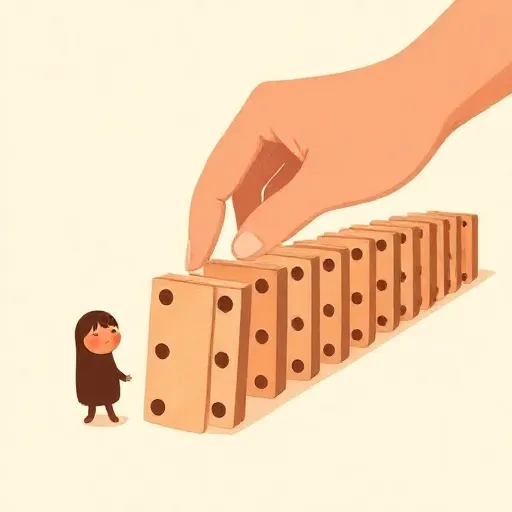
From this story, Clifford built one of the stiffest rules in all of philosophy. He wrote that it is wrong always, everywhere, and for anyone to believe anything on insufficient evidence. This is often called Clifford’s Principle.
Clifford was an evidentialist. Evidentialism is the view that you should only form beliefs when you have sufficient evidence — that is, enough good reasons — in your possession. If you don’t have the receipts, you don’t get the belief.
But Clifford’s rule was not just about the moment you form a belief. He also thought you have a duty across time. You can’t just gather evidence once and call it a day. You have to stay open to new evidence. You have to listen to people who challenge your assumptions. If you purposely avoid books or people that might shake your beliefs, Clifford warned, the life of that person becomes “one long sin against mankind.”
That is a diachronic obligation — a duty that stretches over time. The “right now” version is called a synchronic obligation. Clifford held both: have evidence now, and keep seeking it later.
But wait. Could this be too strict? Do you really need airtight evidence to believe there is still milk in the fridge? Or that your friend is telling you the truth about where she was last night? A less severe version, called moderate evidentialism, says the Clifford rule applies mainly when a lot is at stake — like a pilot deciding where to drop a bomb, or a health official approving a new medicine. When the stakes are low, moderate evidentialists say, you can relax the standards a little.
When a Leap Becomes Necessary

Not everyone thought Clifford’s Principle made sense. The American philosopher and psychologist William James (1842–1910) read Clifford’s essay and practically threw up his hands. He called Clifford a “delicious enfant terrible” with somewhat too much of “robustious pathos in the voice”. James’s reply, published in 1896 as “The Will to Believe,” became the other half of this famous debate.
James was a kind of non-evidentialist. That means he thought there are some situations where it is fine — even necessary — to believe something without sufficient evidence.
But James was no fan of believing whatever you feel like. He set strict conditions. You cannot just believe “what you know ain’t true,” he wrote. A leap is only allowed when you face what James called a genuine option. A genuine option has three features.
First, it must be living. The hypothesis has to be a real possibility for you. Believing in the ancient Greek gods is not a live option today; it just doesn’t feel like a real candidate. Second, it must be forced. You can’t duck it — doing nothing is itself a choice. Imagine a train is coming and you have to decide whether to jump left or right. Standing still is not neutral; it’s a decision with consequences. Third, it must be momentous. The stakes have to be high and the opportunity rare.
If an option is genuinely living, forced, and momentous — and if the evidence does not clearly point one way — then James says your “passional nature” not only may but must decide.
Why must? Because sometimes faith in a fact can help create the fact. James gave the example of a cancer patient who believes firmly that he will survive. The psychological literature suggests that belief itself can improve the odds. The patient doesn’t have proof he will live. But if he waits for proof, he loses the benefit the belief might have provided.
What Are Beliefs Even For?
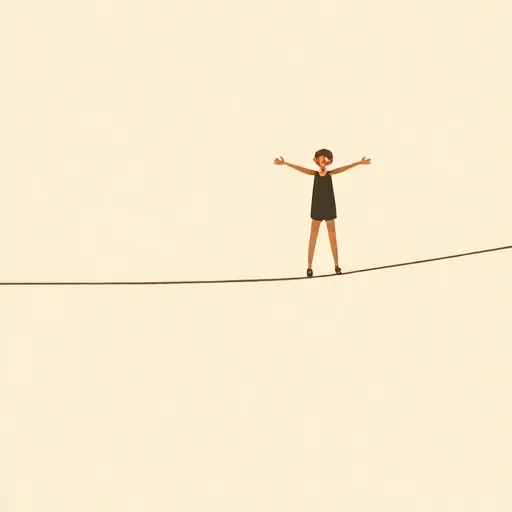
To figure out whose side makes more sense, philosophers ask a deeper question: what is the aim of belief? What is a belief supposed to do for you?
One popular answer is called veritism — the idea that truth is the fundamental good of believing. On this view, a belief is like a map: it succeeds if it gets the territory right, and it fails if it distorts things. If truth is the only aim, then believing on thin evidence looks like a mistake every time. You are risking error for no good reason.
But other philosophers argue that belief has other aims too. Maybe belief should help you survive. Maybe it should give you pleasure or make you feel at home in the world. If that is right, then sometimes it might be okay to believe something because it helps you, even if the evidence is weak.
Consider this scenario: you smell something funny when you come home, and you start to suspect your teenage son is using drugs. But you know that if you form that belief, your relationship with him will be seriously damaged. A prudential norm — a rule about what is good for you practically — might tell you to withhold belief, or even to believe the incense story he told you. A prudential norm cares about what benefits your life, not just what tracks the truth.
But an epistemic norm cares about evidence and knowledge. An epistemic evidentialist says the question is not what makes you happy or safe; the question is whether your belief-forming faculties — perception, memory, reasoning — are working the way they are supposed to. Those faculties are designed to respond to evidence. When you ignore evidence, you are misusing your own mind.
A moral evidentialist goes further. Clifford himself seemed to think that having bad evidence habits is not just an intellectual flaw but a moral one. Your sloppy believing influences other people, because they rely on your word. Over time, careless beliefs lower everyone’s standards and can lead to real harm. For Clifford, the shipowner is not just a bad thinker. He is a blameworthy person.
The Stake That Never Got Smaller
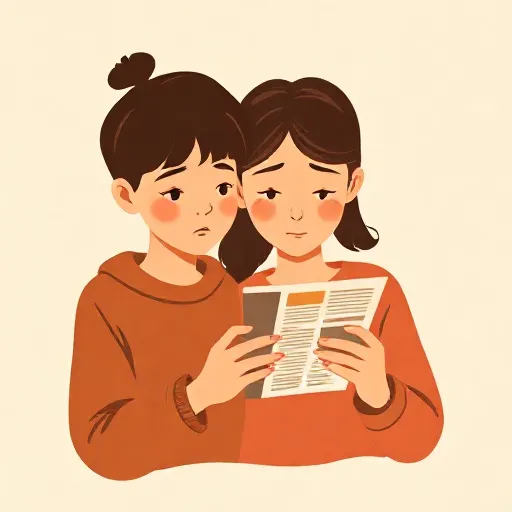
The fight between Clifford and James never really cooled off. It plays out every time you scroll through your feed and see a shocking headline. Do you have sufficient evidence for what you just decided to believe? Are you allowed to believe something because your friends all believe it? What if believing it makes you feel safer or more certain in a confusing world?
The vocabulary changes — evidentialism, non-evidentialism, prudential norm, epistemic norm — but the pressure is exactly the same. Clifford would tell you to slow down, demand proof, and never stifle a doubt. James would ask whether the option in front of you is genuinely forced and momentous, and whether waiting for perfect evidence is a luxury you can afford.
Neither of them tells you the answer is easy. Both of them think believing is serious business. The shipowner’s sin was not that he wanted to believe his ship was safe. It was that he silenced the part of himself that knew he was guessing. That, Clifford would say, is where the trouble always begins.
Think about it
- If a belief makes you happier and hurts no one, could believing it still be wrong?
- Imagine a sports fan who is convinced her team will win, even though all the stats say otherwise. Is her belief justified? What if her cheering actually makes the team play better?
- Can you think of a time you believed something mainly because you wanted it to be true? Looking back, do you think you had good enough evidence?