Believe Without Proof? The Fideist’s Dangerous Gamble
What If Someone Told You to Just Believe?

Imagine you’re at lunch and a friend claims she can read minds. You ask for proof — a test, a prediction. She shrugs and says, “You just have to believe me.” You’d probably feel cheated. Now imagine she says the same thing about God: “I believe, and I don’t need to give you reasons.” That kind of move has been stirring up philosophers for centuries. It even has a name: fideism.
The philosopher Alvin Plantinga (born 1932) gives a clear definition. A fideist is someone who relies on faith alone to reach truth, especially about God, and who pushes reason aside — maybe even mocks it. The word comes from the Latin fides, meaning faith. At first, “fideism” was a label invented in the 1800s to criticize Catholic thinkers who said that tradition, not rational proof, passed down divine truth. But the idea itself is much older.
In the second century, the early Christian writer Tertullian (c. 155–c. 240) seemed to embrace it when he declared that the story of Christ’s death and resurrection “is by all means to be believed, because it is absurd.” That line has rung down the ages. Yet many scholars now say Tertullian was not rejecting all reason — he was poking at philosophers who acted as if their cleverness could outsmart God. He meant the claim is credible precisely because it’s wildly surprising, not because it’s nonsense. Still, the image stuck: a faithful person who sees evidence as almost an enemy.
So the stage is set: on one side, people who think genuine faith doesn’t need — and might even be spoiled by — rational proof. On the other, those who say believing without evidence is a recipe for disaster. The most famous voices in this quarrel are not ancient. They lived in the last four hundred years, and their arguments still feel shockingly alive.
Pascal’s Cosmic Bet
Blaise Pascal (1623–1662) was a mathematical genius who, after a mystical experience one night, spent the rest of his short life in a monastery. He became convinced that the usual arguments for God’s existence — the kind that try to prove God like a theorem — were useless. God is “infinitely incomprehensible,” Pascal wrote. You can’t stack up evidence to reach an infinite being. But then what?
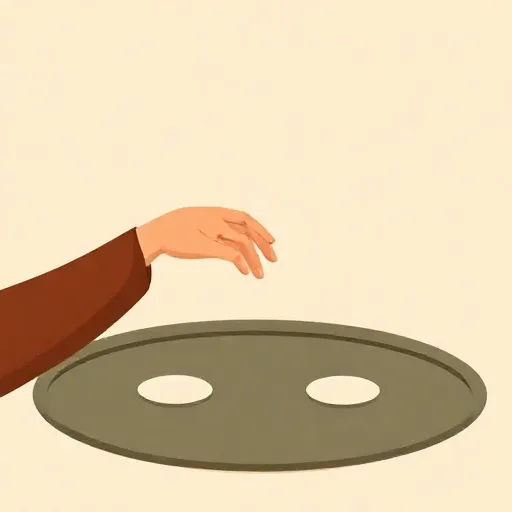
Pascal’s famous answer is the Wager. Reason can’t settle whether God exists. But you still have to live — and that means, whether you admit it or not, you are already placing a bet. If you choose to believe in God, and God exists, the payoff is infinite happiness. If you disbelieve, and God exists, the loss is infinite misery. If God doesn’t exist, belief might cost you a few earthly pleasures, while unbelief brings finite gains. So the expected value of believing is overwhelming: a tiny chance at an infinite prize beats any finite loss. Pascal concluded it is prudentially rational to bet on God, even if you have no evidence.
Critics jumped on this fast. First, can you just decide to believe something because the numbers look good? Pascal was ready: he said you can train yourself into belief by acting like a believer — going to worship, taking holy water — until the belief takes root. Many find that manipulative, even self-deceptive. Second, what about other gods? If every religion promises infinite rewards, the Wager doesn’t pick one over another. Finally, maybe a truly good God wouldn’t punish people for honest doubt — we just don’t know. Still, new versions of the Wager keep appearing, and the core question endures: if evidence is stuck, does it make sense to jump anyway?
Kierkegaard’s Leap into the Dark
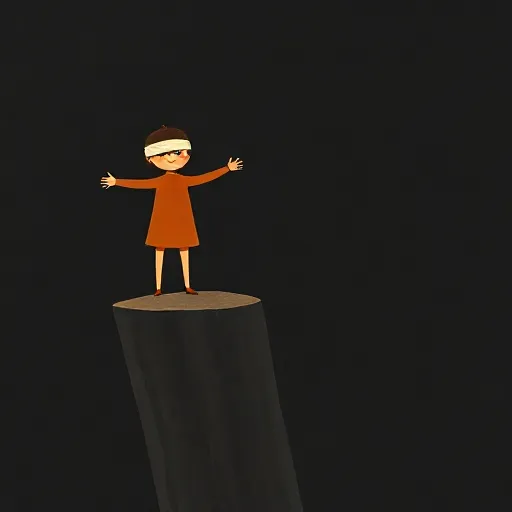
Søren Kierkegaard (1813–1855) wrote under eccentric fake names, but his target was clear: the comfortable “Christendom” of his day, where people mistook being Danish with being Christian. He wanted to make faith terrifying again. For Kierkegaard, having proof for God would ruin the whole thing. Faith needs objective uncertainty — if you could prove God like a fact in a textbook, you’d relate to it differently, the way you relate to a formula you memorized. But faith, he said, is a passionate commitment made “out on 70,000 fathoms of water.”
That doesn’t mean Kierkegaard thought believers should be irrational. He drew a sharp line between nonsense, which reason can detect, and the paradox at the heart of Christianity — that the eternal God entered time and died. Reason can recognize that this leaps beyond its limits, and that very recognition is where faith begins. He called the moment of decision a “qualitative leap.” You don’t glide into belief by piling up evidence; you take a stand with your whole life.
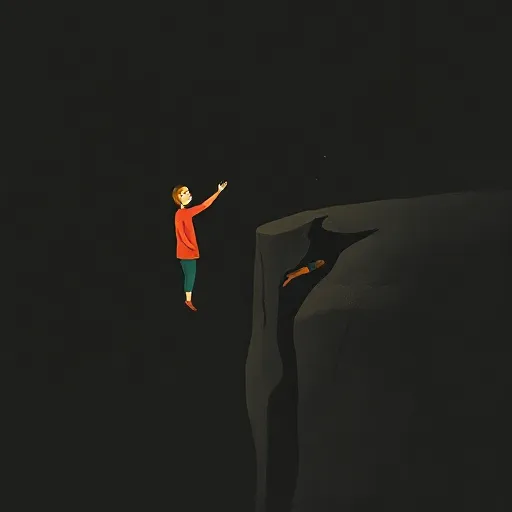
Many philosophers find this terrifying in a bad way. J. L. Mackie called Kierkegaard’s leap “a sort of intellectual Russian roulette.” Why leap toward the Christian God rather than anything else? If you’re leaping because evidence ran out, you might land anywhere. Kierkegaard might answer that faith doesn’t start from neutral ground — you’re already living a life, and the leap is a response to a call, not a random jump off a cliff. Still, the risk is real, and that’s exactly the point.
James: The Right to Believe When Evidence Runs Out

The Victorian thinker W. K. Clifford (1845–1879) announced a stern rule that it is wrong always, everywhere, and for anyone, to believe anything upon insufficient evidence. If that sounds strict, the American psychologist and philosopher William James (1842–1910) thought it was also impossible. In his essay “The Will to Believe,” James argued that life hands us options where evidence can’t decide, and yet we must decide.
James called such situations genuine options. An option is genuine when it is live (each choice feels like a real possibility for you), forced (you can’t opt out — doing nothing counts as a choice), and momentous (the stakes are high and the chance is unique). Religion, he said, meets all three for many people. You can’t just stay neutral forever; waiting is equivalent to choosing against faith.
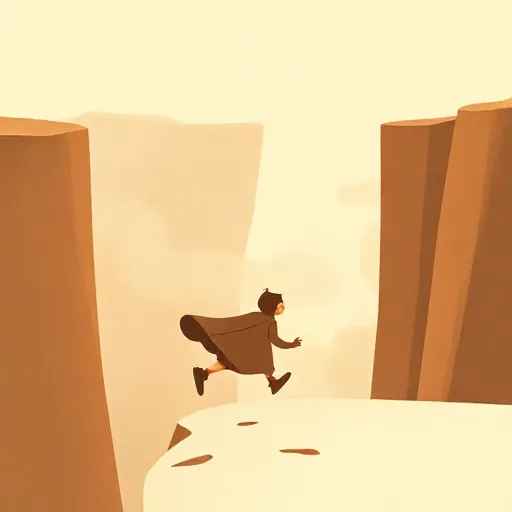
Think of friendship. If you wait for proof that a new classmate will be kind before you act friendly, you’ll probably seem cold — and the friendship will never start. You have to risk a little trust for the possibility to open up. James said religion works the same way: you have to meet the religious hypothesis “half-way.” He was not giving permission to believe against evidence, only to believe when evidence is silent and life demands a leap. In that narrow space, for those to whom the idea of God feels alive, faith can be as reasonable as doubt.
The Language-Game of Faith

Ludwig Wittgenstein (1889–1951) never wrote a tidy theory of religion, but some of his followers developed a view now called Wittgensteinian Fideism. Wittgenstein’s big idea was that words get their meaning from the “language-games” they belong to — concrete activities woven into a form of life. Hammering a nail and solving a math problem are different games with different rules. On this picture, religious language is its own game. Praying, confessing, or saying “God is love” serves a different purpose than stating a fact about the weather.
Taken to an extreme, this can suggest that religion is sealed off: its claims can’t be criticized by science, and non-believers can’t even understand them. But many scholars, including Wittgenstein specialists, insist that this is a caricature. Wittgenstein used metaphors of overlapping streets in an ancient city, not sealed boxes. Still, the image stuck because it highlights a real puzzle: is faith answerable to the same evidence rules we use in a lab, or does it play by a different logic? The question refuses to go away.
Why ‘Fideist’ Is an Insult — and Why the Fight Still Matters

Here’s a clue about how charged this debate is: almost no one ever says, “Pleased to meet you, I’m a fideist.” From its birth in 19th-century theology, the term has been a weapon. Catholic popes have condemned fideism. Protestant reformers who said human reason is damaged by sin were called fideists. Pascal, Kierkegaard, James, and Wittgenstein have all been shoved under the label — often by people who wanted to make them sound sloppy or scary. Most fought back.
So what’s really at stake? At bottom, it’s a fight about what counts as a good reason. The so-called fideist isn’t usually saying “reason is garbage.” More often, they’re saying that the demand for evidence has limits, especially when the thing at stake is the meaning of your life. Whether you award that point changes how you see not only God, but also the beliefs of friends, parents, and strangers.
You face versions of this puzzle all the time. Do you trust a friend who says they changed but can’t prove it yet? Do you commit to a dream — music, coding, a sport — before you know you’ll succeed? Learning when to hold out for evidence and when to take a risk that goes beyond it is one of the most grown-up skills there is. The fideism debate doesn’t hand you a neat answer. It hands you the terms to think for yourself.
Think about it
- If a person says they believe in God without needing any evidence, is that braver than someone who demands proof, or is it just easier?
- Can you force yourself to believe something just because it might be good for you? Try telling yourself you can fly. At what point, if ever, does pretending turn into real believing?
- Think of a time you trusted someone without proof. Did that trust turn out well? How would you decide if that trust was reasonable, even without evidence?