Is Faith a Leap, a Certainty, or Just Trust?
A Friend’s Hand Over the Cliff

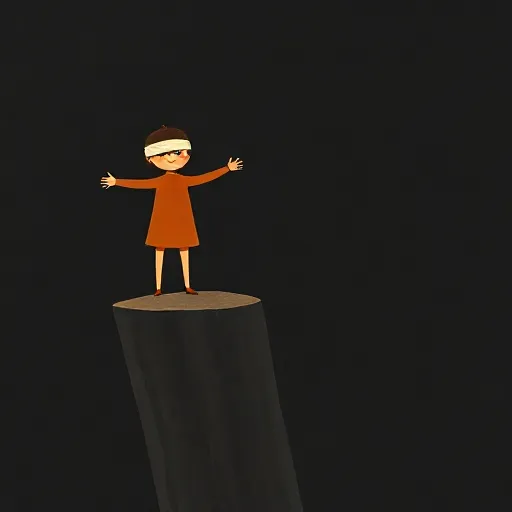
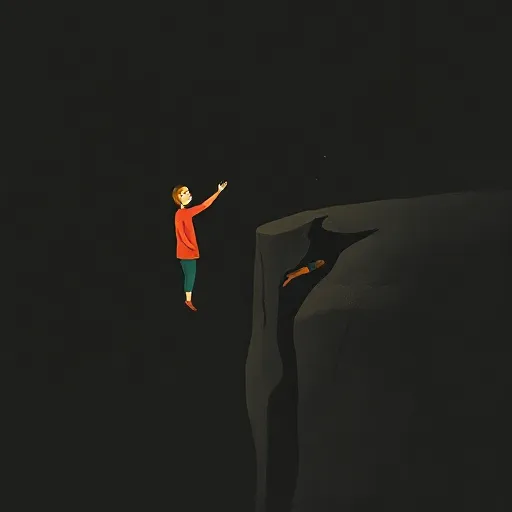
Imagine you’re hiking with a friend. You reach a wide gap between two rocks. Your friend jumps across and says, “Come on, I’ll catch you.” You can’t see if the landing is safe. You don’t have proof your friend will catch you. But you jump. That act—trusting without proof—feels a lot like what religious people call faith.
But philosophers have wondered: what exactly is going on when someone has faith? Is faith a special kind of knowing? Is it a risky leap? Or is it more like a practical commitment, like holding out your hand and trusting? In this article, we explore three big answers.
Faith as a Sixth Sense from God

In the 1500s, the reformer John Calvin (1509–1564) described faith as “a firm and certain knowledge of God’s benevolence towards us.” For Calvin, faith is not a guess. It is a kind of seeing, given to you by God.
Hundreds of years later, philosopher Alvin Plantinga (born 1932) revived a similar idea. He argued that humans might have a special mental faculty—a sensus divinitatis, Latin for “sense of the divine.” If God exists, Plantinga reasoned, God would design us to know him, just as he gave us eyes to see. So belief in God could be immediate knowledge, not the result of arguments. This view belongs to Reformed epistemology: the idea that believing in God can be perfectly rational even without scientific-style evidence.
On this model, faith is not a leap at all. It is receiving a gift of knowledge, then welcoming it into your heart. Calvin said this knowledge is both “revealed to our minds” and “sealed upon our hearts.” You might doubt it, but that would be like closing your eyes to a built-in light.
But here’s a problem. If faith is a special sense, how do you know your sense is working correctly? People from different religions also claim God gives them knowledge—but the content is often contradictory. If everyone’s special sense says something different, how can you tell which one is reliable? This worry leads to a bigger challenge: the demand for evidence.
The Evidence Dilemma: Can You Prove Faith?

Many philosophers have said you should believe only what the evidence supports. This rule is called evidentialism. W. K. Clifford (1845–1879) put it bluntly: it is always wrong to believe something on insufficient evidence. If faith involves believing that God exists, it must be backed by good proof.
The trouble is that many thinkers find the evidence for God’s existence “evidentially ambiguous.” That means a smart, honest person could look at the same facts and come to opposite conclusions. If that is right, then firmly believing in God would break the evidentialist rule.
Richard Swinburne (born 1934) tries to solve this. He uses careful probability calculations to argue that God’s existence is more likely than not, given the evidence. But many find his arguments uncertain. And Reformed epistemology has its own circle: to know your sensus divinitatis gives you knowledge, you would first need to know God exists. So how can you be sure you are entitled to believe? The question seems to chase its own tail.
If faith requires absolute certainty, a reflective person might wonder: Am I just fooling myself? This is where a very different model enters the picture.
The Leap into the Unknown

The Danish philosopher Søren Kierkegaard (1813–1855) thought that faith is anything but comfortable certainty. He described it as “an objective uncertainty held fast in an appropriation process of the most passionate inwardness.” In simpler words: faith is deciding to trust a truth you cannot prove, and committing your whole self to it. He compared it to a leap—you don’t know for sure where you’ll land, but you jump anyway.
This is a doxastic venture (from the Greek doxa, “belief”). It means you actively take a faith-claim to be true in your practical reasoning, even though the evidence doesn’t settle the question. You don’t wait for proof. You choose to live as if God is real and trustworthy.
The American philosopher William James (1842–1910) defended a similar view. In his lecture “The Will to Believe,” he argued that when a question is urgent and life-defining, and you can’t avoid deciding, you have the right to believe beyond your evidence—as long as the belief is a genuine, living option for you. James noticed that many religious beliefs arise from “passional” causes, like upbringing and personal experience, not from cold logic. And he thought that was acceptable.
Both Kierkegaard and James insisted that faith is not against reason. It simply goes beyond what reason can settle. But critics worry: if you can believe anything without enough evidence, what stops you from believing harmful nonsense? That’s why some philosophers want to understand faith not as a belief at all, but as a kind of action: trust.
Faith as Trust, Not Belief

What if faith is really about trusting in someone, not just believing facts about them? This is the fiducial model (from Latin fides, “trust”). Richard Swinburne describes it like this: the person of faith trusts God and commits himself to God. The heart of faith is a practical commitment. You rely on God like you rely on a friend—by acting on the assumption that he will do what you hope for, even when you’re not totally certain.
Philosophers point out that trusting does not always require firm belief. You might not fully believe a friend will catch you, but you jump anyway. On this view, faith is an act, not a mental state. Some thinkers go further and say you don’t even need to believe God exists. You can simply accept the claim as a basis for living—a non-doxastic venture (a venture without belief). F. R. Tennant (1866–1957) compared faith to an experiment: you treat hoped-for things as if they were real and see what happens.
This fits how many people experience faith—not as total certainty, but as steady commitment made strong through doubt. The question shifts from “Do you believe?” to “Do you trust?” But many religious traditions still insist that real faith involves an inner “yes,” not just outward actions. So the debate continues.
Why This All Matters (Even If You’re Not Religious)
You might be thinking: I’m not religious. Why should I care? Here’s why. The patterns of faith that philosophers study appear in everyday life, too. When you make a new friend, you trust them without proof they’ll be loyal. When you work hard toward a dream, like becoming a scientist or an artist, you don’t know it will succeed—but you commit. That is a small doxastic venture. Even science relies on something like faith: the belief that the world is understandable and that your senses can be trusted.
So the big question isn’t just about God. It’s about how we live with uncertainty. Can it ever be reasonable to commit yourself to something that goes beyond the evidence? Calvin and Plantinga say we can be given certainty. Kierkegaard and James say we must leap. Swinburne and others say we can trust without needing to know for sure. There is no final answer. But by thinking through these models, you can better understand your own commitments—and maybe be more understanding of those who commit differently.
Think about it
- If a scientist could prove that every religious experience is just brain activity, would faith become unreasonable? Or could taking a leap still be worth it?
- Imagine you want to become a great musician, but you don’t know if you’ll succeed. Is that hope more like faith as a leap beyond evidence, or faith as trust in your own abilities? How is it similar to religious faith?
- Think of something you trust without proof—maybe a person, an idea, or even your own future. Why do you trust it? Would you call that “faith”? What makes it different from the faith philosophers discuss?