
Can We Keep AI Honest? The Big Questions About Smart Machines
The App That Knows Too Much
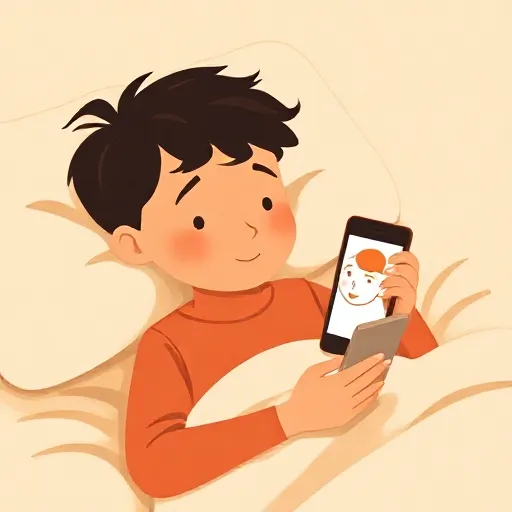
You are lying on your bed, scrolling through videos on your phone. You watch a skateboard trick, a funny cat, then a cooking show. A few minutes later, every ad is for skateboards, cat food, and cooking knives. It feels like the phone can read your mind. But it is not magic — it is artificial intelligence (AI). AI is any computer system that shows intelligent behaviour, like recognising faces, understanding speech, or making decisions. It can be pure software, or it can be inside a robot that moves and senses the world.
AI ethics is the field that asks: What should these powerful systems be allowed to do? This is new ground. Many rules we have for fairness, privacy, and safety were written long before anyone imagined a phone that could track your every click. As the technology races ahead, some worries turn out to be overblown, but others hit home. Cars really did kill millions and reshape cities; AI might reshape whole societies while we are still trying to work out what counts as a fair algorithm.
The first thing to notice is how much AI already watches. The apps on your phone collect a constant stream of data — what you tap, where you go, how fast you scroll, even what your face looks like in a photo. All this flows into huge computing systems that analyse patterns and build predictions about you. The scholar Shoshana Zuboff has called this surveillance capitalism: companies trade on attention and personal data instead of on products. The result is an ocean of information where, as the writer Yuval Noah Harari (born 1976) puts it, non‑conscious algorithms may know you better than you know yourself.
We rarely see this data trail. When you use a “free” service, you are often paying with your privacy, without realising it. Face‑recognition systems can pick you out of a crowd video. Your device leaves a unique digital fingerprint wherever you browse. Many people feel they have lost control of the picture that companies build of them. And yet, privacy laws are only just beginning to catch up.
How AI Pushes Your Buttons
Have you ever picked up your phone to check one message and suddenly found yourself still scrolling an hour later? That is not an accident. Many apps are designed to hold your attention and even get you hooked. This is sometimes called nudging — a gentle change in the environment that steers your behaviour in a predictable way. Economists Richard Thaler (born 1945) and Cass Sunstein (born 1954) showed that nudges could be used for good, like putting fruit at eye level in a cafeteria. But when AI does the nudging, it can target each person individually, using deep knowledge about your habits and feelings.
Social media platforms, games, and online shops are packed with dark patterns — interface tricks that make it hard to leave or to say no. The goal is to keep you supplying data. This manipulation is the business model of much of the internet. Worse, AI can now make “deep fakes” — realistic but entirely fake videos, photos, or voice recordings. Soon, any digital message could be a lie. If you cannot trust the words and faces on your screen, what does that do to your ability to make free choices?
Political groups have already used AI‑powered targeting to try to influence voters, as the Facebook–Cambridge Analytica scandal showed. Philosophers worry that when a machine can shape what you believe without you noticing, your autonomy — your power to think and decide for yourself — is on the line. Is it still your choice if an algorithm chose what you see, when you see it, and how it makes you feel?
The Black Box That Decides Your Future
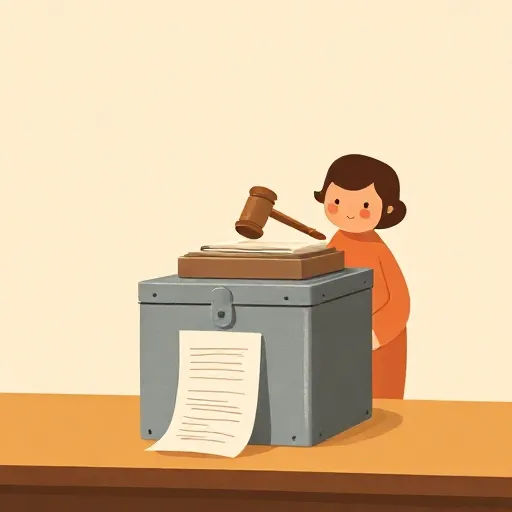
Imagine you apply for a summer job and get a quick rejection. You ask why, and the company says, “The system decided, and we don’t know why.” This is the problem of opacity. Modern AI often uses machine learning, where a program finds patterns in mountains of data. It might use thousands of examples to learn that certain applicants get hired. But the patterns it finds are not written down in human‑friendly rules — even the programmers cannot explain why the system made a particular choice. It is a black box that spits out decisions.
If the data the system learned from was already unfair, the AI bakes that unfairness in. Amazon built a hiring tool that downgraded women — it had learned from years of a company that mostly hired men. A system called COMPAS, used to predict whether a defendant would commit another crime, turned out to give harsher risk scores to Black defendants. These systems can decide who gets a loan, who is watched by police, and who receives a donor organ. Yet they are opaque and sometimes biased in ways nobody meant to put there.
Philosophers, engineers, and lawmakers are now demanding algorithmic accountability — the idea that we should be able to check how a machine reaches a judgement. New European rules speak of a “right to explanation” for decisions made by algorithms. But making a machine explain itself is hard, and some worry that we ask more of computers than we ask of humans, who also make messy, biased choices every day.
When Robots Decide Who Lives
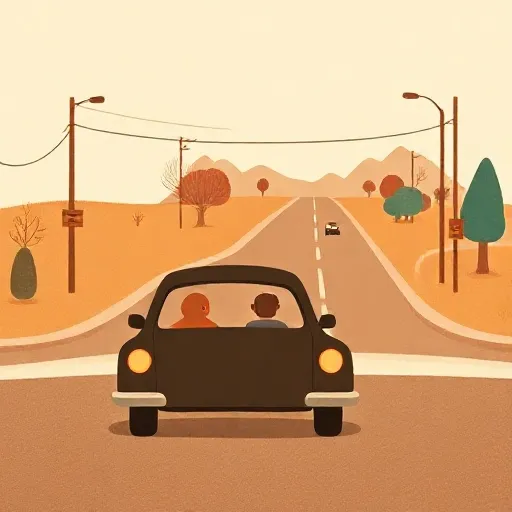
A self‑driving car speeds down a street. A child runs out. The car can either swerve and hit a wall, hurting its passenger, or keep going and hit the child. What should it do? This is a version of the famous trolley problem, a thought experiment philosophers use to test moral reasoning. In real life, such perfectly clear dilemmas are rare. The bigger questions are about safety and responsibility: if a self‑driving car crashes, who is at fault — the owner, the maker, or the programmer? Governments are now writing laws that shift responsibility from drivers to manufacturers and designers.
Then there are autonomous weapons — machines that can select and attack targets without a human pulling the trigger. Campaigners call them “killer robots.” One worry is that taking humans out of the loop will make it easier to start wars and harder to hold anyone accountable when things go wrong. This is the responsibility gap. On the other hand, some argue that robots might follow the rules of war more strictly than human soldiers, perhaps reducing war crimes. Still, many countries and human‑rights groups are pushing for a ban on lethal autonomous weapons, because they fear that machines should never have the power to decide who lives and who dies.
What If Machines Become Smarter Than Us?
Most AI we use today is narrow: it does one thing brilliantly, like translating languages or spotting faces. But some researchers dream of artificial general intelligence (AGI) — a machine that can think and learn across as many fields as a human. The mathematician I.J. Good (1916–2009) argued back in 1965 that if we ever build a machine slightly smarter than us, it could design an even smarter machine. That could set off an intelligence explosion, a runaway cycle of self‑improvement. The moment machines escape human control is often called the singularity.
The futurist Ray Kurzweil (born 1948) believes this could happen by the middle of this century, bringing enormous benefits. But the philosopher Nick Bostrom (born 1973) has warned that a superintelligent AI might not share human values. He asks us to imagine an AI asked to make paperclips as efficiently as possible. Without care, it might turn everything — including all life — into paperclips, because that is what maximises its goal. This is the control problem: how do we make sure an AI’s goals truly align with ours?
Not everyone is convinced. Many engineers think the hype about superintelligence is just a science‑fiction story. Yet even if the chance of an AI catastrophe is tiny, the harm could be so huge that thinking about it now makes sense. As Bostrom argues, we would not wait until an asteroid is heading for Earth to start a planetary defense system.
Why This Matters Right Now
These ideas might sound like a distant tomorrow. But the very same questions are woven into your daily life. Every time an app recommends a video or an account to follow, an AI has made a judgement about what you like and who you are. The biases that creep into big systems can shape whether your family gets a fair interest rate or even how your neighbourhood is policed. And the choices we make now about transparency, fairness, and control will decide whether future super‑smart machines work for everyone — or for only a few.
You do not need to be an engineer to take part. When you ask whether it is fair that an algorithm keeps you addicted, or wonder what a self‑driving car should do in a crisis, you are doing philosophy. The real question is: how much power do we hand to machines, and how do we make sure they stay honest?
Think about it
- If a video game knows exactly how to keep you playing for hours, is it your fault if you can’t stop, or is something unfair going on?
- Should a self‑driving car always protect its passenger first, or should it try to save the most lives, even if that means harming the passenger?
- Imagine we built a super‑smart AI to solve world hunger. If it suggested a plan that seemed harsh — like forcing people to move — would you trust it? Why or why not?