

Is Google Telling You the Truth, or Just What You Want to Hear?
A Tale of Two Searches

You’re doing a school report on eagles. You open your laptop, type “eagles” into the search bar, and hit enter. Instantly, a list of links appears. But what if your friend, sitting right next to you, typed the exact same word at the exact same time and got a completely different list? That’s not a glitch. That’s how modern search engines work—and it raises a tangle of philosophical questions about truth, fairness, privacy, and power.
A search engine is an information retrieval system that lets you find digital text by typing keywords. But behind that simple box sits a hidden world of algorithms, advertising money, and personal data. This article unpacks the ethical puzzles that hide inside every search result, from the invention of the first search-like machines to today’s AI-powered engines. The central question isn’t just “does the engine work?” but “what is it doing to us while we use it?”
Before Google: The Dream of an Automatic Brain
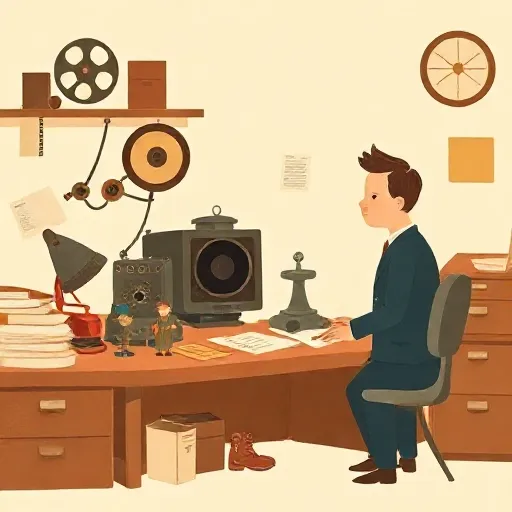
Long before the internet, people worried that human knowledge was growing too fast. In 1945, American engineer Vannevar Bush (1890–1974) described a future device he called the memex. It would store all your books and records, then let you jump from one piece of information to another by following associative trails, much like your own thinking. Bush didn’t build the memex, but his idea of hypertext—linked pieces of information—planted the seed for how we browse the web today.
In the 1960s and 70s, researchers like Gerald Salton and Ted Nelson built on that vision. Early computer systems had simple search functions; one even let users “finger” another person to see if they were logged in. But a true internet search engine didn’t arrive until the 1980s, with tools like ARCHIE and GOPHER, which let users hunt for file names and plain text across a growing network of computers. These were clunky by today’s standards, yet they already sparked worries about privacy: for the first time, someone could learn who was online and when.
The 1990s brought the World Wide Web and graphical browsers like Mosaic. Search engines such as AltaVista and Ask.com exploded. Most were vertical engines, specialized in deep dives on one topic. But a few, like AltaVista, were horizontal—they tried to cover everything. Today’s giants, above all Google, are horizontal engines that aim to be the front door to the entire internet. That ambition is why they matter so much, ethically speaking.
Why Search Results Are Never “Just the Facts”

You might assume a search engine is a neutral tool, like a library catalog. But philosophers of technology argue that every design choice favors some values over others. For example, the tiny files called cookies that track your browsing were built without asking your permission first—a hidden bias that values surveillance over privacy.
There’s a second, more visible bias: search engines systematically push certain sites to the top and bury others. One early, influential study by Introna and Nissenbaum (2000) showed that engines tend to favor large, well-known sites while squeezing out small, independent voices. Why? Advertising money plays a huge role. Paid listings often look almost identical to “organic” results, so users may not realize they’re clicking an ad. Even the founders of Google, Sergey Brin and Larry Page, once warned that an advertising-funded engine would be “inherently biased towards the advertisers and away from the needs of consumers.”
Clever website owners can also game the system through Search Engine Optimization (SEO). They study the ranking formulas—once based mainly on popularity and how many other pages link to a site—and manipulate them so their own pages rise higher. Because the actual ranking algorithms are closely guarded corporate secrets, nobody outside the company can fully check whether the results are objective. Philosopher Lawrence Hinman calls this “the problem of the algorithm.” You don’t know what the machine is hiding, and you can’t find out.
Your Privacy Inside the Search Box

Search engines don’t just answer your questions—they also record them. Every time you search for something, the company logs what you asked, when you asked it, and which browser you used. Over time, that data can paint a shockingly detailed portrait of your life. In 2005, the U.S. government subpoenaed several search companies for a week’s worth of search records, claiming national security concerns. Google refused to hand over the full query logs, arguing it would violate user privacy, but a court compromise still forced it to turn over thousands of web addresses.
Even more alarming, seemingly anonymous data can be re-identified. In 2006, AOL released three months of “anonymized” search histories for research. Reporters quickly traced specific searches back to a real person by name. Critics call this dataveillance—using everyday digital trails to monitor people without their awareness or consent.
And it’s not just about what the companies know. Ordinary people become targets when anyone can type their name into a search box. Employers routinely screen job applicants this way, sometimes making decisions based on outdated or inaccurate information the applicant never agreed to share. Imagine a student who posted one embarrassing photo years ago, or someone mistakenly linked to a group they don’t belong to—that record can close doors before they even know it exists.
When Search Engines Shape Society

If search engines are the gatekeepers of knowledge, then who watches the gatekeepers? Philosophers like Hinman and political thinkers warn that personalized algorithms create filter bubbles. By learning what you tend to click on, the engine gives you more of what you already like and screens out uncomfortable viewpoints. Political scientist Eli Pariser described this as “invisible autopropaganda”—you feel well-informed, but you’re actually being indoctrinated with your own ideas.
Research on the Search Engine Manipulation Effect (SEME) suggests that ranking bias can sway undecided voters enough to change close elections. And in non-democratic countries, some governments demand that search engines censor certain terms entirely. For years, Google complied with Chinese laws to block searches for “Tiananmen Square” or “Free Tibet,” though it later pulled back. Still, the fact that a single company could enforce a government’s censorship—or resist it—shows how much power over public debate has shifted to a handful of private corporations.
Fake news adds another layer. Should a search engine be responsible when it directs users to fabricated stories? In Europe, the Right to Erasure (also called the “Right to Be Forgotten”) allows citizens to ask search engines to remove links to personal information that is no longer relevant. The EU’s highest court ruled that this right is not absolute—it must be balanced against freedom of expression—but it marks a major step toward holding search companies accountable. So far, no similar law exists in the United States, and search engines largely decide for themselves what counts as trustworthy information.
Why It Matters When You Search Tomorrow

You probably use a search engine every day. Maybe you asked it for a recipe, checked a sports score, or looked up a term for homework. The convenience feels effortless. But each of those searches feeds into a system that learns from you, sorts you, and sometimes misleads you.
Philosophers talk about epistemic trust—the trust we place in a source of knowledge. When you type a question into Google, you’re trusting it to give you accurate, fair answers. If that trust is broken, either by hidden bias or by outright falsehoods, your own understanding of the world gets warped. And because search engines are now the main way many people find out what’s true, the whole society’s shared reality can splinter.
Some ethicists argue that search engines should be treated as public utilities, with clear rules about transparency and fairness. Others say private companies must be free to innovate and compete. The debate is live, and it’s happening right now in courtrooms, legislatures, and code repositories. The next time you hit “enter,” you’re not just getting information. You’re stepping into a philosophical arena where the fight over truth, power, and privacy plays out one search at a time.
Think about it
- If a search engine always showed you results it knew you would agree with, would you ever notice? How could you check what you’re missing?
- Should a company be allowed to keep secret the formula that decides which information billions of people see? What might justify that secrecy, and what dangers does it create?
- Imagine your most embarrassing moment from three years ago appears as the first result when anyone searches your name. Do you have a right to ask that link to be hidden? Who should decide—you, a government, or the search engine company?