
Can You Be Happy by Wanting Almost Nothing? Epicurus’s Answer
The Garden Where Fear Dissolved
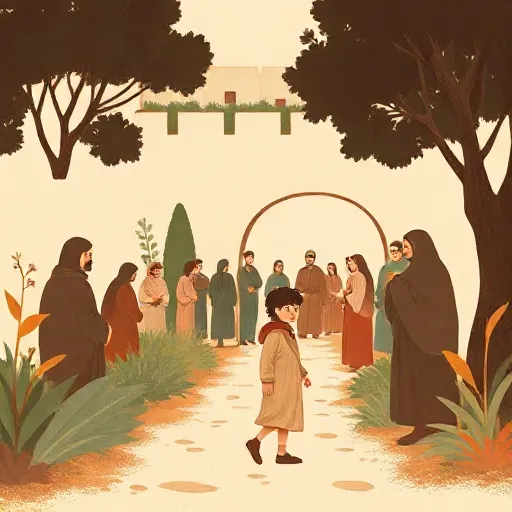
In 306 BCE, a man named Epicurus (341–270 BCE) bought a house with a garden just outside the walls of Athens. He invited men, women, and even enslaved people to think and talk with him. There were no expensive robes or grand lecture halls—just a quiet place where ordinary life was examined. The goal was not to win debates. The goal was to stop suffering from fears that, Epicurus thought, were ruining human happiness.
Imagine stepping into that garden. You’re worried about failing, about what happens after death, about the gods’ punishments. Epicurus would greet you and say something startling: nearly all your fears are built on mistakes about how the world really works. If you understand nature, you’ll see there’s nothing to be terrified of. The highest good, he taught, is ataraxia—a deep, unshakeable calm, a mind free from disturbance. The whole Epicurean way of life was a kind of therapy for the soul, designed to get you there.
A Universe Made of Atoms and Nothing Else
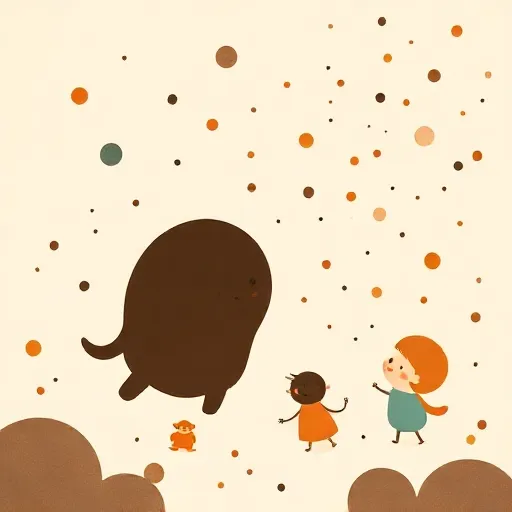
To cure fear, you need to know what the world is made of. Epicurus borrowed an idea from earlier thinkers like Democritus: everything consists of tiny, indivisible particles he called atoms, moving through empty space, which he called the void. There is no supernatural stuff, no magic, no invisible forces. Your body, your thoughts, your feelings—all are just atoms arranged in particular ways.
Why did this matter? Because if everything is atoms, then when your body dies and its atoms scatter, there is nothing left of you that can suffer. There is no ghostly soul floating away to be judged. The soul itself, Epicurus argued, is made of extremely fine atoms spread through the whole body; once the body can no longer hold them together, sensation stops. There’s no more “you” to be punished or rewarded. This was the first step toward ataraxia: realize that death isn’t a scary place you go to—it’s simply the end of experience.
Why Death Is Nothing to Us
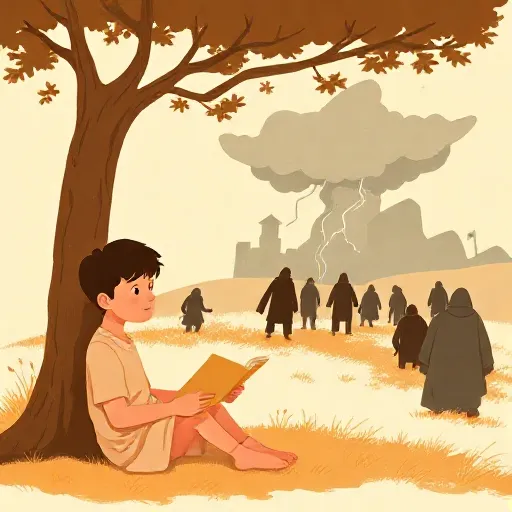
Epicurus put it bluntly in a letter to a friend: “Death is nothing to us.” His reasoning is still famous. While you exist, your death isn’t present. When your death occurs, you no longer exist. So you and your death never meet. There’s no moment when you can experience being dead. Fearing death is like fearing a movie you will never watch—there’s no you to be frightened while it plays.
But people do fear death, and that fear poisons life. They imagine themselves lying alone in the dark, feeling nothing forever. Epicurus would say that mental picture is a trick of language and empty belief. He called this kind of confusion kenodoxia, or empty opinion. Words like “death” can make us think there’s a real thing to experience. The therapy was to use reason (logismos) to trace words back to clear sensations. Sensations never lie, Epicurus maintained, but the opinions we attach to them often do. When you strip away the false beliefs, you’re left with a simple truth: you’re only ever alive, and life is full of possibilities for pleasure.
Pleasure: The Art of Wanting What You Already Have

If death isn’t scary, what should you aim for? Pleasure, Epicurus said. But this is where many people misunderstand him. He didn’t mean constant partying or stuffing yourself. He distinguished between different kinds of desire.
Some desires are natural and necessary: food when hungry, water when thirsty, shelter from cold. These are easy to satisfy and cause real pain when ignored. Others are natural but unnecessary: fancy meals, perfumes, luxurious clothes. You can enjoy them if they’re available, but chasing them brings trouble. Then there are empty desires: wealth, fame, political power, immortality. These have no natural limit, and pursuing them creates endless anxiety.
The best kind of pleasure is the absence of pain and fear—what scholars now call catastematic pleasure, a state of well-being rather than a thrill. Epicurus contrasted it with kinetic pleasure, the fleeting buzz you get from eating when hungry or hearing a sweet melody. Kinetic pleasure depends on a lack; once the lack is filled, the pleasure fades. Catastematic pleasure is steady: it’s the feeling of being healthy, unafraid, and satisfied with little. Epicurus wrote that self-sufficiency is the greatest freedom. If you can be happy with a piece of bread and some water, you’re richer than a king who’s always worried about losing his treasure.
The Tiny Swerve That Makes You Free
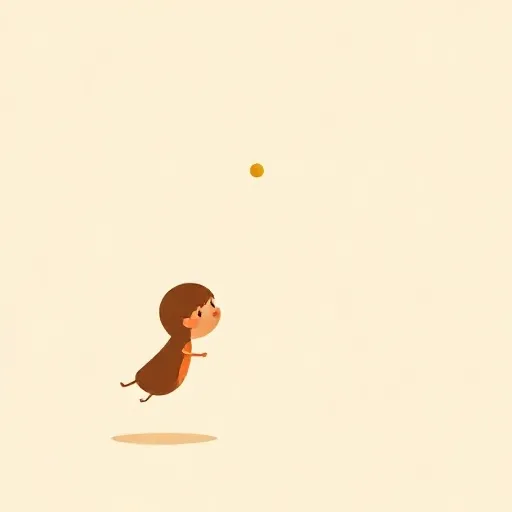
There’s a puzzle here. If everything, including your mind, is made of atoms moving by fixed laws, how can you ever choose freely? Epicurus didn’t want a world where everything was predetermined; that would make moral advice useless and life paralyzed by fate. He said it was better to believe in old myths than to accept that every action is forced.
His surprising solution was the swerve. Atoms normally fall in a preferred direction, all at the same speed. But Epicurus (according to the Roman poet Lucretius, who preserved his ideas) suggested that occasionally, at no fixed time or place, an atom deviates by a tiny amount. This random, uncaused motion breaks the chain of cause and effect. Because the mind’s atoms are especially fine, the swerve introduces an element of genuine freedom into our decisions. We aren’t puppets; we can initiate our own actions.
Modern scholars debate exactly how the swerve was meant to work. Some think it’s only a physical explanation of how collisions start, not a direct cause of free will. But one thing is clear: Epicurus was committed to the idea that we are not trapped. Your choices are real, and that makes it meaningful to work on yourself.
Justice, Friendship, and Living Like a God

If nature is just atoms and void, what makes something right or wrong? Epicurus had a down-to-earth answer: justice is a contract. People agree not to harm one another because that way they avoid the anxiety of being attacked. Laws that support such agreements are just; those that don’t are not. The wise person follows justice because the fear of getting caught—and the mental disturbance that fear brings—cancels any pleasure you might get from a crime.
Friendship plays a starring role in the Epicurean life. Epicurus famously said that friendship goes dancing around the world, announcing to all of us to wake up to happiness. He thought a wise person would suffer for a friend and even die for one, because a life without trustworthy friends would be too insecure to be peaceful. Friendship starts for practical reasons—we need each other to survive—but becomes something we choose for its own sake.
As for the gods, Epicurus believed they exist, but they live in perfect blessedness and don’t meddle with human affairs. They don’t punish or reward us. The point isn’t to be an atheist; it’s to stop being terrified that lightning is a sign of divine anger. A human being who reaches ataraxia, Epicurus said, lives a life equal in happiness to the gods. Pleasure doesn’t increase by lasting longer, just like perfect health doesn’t become “more perfect” if it goes on for a hundred years. So a small, calm life can be as full as an immortal one.
From an Ancient Garden to Your Phone Screen

So why does a guy who taught in a garden over two thousand years ago still matter? Think about the last time you couldn’t stop scrolling, convinced you were missing out on something amazing. Or the biting worry that you’re not as popular as you should be, or that your grades define your worth. Epicurus would gently call those empty desires. They promise security but deliver restlessness.
His idea that happiness comes from wanting less, not more, hits hard in a world that constantly tells you to want everything. He wouldn’t say you should give up your phone or your ambitions. But he’d ask you to check whether the chase is causing more pain than the prize is worth. The calm you feel after a real talk with a friend, a meal when you’re truly hungry, a quiet moment with no dread—those are still the building blocks of a happy life. The ancient recipe hasn’t expired.
Think about it
- If you knew for sure that there was no punishment after death, would you behave differently? Why?
- Imagine you can have any toy, gadget, or clothing you want—but every new thing makes you worry about losing it. Would you still take the deal?
- Is a calm, simple life with a few close friends more satisfying than an exciting life full of fame and risk? What would you choose, and why might someone choose differently?