
What If Nothing Was Really Good or Bad?
A Meeting in India That Changed Everything

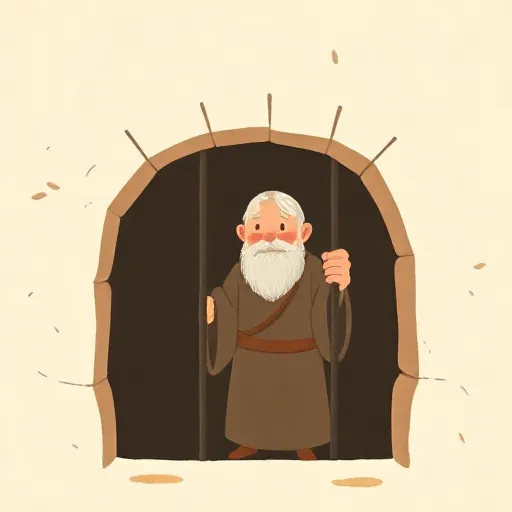
Around 330 BCE, a Greek painter turned philosopher named Pyrrho (around 360–270 BCE) found himself thousands of miles from home. He was traveling with Alexander the Great’s army across what is now Pakistan and India. There, ancient writers tell us, he met some gumnosophistai — “naked wise men,” Indian sages who seemed utterly untroubled by heat, discomfort, or the opinions of others. Pyrrho was fascinated. When he finally returned to his hometown of Elis in Greece, he brought back a radically strange idea: what if nothing is really good or bad, right or wrong, by its very nature? What if all that stuff is just human habit?
Pyrrho wrote nothing down. Everything we know about his thinking comes from others — especially his devoted follower Timon of Phlius, whose own writings survive only in fragments. The most important of those fragments appears in a summary by a later writer named Aristocles. That summary contains a puzzle that scholars have argued about for over a century, because it can be read in two totally different ways. And those two ways lead to two very different Pyrrhos.
Three Questions That Promise Happiness

Aristocles tells us that Timon reported a kind of recipe for happiness from Pyrrho. It begins with three questions, one after another. First: what are things like by nature? Second: given that, how should we feel about them? Third: what will happen if we adopt that attitude?
The answer to the first question, according to the summary, is a string of three elusive Greek words. Things are adiaphora, astathmêta, and anepikrita. Each of those words can be understood in two importantly different ways. Adiaphora could mean “indifferent” — that things really have no built-in features that make them this rather than that. Or it could mean “undifferentiable” — that we humans simply can’t tell the difference. Astathmêta could be “unstable” (things themselves keep shifting) or “unmeasurable” (we can’t weigh them on any reliable scale). Anepikrita could be “indeterminate” (reality is just fuzzy) or “indeterminable” (we can’t pin it down). That tiny twist in translation changes everything about Pyrrho’s philosophy.
After describing things this way, the passage adds that “neither our sensations nor our opinions tell the truth or lie.” Then it moves to the second question. The attitude we should adopt, it says, is to withhold trust from our senses and opinions. We should become unopinionated. Instead of saying “this is good” or “that is bad,” we should instead say that a thing no more is than is not, or both is and is not, or neither. Finally, the third question’s answer: the result of all this is first aphasia (a refusal to commit oneself in words, or maybe a stunned silence) and then ataraxia — a deep, lasting freedom from worry. And ataraxia, Timon says, is happiness.
The Great Riddle: Two Ways to Read Pyrrho’s Answer
So what exactly was Pyrrho claiming? Scholars have lined up behind two big interpretations. On the metaphysical reading, Pyrrho was making a statement about how the world really is. Things themselves, down at their deepest nature, are indefinite and indeterminate. They don’t have any permanent fixed features — like good or bad, hot or cold, just or unjust — that belong to them forever. Our senses and opinions keep showing us things as having definite qualities, but reality isn’t like that. That means those perceptions aren’t true. But because those temporary features really do appear on occasion, they aren’t exactly false, either. They’re just surface shows.
On the epistemological reading, Pyrrho wasn’t claiming to know how things are. He was claiming that we can’t know. The world might be a certain way, but our sensations and opinions never give us a consistent, trustworthy picture. They can’t “tell the truth or lie” because they never actually present us with how things really are — only with how things appear. And since appearances alone can’t settle what’s true, we can’t ever determine the true nature of anything.
The choice matters enormously. If the metaphysical reading is right, Pyrrho was not really a skeptic. He was a bold thinker with a definite thesis about reality. If the epistemological reading is right, he was an early forerunner of the later Greek skeptics — the ones who proudly called themselves Pyrrhonists — and his whole method was about suspending judgment, not about asserting a secret truth of his own.
Some scholars suspect that most of the summary is actually Timon’s creative expansion of a single, simpler idea from Pyrrho. Maybe Pyrrho himself only talked about the first question — that things are indifferent, or that we can’t tell — and it was Timon who built the rest of the system. If so, the original Pyrrho might have been focused mainly on value: good, bad, just, unjust. That would make the whole philosophy less about knowledge and more about how we live.
The Man Who Wouldn’t Flinch
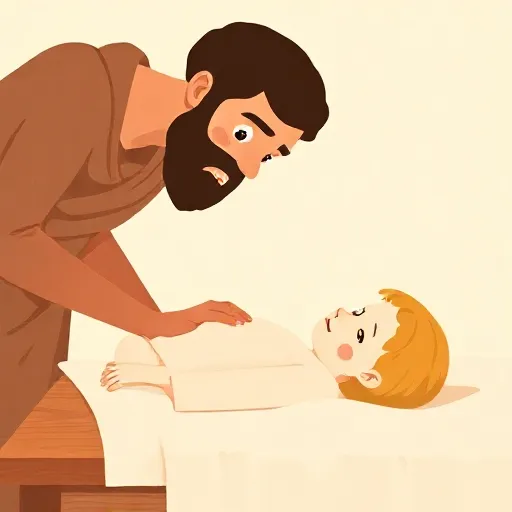
Whatever the core theory was, Pyrrho became locally famous for living out his ideal. Ancient biographers — with varying degrees of reliability — handed down a collection of stories about his remarkable imperturbability. He was said to stay completely calm during storms at sea. He reportedly didn’t flinch even during the brutal surgeries of his time, without painkillers. When everyone around him was panicking, Pyrrho just didn’t seem to care.
Part of that not-caring extended to social rules. Anecdotes describe him wandering off alone for days, doing housework with his own hands, and even washing a pig — jobs that a respectable Greek gentleman would have left to servants or women. He wasn’t interested in what others thought of him. Timon’s poems add a more intellectual layer: Pyrrho wasn’t bothered by the endless arguments between philosophical schools. Other thinkers worried about proving their theories about the universe. Pyrrho stepped away from all of that.
But this leads to an obvious question. If you stop believing that anything is truly good, bad, valuable, or worth avoiding, how do you actually decide what to do? One fragment suggests that the early answer was “by the appearances.” You don’t take the way things appear as a guide to their hidden nature, but you do use appearances to get through the day. You see a cart coming and step aside — not because the cart is “bad” in some deep sense, but because that’s what appears sensible in the moment.
Why Pyrrho’s Puzzle Still Echoes Today

Pyrrho’s philosophy looks extreme, but it points at something you’ve probably felt yourself. Have you ever noticed how two people can react completely differently to the same event? One person sees a rainy day and feels cozy; another sees it as a ruined afternoon. One student gets a B on a test and celebrates; another gets the same B and is crushed. Where is the “badness” or “goodness” — in the event itself, or in us?
If Pyrrho is right in one way, then most of our stress comes from tacking labels like “terrible” or “wonderful” onto things that, by themselves, don’t have those labels. Stop doing that, the idea goes, and you’ll be calmer. If he’s right in the other way, then the deeper truth is simply that we don’t know, and the honest response is to admit it and relax a little. In either case, ataraxia — that deep untroubled calm — is supposed to follow.
Besides his indirect influence on later skeptics, Pyrrho didn’t launch a huge movement during his own lifetime. But his challenge still pokes at us. Every time you feel certain that something is absolutely the worst — or the best — Pyrrho’s ghost raises an eyebrow. What if it’s just the way it appears to you, right now, and nothing more?
Think about it
- If you knew for sure that nothing was truly good or bad, would you still ever get upset about anything? Why or why not?
- Can a person be completely calm no matter what happens, like Pyrrho tried to be, or is that impossible for most people?
- When you say a food is “good” or a movie is “bad,” are you just stating your own feelings, or pointing to something real in the food or movie?