Can You Live Without Believing Anything at All?
What if you refused to ever make up your mind?

Imagine you stare at a menu, completely unable to decide what to order. Chocolate cake looks delicious, but so does the fruit salad. Friends urge you to pick one. You think, “I can’t say which is better — maybe neither is truly better at all.” So you just sit there, not choosing. Now imagine doing that with everything in life — not just desserts, but all your opinions, all your judgments about the world. That’s the kind of life the ancient skeptics tried to live.
Skepticism today often means doubting things. But for the philosophers we call ancient skeptics, it meant something far more radical: a whole life without belief — that is, without ever accepting that something is definitely true. They used the Greek word doxa for belief, and they aimed to live adoxastôs, “without belief.” Instead of forming beliefs, they tried to follow how things appeared to them at the moment, without claiming that things really are a certain way. This idea sparked fierce debates: can a human being actually do this? If you don’t believe the door is real, will you walk into a wall? We’ll explore how ancient skeptics answered that — and why their challenge still echoes today.
The strange case of Pyrrho and the drowning man
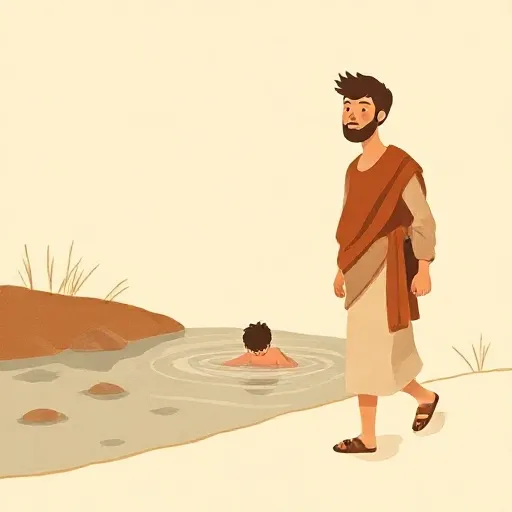
The story of ancient skepticism often starts with Pyrrho of Elis (c. 365–275 BCE). He left no writings, but anecdotes paint a startling picture. Once, a friend fell into a river and was drowning. According to the story, Pyrrho simply walked on, completely unbothered. Another time, he was about to cross a street when a wagon rushed toward him, and friends had to pull him away. Pyrrho seemed not to care about danger or disaster. Why? Because he thought nothing was inherently good or bad, safe or dangerous.
Pyrrho’s follower, the poet Timon (c. 325–235 BCE), summarized his teacher’s view with three questions. First, what are things really like by nature? Pyrrho’s answer: they are indeterminate — not fixed, not stable. Second, how should we react? We should not trust our senses or opinions; we should be without beliefs. Third, what’s the result? First, a kind of speechlessness, then tranquility (the Greek word is ataraxia), a calm, untroubled state of mind. Timon said Pyrrho used the phrase ou mallon, meaning “no more this than that” — as in, “it is no more true that the honey is sweet than that it is not.” For Pyrrho, the world had no definite nature, so we never get things right.
Modern scholars debate whether Pyrrho was really a skeptic or rather a dogmatist — someone who held strong positive views about reality (in this case, that reality is indeterminate). But his ideas kicked off a whole movement. Later philosophers would refine them into a careful art of living without belief.
How to act when you don’t believe anything
Even in the ancient world, many people thought skepticism was impossible to live by. The Stoic and Epicurean philosophers, who were the skeptics’ main opponents, raised a blunt objection called the Apraxia Charge — the charge that without belief, you cannot act (the Greek word for action is praxis). If you don’t believe the wall is solid, you’ll walk into it. If you don’t believe food will nourish you, you won’t cook. The skeptics needed a reply.
Arcesilaus (316/5–241/0 BCE), who transformed Plato’s Academy into a skeptical school, answered by pointing to what is reasonable (the Greek word eulogon). He admitted that skeptics suspend judgment about everything — they never assent to a claim as true. But they still notice what seems more plausible. When leaving a room, the skeptic doesn’t need to believe “this is the door.” They simply see a door-like appearance and walk through, guided by what looks reasonable in that moment. They don’t form the belief; they just act on the appearance.
Later, Carneades (214–129/8 BCE) went further. He described a three-stage guide for life. For small matters, the skeptic follows what is persuasive (pithanon). For more important ones, they check whether the persuasive impression fits with other impressions around it (it must be undiverted). And for matters that affect happiness, they carefully examine the impression before following it. Suppose you think you see a coiled rope in a dark room. Before grabbing it, you poke it with a stick — because a coiled object might be a snake. The persuasive appearance plus a careful check guides you to act, without any belief that it really is a rope.
Carneades even admitted a kind of approval — a weak form of assent that falls short of “holding to be true” in the full-blooded sense that Stoics demanded. But his followers disagreed about whether this approval counted as real belief. That dispute remains unsettled to this day.
The ten modes: how to argue against every belief
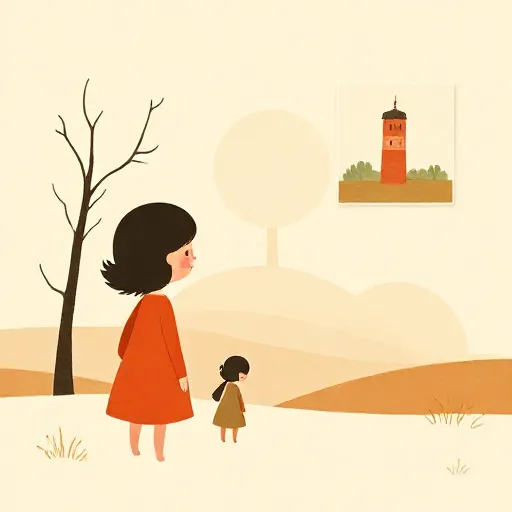
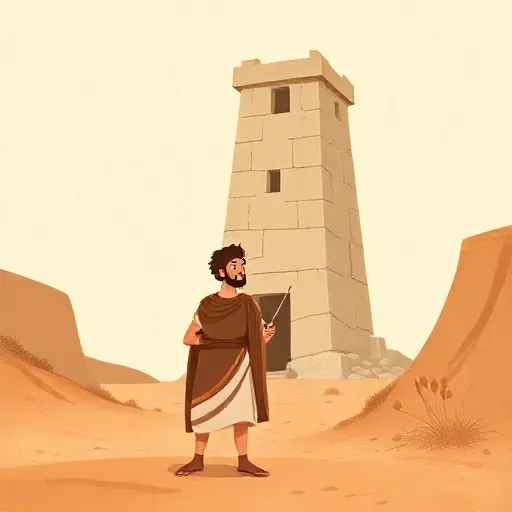
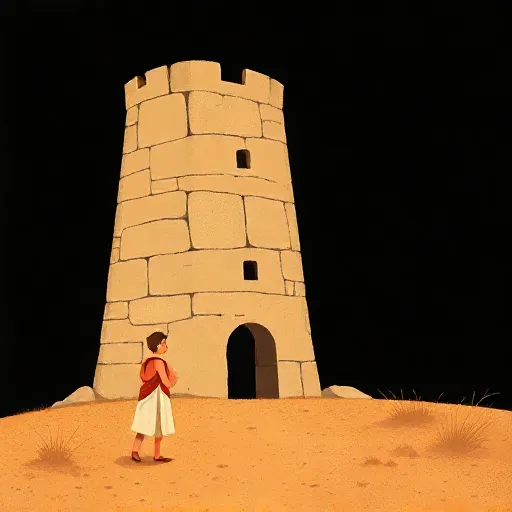
A later skeptic named Aenesidemus (1st century BCE) built a toolkit of arguments to produce suspension of judgment. These are called the Ten Modes. They exploit how things appear differently to different observers. For example, honey tastes sweet to a human, but bitter to a person with jaundice. The same tower looks round from a distance but square up close. Different animals perceive the world in radically different ways. Since we have no impartial judge — we are always one of the parties — we cannot decide which appearance is the true one. Therefore, we should suspend judgment.
The Ten Modes cover everything from differences among human bodies to customs and laws. They gave skeptics a ready method for any philosophical debate: simply find a conflicting appearance and both sides become equally weighty. This equipollence (equal weight, isostheneia) leads to suspension of judgment, and eventually to tranquility. Aenesidemus also introduced the skeptical formula “I determine nothing,” which even applied to itself — he said the skeptic “determines nothing, not even this fact that he determines nothing.” The phrase cancels itself out, like a ladder you climb and then throw away.
Sextus Empiricus and the complete skeptical life
The most detailed surviving account of ancient skepticism comes from Sextus Empiricus (c. 160–210 CE), a doctor and philosopher. He laid out a full system of how to live without belief. For Sextus, the skeptic is first and foremost an investigator — someone who keeps searching for truth. The starting point is noticing contradictions between appearances and thoughts; this disturbance pushes the skeptic to inquire. By applying the modes, they find equal arguments on both sides. Unable to decide, they give up and unexpectedly experience tranquility in matters of belief.
How does the skeptic act? Sextus says they follow appearances as a practical criterion. Nature supplies them with senses and thought; thirst drives them to drink; customs and laws guide them through social life; and skills learned from others let them do things like medicine or music. They assent only when forced — like when thirst moves them to reach for water. This forced assent is not a belief about what water is; it’s just the automatic response of a living being. In other cases, they give a weaker, non-doxastic assent, which Sextus carefully distinguishes from the full assent that forms beliefs.
Sextus also describes how skeptics speak. They never assert that something is true. Instead, they report their own feelings, saying “honey appears sweet to me now” or “it seems that the tower is round.” These reports are like an avowal of a private mental state, not a claim about reality. The skeptical formulas — “no more this than that,” “I determine nothing,” “maybe” — all express a state of mind without dogmatism. Even the statement “everything is inapprehensible” turns back on itself and cancels out, like a purgative drug that eliminates itself along with the illness.
Critics, both ancient and modern, have argued that the skeptics’ life is self-refuting. If you say “nothing is true,” isn’t that a truth claim? If you live without belief, how can you even understand language or think? Sextus replies by pointing to the way children acquire concepts before they can assent. The ability to think conceptually grows in us naturally, without any act of belief. So the skeptic can think, reason, and argue dialectically — using the dogmatists’ own premises against them — without ever endorsing a claim as true.
Why it still matters: the unexamined life
You might never try to live without a single belief. But ancient skepticism still asks a sharp question: why do you believe what you believe? Even today, we encounter fierce disagreements — about politics, science, even what’s “true” on social media. The ancient skeptics remind us that often, both sides can produce seemingly good arguments, and no neutral judge exists. They suggest that maybe the calmest, wisest stance is to keep investigating without ever fully settling on a final answer.
That doesn’t mean you should walk into walls or ignore a drowning friend. It means you might recognize that your deepest convictions rest on appearances — on how things seem to you, given your culture, your senses, your limited perspective. Ancient skepticism is a call to stay curious, to question easily accepted assumptions, and to trade the anxiety of being certain for the quiet of an open mind. As Socrates (who inspired the skeptics) said, the examined life is worth living. What would it be like to examine your own beliefs, not to destroy them, but to see them more clearly?
Think about it
- If you saw exactly the same evidence that two conflicting opinions are equally true, would you be able to “suspend judgment” forever, or would you eventually pick a side anyway?
- Could a scientist (or an ordinary person) work without ever believing their theories are really true, just following what the data seem to show?
- Imagine a friend who never commits to any belief, not even that the sun will rise tomorrow. Would that friend be peaceful or paralyzed? Could you be friends with them?