Can You Ever Know for Sure? The Ancient Skeptic’s Challenge
The Man Who Didn’t Even Know His Own Dates

Imagine a philosopher whose own life is so mysterious that scholars still argue about when he was born. Sextus Empiricus (probably 2nd or 3rd century CE) wrote the closest thing we have to a handbook of ancient skepticism — the art of doubting what others take for granted. He belonged to a tradition started by Pyrrho (c. 365–270 BCE), so his outlook is called Pyrrhonian skepticism. The word “Empiricus” tells us he was a doctor in the Empirical school of medicine. Yet the details of his life, like almost everything else he studied, remain uncertain. What we do have are his writings: the Outlines of Pyrrhonism and the longer, more detailed Against the Mathematicians. Those works lay out a whole way of life built on one daring idea: you can live well without ever settling life’s deepest puzzles.
The Skill of Doubt: Why Investigations Never End
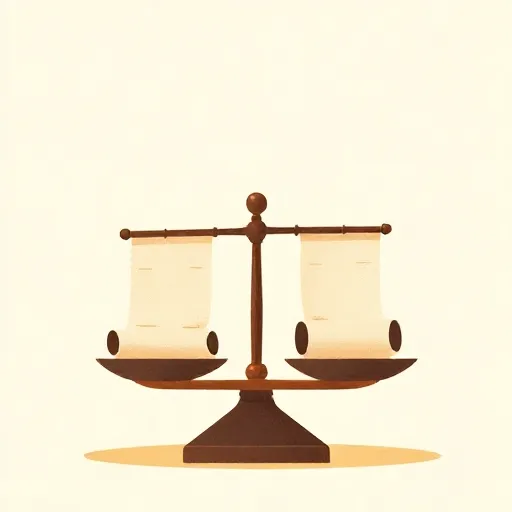
When you investigate a question, Sextus said, three things can happen. You might think you find the answer (like a scientist discovering a fact), you might declare that no answer can ever be found (like someone giving up hope), or — and this is the skeptic’s path — you might find the reasons on both sides perfectly matched. The Greek word skeptesthai means “to investigate.” So a skeptic isn’t someone who refuses to look; it’s someone who keeps looking and hasn’t yet found a winner.
Sextus defined skepticism as an ability or skill, not a list of beliefs. A skilled skeptic can take any claim — say, “honey is sweet” — and line up an opposing claim that is just as convincing. When the arguments balance out like this (a state called equipollence), the skeptic finds themselves in suspension of judgment — the Greek term is epochê. It’s not the same as never having thought about the topic. You have to face the strong arguments for and against, weigh them, and then find they cancel each other out. It’s like two expert chess players always reaching a draw: neither can topple the other.
Crucially, the skeptic doesn’t stop looking. Epochê is a moment in an ongoing investigation, not a final verdict. Sextus compared dogmatic philosophers (people who believe they have found the truth) to people who stop running a race too soon, satisfied with a quick answer. The skeptic stays in the race.
Finding Peace by Giving Up?

Why would anyone want to be caught in eternal doubt? Sextus’s answer is surprising: peace of mind. He tells a story about Apelles, a painter who tried and failed to paint the foam on a horse’s mouth. Frustrated, he threw his sponge at the picture — and by chance, the sponge left exactly the mark he had wanted. In the same way, Sextus said, smart and curious people are first troubled by life’s many contradictions. They think that if they can just solve every puzzle, they’ll finally feel calm (tranquility, or ataraxia). But the more they investigate, the more they find equal arguments on all sides. At last, they suspend judgment — and tranquility follows as a surprise, “like a shadow follows a body.”
Not everyone accepts this sunny ending. One criticism says you can’t truly feel peaceful if your doubt cuts too deep. To relax, a person might need to believe that no answer will ever come — but Sextus’s skeptics are supposed to keep searching, never concluding that discovery is impossible. Another worry is that life without stable beliefs might be scary, not soothing. Yet Sextus insisted that the peace he promised was intellectual: freedom from the nagging feeling that you ought to have the answers to every big question.
Can a Skeptic Have Beliefs?

Here’s the real puzzle: does a skeptic actually hold any beliefs? If you argue against every positive claim, wouldn’t your own life become impossible? You have to eat, sleep, do your homework, and avoid stepping into traffic. All that seems to require believing things like “the car is coming” and “food satisfies hunger.”
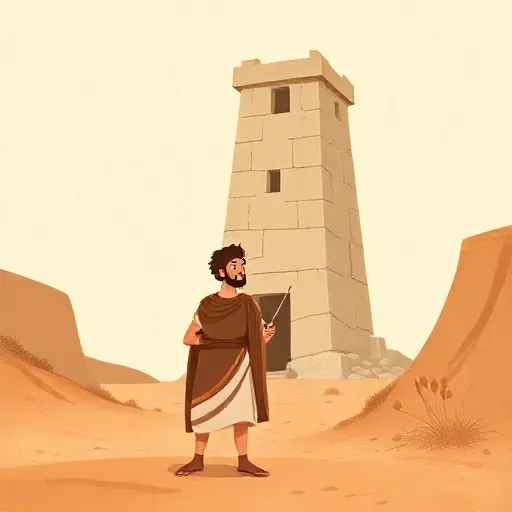
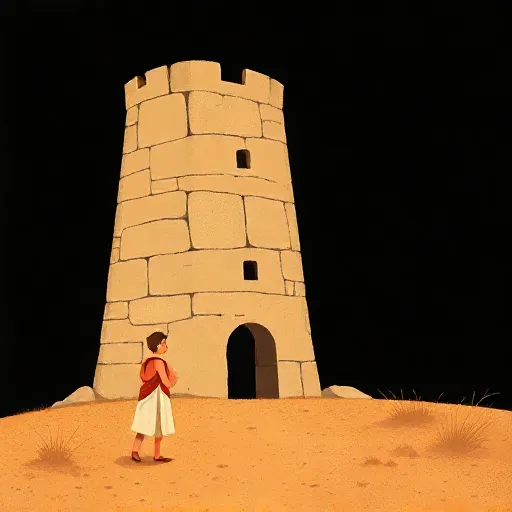
Sextus addresses this in a tiny but explosive paragraph (PH I 13). He says that when skeptics say they hold no beliefs, they are using belief (the Greek word dogma) in a special way. They happily assent to the feelings forced on them by appearances — if they feel warm, they don’t say, “I think I’m not warm.” That’s a dogma in a broad sense. But they refuse to assent to anything unclear — theories behind appearances, like why the world is hot or cold, or what justice truly is. So skeptics can have ordinary, everyday beliefs like “the tower looks round from here,” but not lofty philosophical ones like “the tower really is round by nature.”
Modern interpreters have fought over this. Some, following the scholar Michael Frede, argue that Sextus lets skeptics have many perfectly normal beliefs — formed not by argument but just by how things strike them. Others, like Myles Burnyeat and Jonathan Barnes, insist true skeptics hold no beliefs at all, not even humdrum ones, because that would require a hidden assumption: that our senses are trustworthy. If Sextus really keeps investigating everything, they say, he can’t even believe it’s daytime. The debate is fierce because it touches everyday life: can you function without any beliefs? Scholars haven’t settled it, but the Frede view shows one way a skeptic might cook breakfast, laugh at jokes, and still call themselves a skeptic.
The Modes: Doubting Tools for Every Occasion
How do skeptics actually produce those perfectly balanced arguments? They use sets of patterns called modes. Sextus described the Ten Modes, which collect examples of how things appear differently to different creatures or in different conditions. Honey seems sweet to a healthy human but bitter to someone with jaundice. A tower looks round from far away and square from up close. These modes aren’t meant to prove anything — instead, they’re recipes for creating an opposing argument whenever a dogmatic philosopher announces a discovery.
The later Five Modes, attributed to a thinker named Agrippa (late 1st century BCE), are even sharper. They show that any argument eventually falls into one of three traps: it goes in an infinite loop (always needing more proof), it goes in a circle (assuming what it’s trying to prove), or it stops at an unsupported starting point (a mere hypothesis). Faced with these dead ends, a skeptic concludes that no argument ever provides a final, stable foundation — and suspends judgment again.
These tools aren’t just ancient tricks. They invite you to notice that what looked like settled fact may simply be one perspective among many. And that realization can be deeply unsettling — or, as Sextus hoped, it can free you from the burden of needing to be right about everything.
Why It Matters Today: Doubt, Curiosity, and You
Sextus Empiricus’s ideas didn’t disappear with the Roman Empire. They were rediscovered in the Renaissance and shook up thinkers who would later shape science and philosophy. Yet even without diving into his texts, his challenge meets you every day. When you argue with friends about who’s the best band, or whether a rule is fair, you’re thrown into a miniature version of Sextus’s investigation. If the reasons on both sides feel equally strong, you might suspend judgment — and maybe that feels like a letdown, or maybe it feels like a relief.
Sextus prompts a deeper question about growing up and learning: is the goal to gather a pile of final answers, or to get better at asking questions? The Pyrrhonist answer is the second one. Whether you ever accept it or not, Sextus hands you a skill: the habit of looking for the opposite argument. That habit can make you a sharper thinker, a humbler debater, and, perhaps, a little more at peace with the things you don’t know.
Think about it
- If you had to argue both for and against a claim like “school uniforms are good,” and you thought each side was equally strong, would you stop caring about the issue? Why or why not?
- Sextus believed suspending judgment could bring calm. Can you think of a time when you felt calmer after admitting you weren’t sure — or a time when not knowing only made you more anxious?
- Can a person live a whole life without any beliefs about what is truly right or wrong, true or false? What might that life feel like?