If You Won’t Feel It, Why Worry? The Big Fight Over Death
Epicurus’s Bold Claim: Death Is Nothing to Us
Imagine you fall asleep tonight and never wake up. You don’t feel a thing. No pain, no fear, no darkness. Is that a bad thing for you?
The ancient Greek philosopher Epicurus (341–270 BCE) gave a surprising answer: no. He argued that death cannot harm the person who dies. To understand why, think about what makes something good or bad for you. Epicurus was an intrinsic hedonist, meaning he believed that only pleasant experiences are truly good for you in themselves, and only painful experiences are truly bad for you in themselves. Everything else is only good or bad because of the experiences it causes.
Now, Epicurus noticed a simple fact: “when we are, death is not, and when death is present, then we are not.” In other words, you never exist at the same time as your own death. When you are alive, death hasn’t arrived. Once you die, you are gone. So death itself is not an experience — you never feel it. And if something isn’t an experience, Epicurus reasoned, it can’t be intrinsically good or bad for you.
Could death still be extrinsically bad for you — bad because of what it causes? Epicurus thought not. He accepted a view we can call extrinsic instrumentalism: something is extrinsically good or bad for you only if it makes you have intrinsically good or bad experiences. But a person’s death doesn’t make that person have any experiences at all. So death can’t be extrinsically bad either. Conclusion: death is nothing to us. Being dead is neither good nor bad.
Hold on — what about a painful dying process? Epicurus’s argument mainly targets being dead, not the event of dying. If dying hurts, that pain is an experience, so it is bad for you. But if you die instantly in your sleep, your death brings no suffering. Epicurus would say that kind of death is simply not a misfortune. Is he right?
But What About the Life You Missed?
Many philosophers think Epicurus missed something huge: death can harm you by taking away the good life you would have had. This idea is called deprivationism.
Deprivationists start from a comparativist view: an event is overall bad for you if it makes your life as a whole worse than it otherwise would have been. Suppose Hilda dies painlessly at age 25. If she had lived, she would have enjoyed many years of friendship, discovery, and joy. Her actual lifetime contains far fewer good things than the longer life she could have lived. So dying at 25 is overall bad for Hilda — not because it causes pain, but because it deprives her of goods.
The contemporary philosopher Thomas Nagel (1937–) made this point powerfully in his essay “Death.” Even if we never experience our own nonexistence, we can still be harmed by the good things we miss. It’s like being secretly left out of a party you never knew about. You don’t feel sad, but you still lost something that would have made your life better.
Deprivationism doesn’t say death is always bad. If someone is very old and suffering, and their future would hold only misery, then dying might be overall good for them — it saves them from evils. But for many of us, death comes too soon and steals a future worth having. That’s why it can be a misfortune even if it’s painless.
But this raises a puzzle: when exactly does this harm occur?
The Timing Puzzle: When Does Death Harm You?
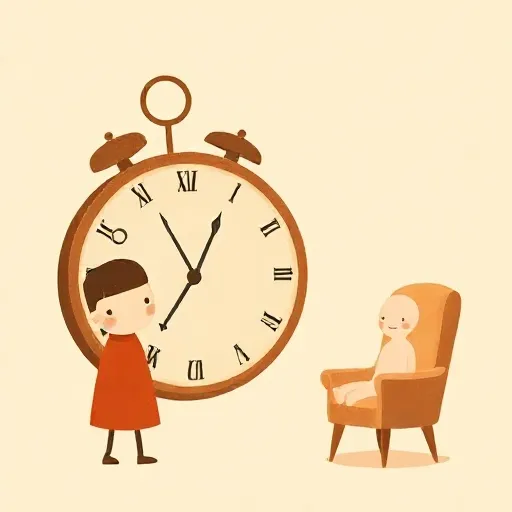
If death harms Hilda by taking away her future joys, at what moment is she worse off? She is gone after she dies. She feels nothing. So can we even say she is “worse off” at any particular time?
Epicurus himself might have asked: how can a dead person have a welfare level at all? This is called the problem of the subject. If Hilda no longer exists, it seems odd to say she has the property of “lacking joy” on Tuesday afternoon. Some philosophers try to solve this by saying that death’s harm has no specific time — it’s just an eternal truth that Hilda’s life was shorter and contained less good than it could have. This view is called atemporalism: death is bad for the deceased, but not at any moment.
Others think the harm happens after death, during the years Hilda would have been alive. That view is subsequentism. It says she is worse off precisely during those lost years — even though she isn’t there to notice. Critics find that strange. After all, a corpse can’t be unhappy. But perhaps a dead person can still be worse off in the sense that their life story has less overall good.
The timing puzzle shows that even if deprivationism feels right, it’s tricky to explain exactly when death’s badness lands. Still, many philosophers think we don’t need a precise time to say something harmed us. It’s just true that our lives went worse.
The Mirror Trick: Before Birth and After Death
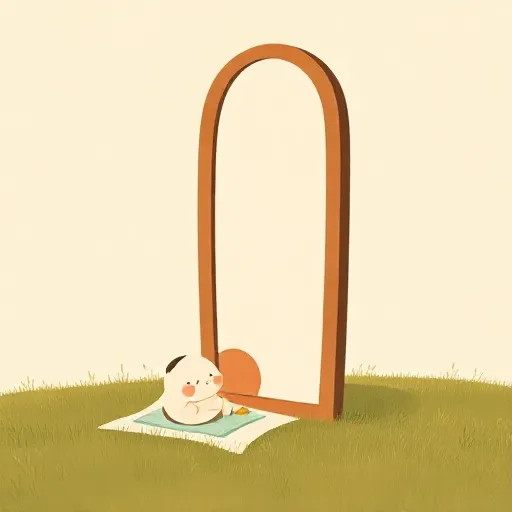
Epicurus’s follower Lucretius (c. 99–c. 55 BCE) added another challenge. He asked: if you think it’s bad to not exist after death, shouldn’t you also think it’s bad that you didn’t exist before you were born? The two states — pre-vital nonexistence and posthumous nonexistence — seem perfectly symmetrical. Yet nobody lies awake upset about the eternity before their birth. So why cry over the eternity after? If nothingness before life didn’t harm you, why should nothingness after life harm you?
There is a reply, however. Birth made life possible — it started a good thing. Death ends that good thing. The past stretch of nonexistence didn’t take any life away from you, but death does. We aren’t upset about nonexistence itself; we’re upset about losing the life we had and the future we could have had.
Also, our minds naturally lean forward. Frances Kamm, a contemporary philosopher, points out that we don’t want our lives to be “all over with.” We have plans, projects, and relationships that reach into the future. We can extend our lives forward, not backward. So a preference for future life over pre-birth life makes sense — it’s not irrational.
Would Living Forever Be a Cure or a Curse?
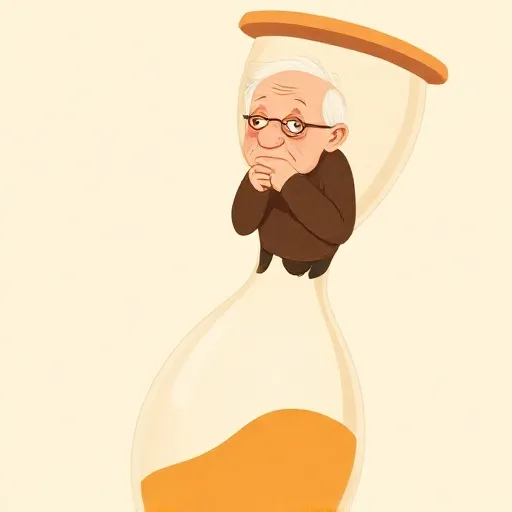
If death is bad because it robs us of good life, would never dying be the ultimate good? Not necessarily, argued the British philosopher Bernard Williams (1929–2003). He thought that living forever would eventually become dreadful — a state of endless boredom.
Williams introduced the idea of categorical desires: deep wishes that give us reason to live, like wanting to see your little brother grow up or finish a life’s work. These desires are not conditional on staying alive; they are what make life meaningful. But if we lived forever, Williams argued, we would eventually run out of fresh categorical desires. Our characters would have to change so radically that later selves would barely feel like “us.” Life would become hollow repetition. Immortality, under the best circumstances, would still be a misfortune.
Thomas Nagel disagreed. He thought that simply experiencing things is so good that it always outweighs any suffering. For Nagel, no matter when death comes, more life is always better, because awareness itself has positive value.
Most of us probably fall somewhere in the middle. We want more life, but not an eternity of empty sameness. This debate matters because it forces us to ask: what actually makes a life worth living? The answer shapes how we think about death — and how we choose to live today.
Think about it
- If a scientist could erase all your memories of a wonderful trip you once took, would that trip still have been good for you? Why or why not?
- Imagine a life that never ends but slowly changes everything about who you are. Would that still be your life you want to keep going?
- If you knew you would die painlessly in your sleep tonight, would you do anything differently today? What does your answer say about what matters to you?