Do You Have to Be a Scientist to Truly See Nature’s Beauty?
How We Learned to Love a Good View
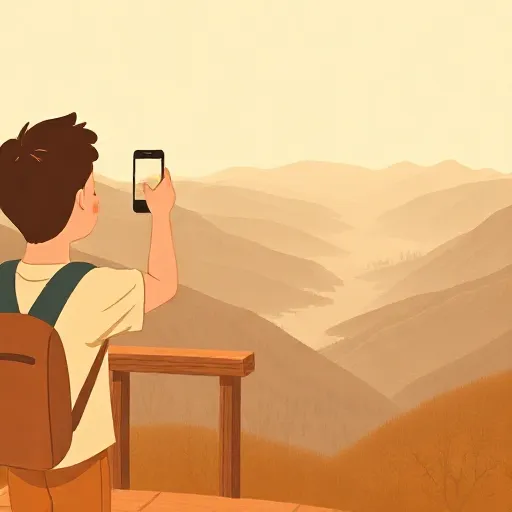
You are standing at a viewpoint in a national park, phone in hand, framing the jagged mountains against a perfect blue sky. It is stunning—exactly what you would expect from a postcard. A few feet away, a biologist crouches, not looking at the peaks at all. She is poking at a patch of lichen with a magnifying glass, muttering about its role in breaking down the rock. Both of you are “appreciating nature.” But are you doing it the right way? That question lies at the heart of environmental aesthetics, the branch of philosophy that asks what makes natural places beautiful and how we should experience them.
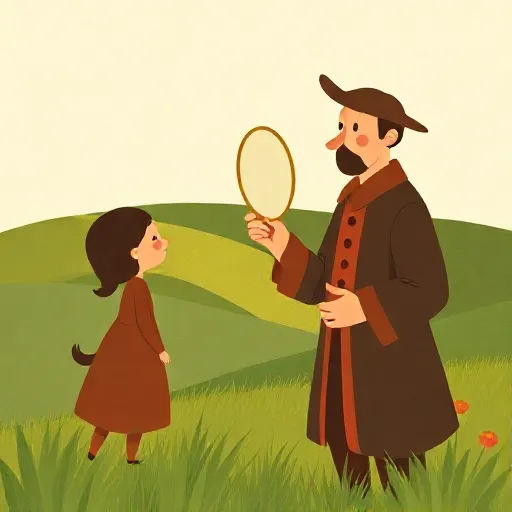
The idea that a landscape should look like a painting did not start with cell‑phone cameras. In the 1700s, wealthy Europeans fell in love with the picturesque—the notion that nature is most beautiful when it resembles a work of art. Aristocrats in Britain reshaped their estates to mimic the dreamy pastoral scenes painted by Claude Lorrain. Travelers carried a “Claude glass,” a small tinted mirror that turned a vista into a framed, picture‑like composition. The landscape became scenery, something to be viewed from just the right spot. This mindset sparked the first wave of scenic tourism. Later, when the United States created its earliest national parks, the goal was not mainly to protect ecosystems, but to preserve “nature’s masterpieces”—dramatic waterfalls, grand canyons, and sweeping mountain views that could rival Europe’s finest art.
The Trouble with Treating Nature Like a Gallery
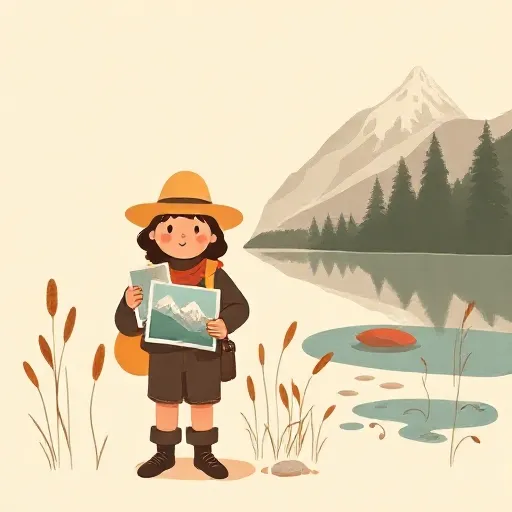
For a long time, that postcard view was the only game in town. But in the 1960s, philosophers started to worry. Ronald Hepburn pointed out that modern philosophy had almost completely ignored natural beauty, focusing only on art. Worse, he said, when people did appreciate nature, they often did it in a shallow way—rushing to snap the same famous viewpoint and moving on. Allen Carlson picked up this thread in the 1970s and gave the problem a name: the landscape model. On this model, we treat a forest or a canyon as if it were a series of two‑dimensional paintings. We judge its “composition,” its “balance,” and how well it fits a romantic image. That misses almost everything that makes a living environment special—the smells, the sounds, the changing seasons, and the web of life that has nothing to do with human viewing.
Carlson also took aim at the scenic‑tourism mindset in environmental policy. Many official methods for measuring “visual landscape quality” assumed that the most beautiful places were the ones that looked best in a photograph. This, he argued, was a deep mistake. A muddy wetland teeming with rare frogs and migrating birds will never beat a snow‑capped peak in a postcard contest. But does that mean the wetland is less beautiful, or that our way of looking is broken?
Carlson’s Answer: Be a Naturalist
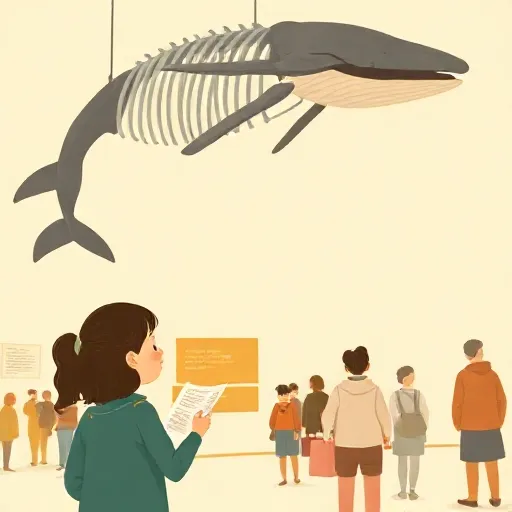
Carlson’s solution was bold. He proposed the Natural Environmental Model (NEM). The idea is simple: to appreciate a natural environment properly, you need to see it for what it really is. And the best way to know what it really is comes from the natural sciences—geology, biology, and ecology. Think about art. When you walk into a museum and face a painting like Picasso’s Guernica, you do not just stare at the shapes and colors and react. You need to know that it is a cubist painting, that it was made during the Spanish Civil War, and that it expresses outrage at the bombing of civilians. That knowledge opens up its aesthetic power. Carlson argued that nature works the same way. A bog may look like a dreary puddle. But learn that it is an ancient peatland, that it stores huge amounts of carbon, that it hosts carnivorous sundew plants and strange bog‑adapted dragonflies, and the bog becomes charged with aesthetic interest. For Carlson, scientific cognitivism was the key: the ideal nature appreciator is a naturalist, someone who sees a landscape through the lens of real understanding.
Berleant’s Radical Dive: Forget the Textbook
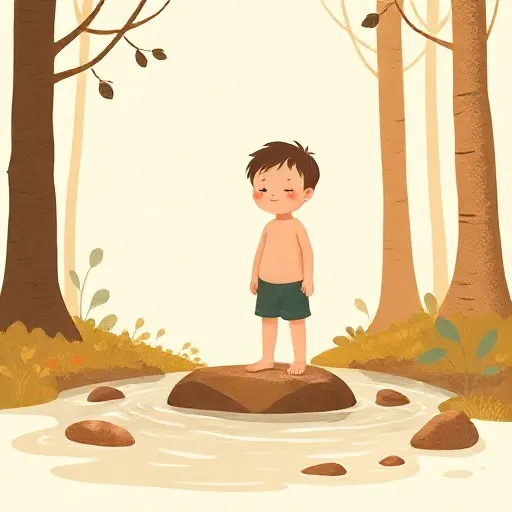
Not everyone agreed. Arnold Berleant thought Carlson had the entire picture upside down. Berleant’s aesthetics of engagement starts from a sharp rejection of the old idea of disinterestedness—the notion, popular since the 1700s, that real aesthetic appreciation requires standing back and keeping your own desires and uses out of the way. For Berleant, that kind of cold distance makes no sense in nature. You are not a spectator watching a painting from across the room. You are in the environment. You feel the wind, smell the damp soil, hear the rustle of leaves, and your own heartbeat. Engaged appreciation is a full‑body, multi‑sensory immersion, a “mutual fashioning of person and place.” Instead of analyzing an ecosystem from the outside, you lower yourself into it. You do not need a geology textbook to be moved by the smoothness of a river‑worn stone under your fingers.
This split sparked the main debate in environmental aesthetics. On one side were cognitive views, like the NEM, that make knowledge essential for correct appreciation. On the other side were non‑cognitive views, like Berleant’s, that put the emphasis on emotion, imagination, mystery, and sensory engagement. Many philosophers refused to join either camp completely. Some argued that science is just one among many valid paths. Others said you only need to know that something is natural, not its full life history. Emily Brady gave a central role to imagination, suggesting that the ideal is “imagining well”—letting your mind play with a landscape freely, but not foolishly. The one thing nearly everyone agreed on was that pure relativism—any reaction is fine, even one based on pure fantasy—was not enough. So the field found itself asking: where should the boundaries of appreciation fall, if not at science?
Why This Fight Matters: Pandas, Wetlands, and the Ugly

The way you answer that question has real consequences. If you work for a conservation group, should you protect a place because it is a scenic treasure, or because it is an ecological powerhouse? This is the problem of aesthetic protectionism—the idea that we should shield nature from harm partly because of its beauty. It sounds lovely, but it has a dark side. The old scenic aesthetic funnels protection money toward “charismatic megafauna”—polar bears, pandas, eagles—and toward postcard landscapes. Swamps, prairies, beetles, and bats get ignored, even though they may be far more important for the health of the planet.
Some philosophers think the answer is positive aesthetics—the claim that, when you see nature with enough understanding, everything in it is beautiful. If that were true, then even a cockroach crawling through leaf litter would have its own quiet splendor, and the problem of ugly species would vanish. John Muir, the great 19th‑century champion of wilderness, already leaned this way. He found beauty not only in grand mountains but also in snakes, alligators, floods, and fires—anything natural, as long as humans had not spoiled it. But critics say positive aesthetics is too sweeping. Is a diseased animal carcass really beautiful? What about the relentless violence of a cheetah killing a baby impala? Some argue that ugliness does exist in nature and that trying to talk it away with scientific facts is a cheat. Others reply that understanding the role predation plays in evolution gives it a kind of terrible, sad beauty. The debate is far from over.
A related challenge comes from biodiversity. Today, conservation often focuses on saving rare species, not necessarily pretty ones. Aesthetic protectionism seems to pull us toward the beautiful, but rarity pulls us toward the weird and the vanishing. Can we square the two? One suggestion is that rarity itself increases aesthetic value, just as a rare painting by Vermeer is more treasured than a common print. Another is that a rich aesthetic life requires a rich, diverse world to appreciate—so protecting all species, ugly or not, is really protecting our own meaningful experience. Philosophers are still testing these ideas against one another.
What Does This Mean for Your Own Backyard?
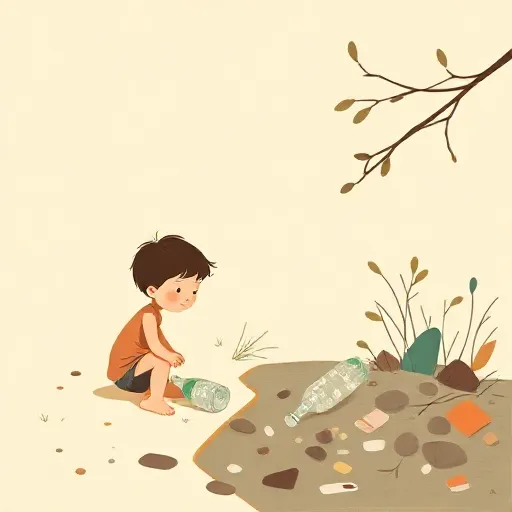
This giant argument about how to look at nature does not just belong to philosophers and park rangers. It follows you home. Climate change is creating new kinds of places—half‑natural, half‑human—that do not fit any old aesthetic category. A once‑pristine river now dotted with plastic bottles, a forest edge scarred by wildfire and logging: can these be beautiful, or are they too “morally tainted” to appreciate at all? Some thinkers warn that enjoying the look of environmental damage might silently approve the damage itself. Others insist that finding even a fragile beauty in a wounded place can make us care more deeply and fight harder. The same kinds of questions arise when you watch a nature documentary on your laptop (is that “real” appreciation, or just a safe substitute?) or when you visit a zoo (is a caged tiger an aesthetic experience, or a cramped sadness?).
The next time you stand at a viewpoint, phone ready, you can choose. You can frame the scene like a postcard, or you can put the phone away and wonder what the lichen on the rock is up to. You can close your eyes, breathe the pine‑scented air, and let the place become something you are inside, not an object you inspect. Both ways are possible. Environmental aesthetics does not hand you a single correct answer—it hands you a sharper set of questions, and a reason to think they matter.
Think about it
- If you could make everyone see the beauty in spiders and swamps by teaching them ecology, would that make the world better protected? Why might someone disagree?
- Can you imagine a way of appreciating a polluted river that still feels like real appreciation of nature? What would be the difference from just ignoring the pollution?
- If a rare toad is ugly and a pretty songbird is everywhere, which should we spend money to save? What does your answer say about your idea of beauty?