Do Landscapes Have Faces? Alexander von Humboldt’s Wild Idea
A Mountain as a Canvas
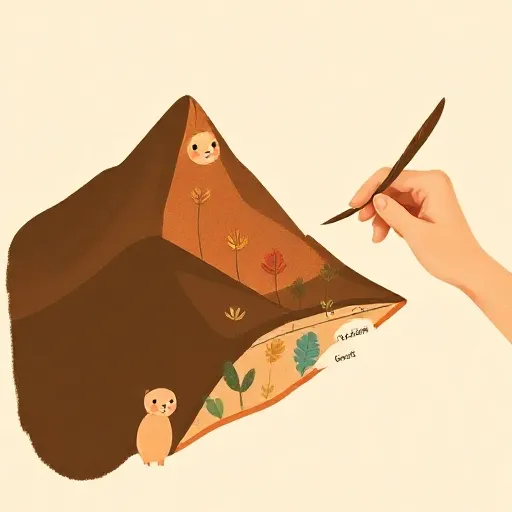
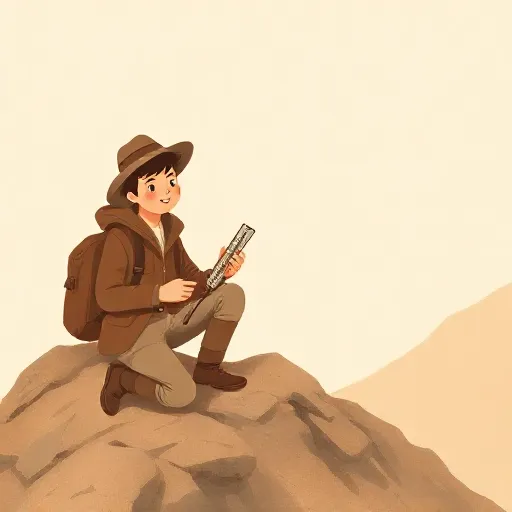
On June 23, 1802, a Prussian scientist in a sweat-soaked coat stopped halfway up a volcano in Ecuador. Alexander von Humboldt (1769–1859) was hauling barometers, thermometers, and a cyanometer to measure how blue the sky is. He and his companions — the French botanist Aimé Bonpland and an Indigenous guide, Carlos Montúfar — were climbing Chimborazo, which many Europeans then believed was the world’s tallest peak. They never reached the summit, but that did not matter. Humboldt was staring at a living canvas: belts of vegetation stacked from steamy jungle to frozen rock, each an expression of the mountain’s whole character.
Most naturalists of his day collected dried plants and classified them in museums. Humboldt wanted something else. He wanted to capture the face of the landscape — what he would call a Naturgemälde, a nature-painting. His goal was not only to measure and name, but to make you feel the mountain, to see how its parts belonged together. He thought that science alone, if it only counted and labeled, missed the most important truth of all: that nature is a single, breathing web, and you are inside it.
The Physiognomy of Nature: Reading a Landscape Like a Face
Humboldt invented a new branch of study he called the physiognomy of nature. The word “physiognomy” usually means reading a person’s character from their expression — the way a raised eyebrow hints at surprise, or a slouch signals disappointment. Humboldt argued that landscapes have faces too. You just need to learn how to look.
A regular botanist picks a plant apart: its stamens, its leaf veins, the shape of its fruit. The physiognomist, by contrast, pays attention to what strikes the eye first — the plant’s overall gesture. Is it a towering palm that thrusts upward like a spear? A liana that twists around trunks? A ground-hugging cushion of moss? Humboldt noticed that certain plant forms, which he called archetypal shapes (he used the German word Urformen), keep reappearing on every continent, even though the species are different. A tall grass that catches the light in the llanos of Venezuela has a cousin in the steppes of Central Asia. A broad-leaved banana in the Amazon has something of the tropical luxuriance you see in Southeast Asian forests. The same fundamental faces show up again and again, separated by oceans but shaped by similar conditions.
To help people see these faces, Humboldt turned to the arts. He praised landscape painters because they let individual trees “run one into the other” instead of isolating them. A painter of a hardwood forest does not catalogue each oak, beech, and walnut separately; she paints the way their crowns mingle into a single leafy character. That kind of seeing, Humboldt insisted, is not unscientific — it is scientific in a deeper way. It trains you to notice how living things are woven together, not how they can be sorted into separate boxes.
The Forest Has a Face, Too: When Trees Make the Weather
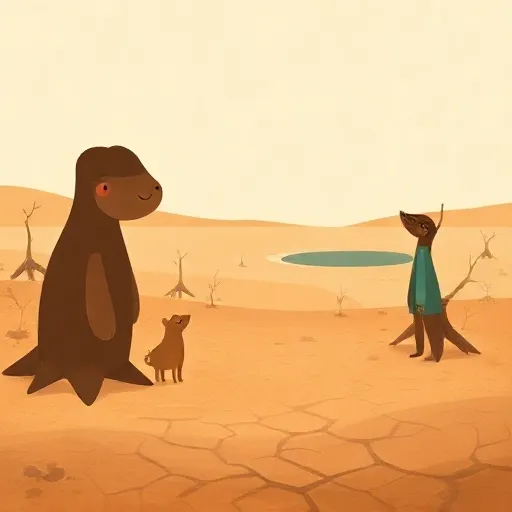
In March 1800 Humboldt and Bonpland reached Lake Valencia in present-day Venezuela. They expected a lush, well-watered landscape. Instead they found a region gripped by drought. The lake had shrunk dramatically. Local farmers and Indigenous elders told him the change had happened within living memory, after the colonial settlers began clearing the forests for plantations.
Humboldt pieced together what no scientist had grasped so clearly before: the trees were not just sitting in the climate — they were making it. When forests were cut down, the ground lost its shade and the soil lost its grip on moisture. Springs dried up. Rains, instead of soaking gently into the earth, became flash floods that carved gullies and swept away topsoil. The land, he wrote, was being changed by human hands into a desert.
This was the birth of the idea we now call ecology — the study of how living beings and their environment shape one another in a mutual dance. Earlier thinkers had asked how climate affects plants, but Humboldt turned the question around: plants affect climate just as much. He began to speak of nature as a household (the Greek oikos, from which “ecology” was later coined) where every member depends on every other. The forest is not just a collection of trees; it is a face the whole region wears, and if you erase that face, the region changes its character permanently.
Truth to Nature: Why a Poem Can Do What a Textbook Can’t
Humboldt believed that art and feeling are not decorations to add after the science is done. They are ways of knowing that get you closer to what he called truth to nature (Naturwahrheit). A measurement tells you the air pressure before an electric storm. A poem can convey what it is like to stand in that thickening air — the smothering heat, the dust, the way the horizon narrows, and the strange tightness in your chest.
In his essay “Concerning the Steppes and Deserts,” Humboldt described exactly that. As a wanderer on the llanos, he felt an internal sense of constriction. At first it seems like a private mood, but he shows that the feeling has a physical source: the falling pressure, the heavy, charged atmosphere. It is the storm itself, translated into a human body. The feeling is just as real a sign of the storm as the barometer reading, and it tells you something that no instrument alone can capture — that the storm is not an object out there, but an event you are part of.
This is the “dual direction” Humboldt aimed for in all his writing. He wanted to deepen scientific knowledge and heighten aesthetic experience at the same time, letting each one fuel the other. He called his essays Naturgemälde — nature-paintings — and he wove together precise measurements, personal memory, and artful description. The reader does not just learn about the steppes; she imagines herself walking from lush valleys onto a treeless plain, watching clouds thicken overhead, even smelling the oncoming deluge. The facts arise from the experience, not the other way around.
The Human Thread in the Web
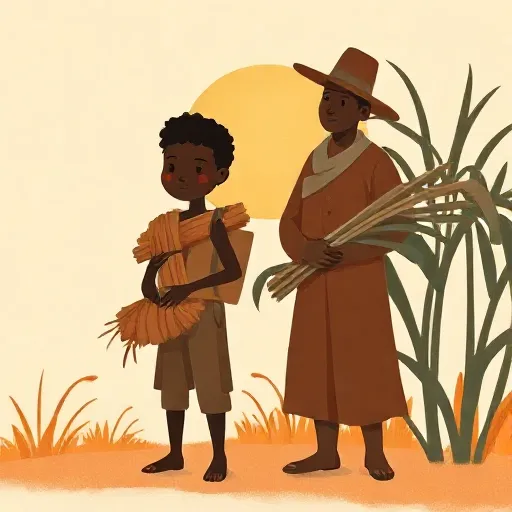
Humboldt never wrote a book called “My Political Philosophy,” but his views about human freedom and justice ran through all his major works. In his Political Essay on the Island of Cuba, he detailed the horrors of slavery on sugar plantations, calling it the greatest evil humanity has inflicted upon itself. He did not just condemn it; he laid out practical steps for abolishing it. When an American publisher later cut the chapter on slavery from the English translation, Humboldt was so furious that he published an open letter in newspapers across the United States, making his abolitionist stance unmistakable.
Why does this belong in a philosophy of nature? Because Humboldt saw that the destruction of people and the destruction of landscapes come from the same mistake: treating parts of the world as if they were not connected. The Spanish colonists wanted the South American soil to look like the barren hills of Castile, and they clearcut forests to do it. They treated Indigenous peoples as inferior and their cultures as disposable. In both cases, Humboldt argued, the result is devastation — the drying up of springs, the loss of crops, and the smothering of human creativity. He insisted that all human beings are one species, that no race is lower than another, and that languages and cultures are astonishingly diverse, not simple or primitive. Nature and culture, he wrote, form a single fabric. Tear it in one place, and the rip spreads everywhere.
Why It Still Matters: The Whole House
Humboldt’s influence did not end in his own century. Charles Darwin carried Humboldt’s Personal Narrative aboard the Beagle, retracing his South American route, and later traced the origins of his evolutionary theory back to the web of life Humboldt had revealed. John Muir, who fought to protect Yosemite, drew inspiration from Humboldt’s vision of nature as a living whole. The very idea of national parks — Yellowstone was the world’s first — grew from the warnings Humboldt gave about what happens when you cut down every tree and poison the springs. In Latin America, Simón Bolívar credited a meeting with Humboldt for fueling his dream of independence, and Mexican leaders used Humboldt’s maps and essays to picture a country free from Spain.
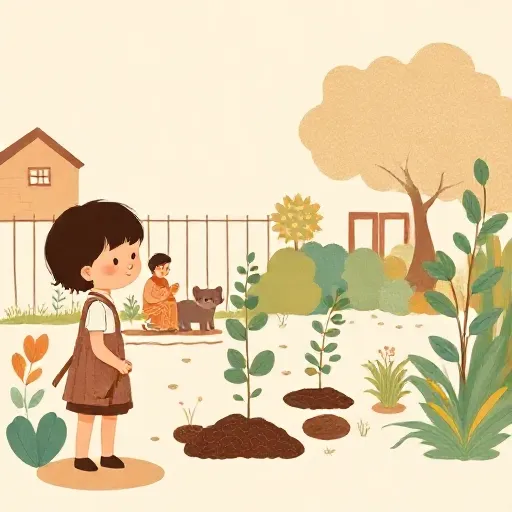
The questions Humboldt asked are even more urgent today. When you pass a vacant lot where a single tree struggles to grow, you are seeing a small-scale version of what he saw at Lake Valencia. When you watch a heatwave wilt a garden, you are feeling a thread in the same web he traced: climate shapes life, life shapes climate, and human decisions pull on both at once. He believed that knowing this starts not in the lab alone, but in your skin, your eyes, your lungs — in the way a thunderstorm tightens your chest and makes you aware that you are standing inside the world, not above it.
Think about it
- If you drew a map of your favorite outdoor place — a park, a creek, a backyard — and showed how the plants, animals, water, and people all affect one another, what would you notice that you usually miss? Would you treat that place differently afterward?
- Humboldt said that a poem or a painting can give you a kind of truth that a measurement alone cannot. Can feeling cold and small while watching a storm actually teach you something real about the storm, or is that just a feeling inside you with nothing to do with the storm itself?
- If you learned that a local forest was going to be cut down to build a shopping center, what arguments would you make to protect it? Would you talk about climate, about the animals, about beauty, about your own memories — or all of them? What would Humboldt have said?