
Why Do Economists Pretend People Are Perfect?
The Invisible Hand That Nobody Planned

In 1776, a Scottish philosopher named Adam Smith (1723–1790) noticed something strange. A baker doesn’t wake up at 4 a.m. because he wants you to enjoy breakfast. He does it to earn money and support his own family. A buyer doesn’t pay for bread to make the baker rich. She pays so her family can eat. Yet somehow, without anyone organizing it, millions of selfish decisions every morning fill bellies and keep cities alive.
Smith called this the invisible hand — the idea that people acting in their own self-interest can accidentally create an orderly society. This insight gave birth to economics as a distinct science. Before the 1700s, thinkers saw farming, trade, and taxes as separate topics. Smith showed they were all part of one hidden machine, a system of production, exchange, and consumption that no single person designed. Philosophers began to suspect that there were regular laws behind this machine, just like the laws of physics. The goal of economics became to uncover those invisible patterns.
But studying an entire economy is not like studying a rock or a planet. It is a swirling mess of human choices, weather, technology, laws, and sheer luck. How can you even begin?
Why Build a World That Doesn’t Exist?
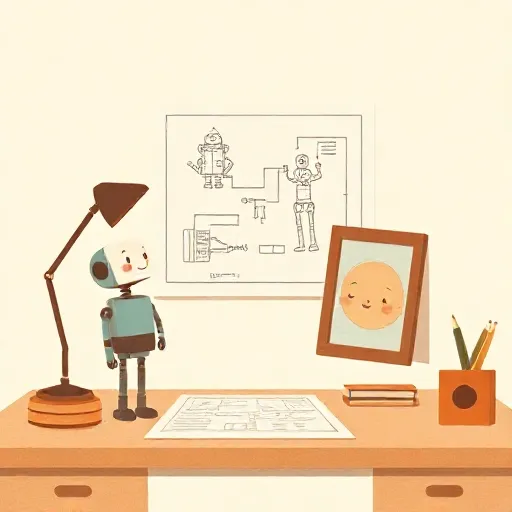
To manage this chaos, economists build models. A model is a simplified imaginary world. In most economic models, people are perfectly rational: they always know exactly what they want, they instantly calculate the best way to get it, and they never get tired, confused, or emotional. They also have perfect information, as if they can see every price in the universe and predict the future with no mistakes.
Real people are not like that. You forget your lunch money. You buy a video game you later hate. You give up on homework because it’s boring. A model where everyone is a cold-blooded genius feels almost comically false. So why do economists use it? This is one of the biggest fights in the philosophy of economics.
One answer was given long before modern computers. In the 19th century, John Stuart Mill (1806–1873) argued that you cannot just look at a complex economy and spot the laws directly. Too many forces push and pull at once. If a country raises tariffs, did its economy grow because of the tariffs, or despite them, or because of some third factor like a new invention? You cannot run an experiment on a whole nation. Mill said economists must use the method a priori: first figure out how one force works in isolation, then deduce its consequences, and only afterwards check the messy facts — while constantly whispering ceteris paribus, Latin for “other things being equal.” In other words, the law only holds when no other forces interfere.
Economists took this logic and ran with it. They built models where people were simplified down to their most predictable engine: self-interest and perfect logic. They knew people were more complicated, but they reasoned that if the models worked well enough to predict prices and trade, the fakeness might not matter.
Friedman’s Bold Bet: Only Predictions Count

In 1953, a young economist named Milton Friedman (1912–2006) wrote an essay that changed everything. He said it is a mistake to judge a theory by how realistic its assumptions are. The only test that matters is whether the theory makes accurate predictions about the things economists actually care about — like prices, employment, and growth.
Friedman used a brilliant analogy. Imagine a physicist trying to predict where a falling leaf will land. A formula that treats the leaf as a perfect sphere in a vacuum might do a pretty good job, even though a leaf is flat and the air is full of wind. A model of a businessman might assume he maximizes profits as perfectly as a calculator, even though real managers have bad days and hunches. According to Friedman, if the model predicts how markets behave, the unrealistic psychology is just scenery. You don’t throw away a useful map because it doesn’t show every squirrel in the park.
This argument was enormously influential. It gave economists permission to ignore evidence that people are not perfectly rational. If experiments showed that college students make irrational bets, Friedman’s followers could say: that’s not a market phenomenon, so it doesn’t count. The model’s job is narrow prediction, not deep truth.
But critics push back. A map of a city that only shows highways will get you to the highway exit, but it might send you off a cliff if you need a side road. If a model assumes everyone is perfectly rational, it might work fine during normal times but break horribly during a financial panic, when people act on fear. Friedman’s approach, critics warn, makes it too easy to ignore evidence that a model is dangerously wrong.
Models as Laboratories for Ideas

Many philosophers of science today see economic models differently — not as predictions of the whole messy world, but as thought experiments or miniature laboratories. When a chemist wants to study a single reaction, she cleans the test tube. When an economist wants to study the effect of a minimum wage on employment, she builds a tiny imaginary economy with only a few workers and firms, and she turns off every other force, like technology changes or global trade shocks.
This is called isolation. The model is not claiming the world is actually that simple. It is saying: if nothing else interferes, then this specific cause will push in this direction. The model helps you understand the causal tendency, even if in real life that tendency is buried under a dozen other factors.
You can think of it like a toy model village. A child builds a tiny house, a little road, and a single tree to see how a storm drain might flood. She knows the real world has a thousand houses and a million trees. But the simplified version lets her see the key relationship clearly. Economic models work the same way: they strip away distractions so we can understand one mechanism at a time.
However, this still leaves a big question. If we only understand isolated toy worlds, how do we put the pieces back together to guide actual policy? Figuring out how three different tendencies combine in a real economy with millions of real people is ferociously hard.
When the Model Breaks: Economics in the Real World
The debate over unrealistic assumptions is not just a nerdy squabble. It has real consequences.
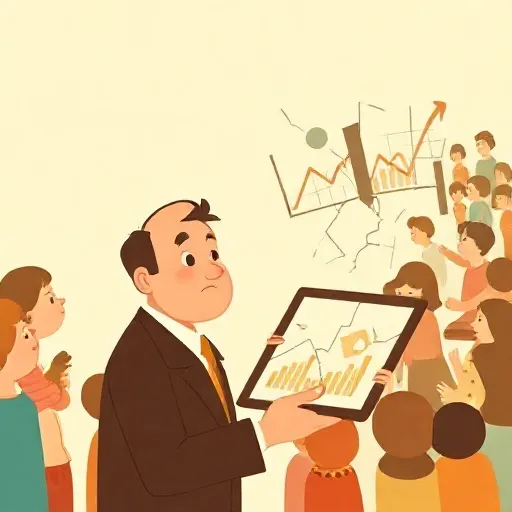
In the years leading up to 2008, many economists used models that assumed financial markets always work smoothly and that nobody makes systematic mistakes. They called it the Great Moderation and believed that big crashes were a thing of the past. Those models were elegant, mathematical, and built on the idea of perfectly rational investors. Then the global financial system nearly collapsed. Millions lost their homes and jobs. The models, which had left out messy human panic and complex financial chains, had failed to warn us.
This catastrophe reminded everyone that assuming perfect rationality is not like ignoring a few squirrels on a map. It can mean ignoring an avalanche. Today, many economists are more humble. They incorporate insights from behavioral economics, a field that studies how real people actually make decisions — including mental shortcuts, overconfidence, and fairness instincts. Yet the old debate is far from over. Some economists still argue that behavioral quirks cancel out in large markets and that traditional models remain the best foundation.
So the next time you hear that a new tax will boost growth or that raising the minimum wage will kill jobs, you can ask a philosopher’s question: what did the model assume? Did it assume everyone is perfectly informed? Did it assume nobody cheats? Did it assume nothing else in the world changes? Knowing the hidden simplifications is the first step toward knowing how much to trust the answer.
Think about it
- If a friend’s map of your town shows only highways but gets you to your destination, is it a good map? What if it leads you into a dead end because it missed a small street? How would you decide when to trust it?
- Economists sometimes use models that assume everyone is purely selfish. If people grew up believing that everyone is selfish, might that belief actually make them act more selfishly in real life? Why or why not?
- You are the prime minister. One economic model says raising the minimum wage will cost many jobs; another says it will barely affect employment. Both models have obvious simplifications. How do you decide which one to follow when you cannot run a real experiment on an entire country?