
Your Brain Isn’t a Perfect Calculator — and That’s a Good Thing
What If a Person Could Always Make the Perfect Choice?

You are standing in the school cafeteria, hungry and in a hurry. The menu board has a dozen things you could eat. You could calculate exactly how much each item costs per gram of protein, how much you like it today, how it will make you feel later — but that would take forever. So what do you do? You grab the pasta you always get. That quick choice is a mental shortcut, and it might not be a mistake. It might be a smarter kind of thinking.
Economists once dreamed of a person who never needed shortcuts. They called this imaginary character homo economicus, the “economic man.” This person always has all the information, never runs out of time, and always picks the option that gives the very best result. In decision theory, the best result is measured by expected utility — roughly, the happiness or satisfaction you expect to get, multiplied by the chance of it happening. If you could calculate expected utility perfectly every time, you’d be the rational machine that economists described.
But you are not that machine. No one is. The idea of bounded rationality says that real people face limits: we don’t know everything, our brains can only handle so much at once, and the clock is always ticking. Instead of being a flaw, these limits may actually push us toward smart, efficient ways of deciding.
Why Perfect Thinking Hits a Wall
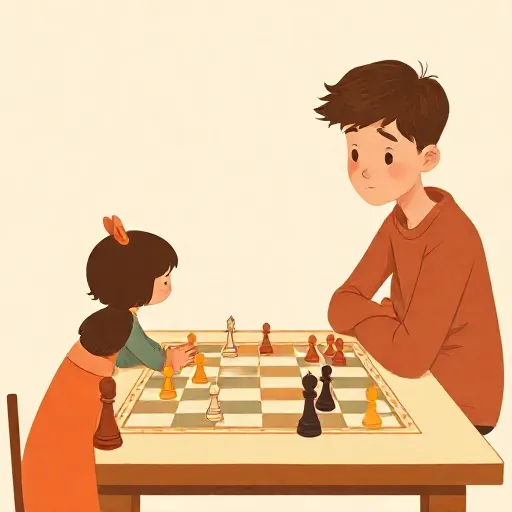
The psychologist and economist Herbert Simon (1916–2001) started asking a simple question in the 1950s: if a perfect decision takes more brainpower than anyone has, what do real people do? He pointed to chess. To play perfectly, a computer would need to check more possible moves than there are atoms in the universe. Nobody, not even a world champion, can do that. Yet people play chess — and win — by using rules of thumb.
Simon called those rules of thumb satisficing. When you satisfice, you don’t try to find the very best option out of all possibilities. Instead, you look at options one at a time until you find one that is “good enough” — one that meets your minimum standard. In the cafeteria, you didn’t compare every dish in your head; you took the first one you knew would be tasty and filling.
This shift matters because it adds up the costs of thinking itself. Figuring out the perfect choice uses time and mental energy that you could spend on something else. Simon called this procedural rationality — being smart about the way you decide, not just about the final answer. Good reported that even following all the rules of perfect rationality is so expensive that real agents have an interest in minimizing those costs. A decision that looks sloppy may turn out to be clever once you count the effort you saved.
The Heuristic Toolbox: When Shortcuts Beat Perfection

If you can’t be perfect, you need a toolkit. Psychologists call those simple decision-making tools heuristics. A heuristic is a fast rule for making a judgment that doesn’t try to use all the information. For example, Take-the-Best is a heuristic for picking between two things: you look at the most useful clue you know, and if that clue favors one option, you stop and choose it. You ignore everything else. It sounds reckless, but in experiments comparing city populations, Take-the-Best often guessed correctly more often than complicated statistical methods — especially when there wasn’t much data.
Why would less thinking give better answers? The bias-variance trade-off helps explain it. A very complex model can fit every little wrinkle of what it already knows, but then it makes wild mistakes on new cases — it overfits. A simple heuristic is biased (it ignores some information), but its predictions are steadier. Sometimes trading a bit of bias for much less variance lowers your total error. In other words, a rough rule that only counts a few signs can beat a fancy calculator that chases every whisper of data.
There are also less-is-more effects. The psychologist Yaakov Kareev showed that small samples of information sometimes make patterns easier to spot. For example, a child with a very limited short-term memory might notice that two things often go together because a small handful of experiences makes the connection look extra strong. That doesn’t mean the child is irrational; it means that a bound on memory can act like a magnifying glass, helping learning get started. Simon had already noticed that satisficing is often not a failure of wits but a strategy that fits the shape of the world.
Two Kinds of Researchers, One Big Debate

In the 1970s, two psychologists, Daniel Kahneman (born 1934) and Amos Tversky (1937–1996), began showing just how often people’s snap judgments wander away from the rules of probability. Their experiments gave names to many cognitive biases — patterns of error that seem built into our minds. For instance, when people are told a story about a witness identifying a taxi, they frequently ignore the base rate (the sheer number of blue versus green cabs in the city) and rely too heavily on the witness’s accuracy. That looks like a mistake.
Kahneman and Tversky argued that these biases reveal the limits of our mental machinery. Their work launched the heuristics and biases program, which treats deviations from probability theory as errors worth studying and, where possible, correcting.
A second group, led by the psychologist Gerd Gigerenzer (born 1947), pushed back with the fast and frugal heuristics program. They agree that heuristics are biased, but they argue that a bias is not automatically an error. If the environment is shaped in the right way, a biased rule can outperform an “unbiased” one. For example, the recognition heuristic says: if you recognize one city name but not the other, guess that the recognized one is bigger. That rule works remarkably well because the world is structured so that we hear about bigger places more often. Gigerenzer and his colleagues treat heuristics not as glitches but as carefully designed algorithms that are tuned to particular tasks.
The disagreement is partly about which standard we should use to judge a decision. Kahneman and Tversky usually measure against the laws of logic and probability; Gigerenzer measures against how often a rule gets the right answer in the real world. Both camps agree that humans are not perfect optimizers. They disagree sharply on whether our shortcuts are mainly defects or features.
Why Your World Shapes Your Thinking

A rule is never smart or stupid all by itself. It works well only in the right surroundings. This idea is called ecological rationality. A bird that catches insects by hopping along branches will starve if it tries the same trick in an open field. In the same way, a mental shortcut that works brilliantly in a crowded cafeteria might fail badly on a math test — and another shortcut, like imitating the most successful person in your group, can spread good habits through a community faster than careful reasoning ever could.
The psychologist Egon Brunswik had already argued in the 1940s that psychology must study the world an organism lives in, not just the organism’s mind. He pointed out that some cues in the environment carry more reliable information than others, and a well-adapted creature learns to rely on the cues that matter. Our shortcuts, then, are not random; they are shaped by the regularities of daily life — friends’ faces, familiar streets, the way prices are listed on a menu.
You also live inside a culture, and culture provides shortcuts. Children imitate adults long before they can explain why. This speeds up learning enormously, but it also means that bad ideas can sometimes spread just as fast as good ones. The same quick copying that teaches you to say “thank you” can also make you copy a superstition. Understanding bounded rationality means looking at the whole picture: your mind, your limits, and the world that surrounds you.
So, Are You Rational? It Depends on What You Mean

Back in the cafeteria, you didn’t solve an equation. You used a shortcut. Does that make you irrational? Not if you think of rationality as getting a good result with the time and energy you actually have. The demand for perfect consistency — what philosophers call coherence — is only one way to measure a mind. Another way is accuracy: did your choice lead to a decent lunch? Did it keep you from spending all afternoon at the counter? Under the right conditions, a simple, biased rule can be more accurate than a perfect-seeming machine that never stops calculating.
These insights matter far beyond lunch. When designers build a website, they arrange buttons so that the most helpful option is easiest to find — they are counting on your satisficing. When doctors decide how to present risks, they know that the way a number is framed can change what you choose. If we pretend that everyone is a cold, perfect calculator, we end up designing a world that fits no one. But if we accept that real minds are bounded — and that those bounds can be strengths — we can build schools, apps, and laws that actually help people decide well.
So the next time you reach for the familiar snack without a second thought, don’t apologize. You are not being lazy. You are using a mental tool that millions of years of evolution, a lifetime of experience, and the shape of your everyday world have made reliable. That’s a kind of smart worth keeping.
Think about it
- If a scientist could predict every choice you’ll make today, would it still be right to say you chose freely? Why or why not?
- Could a robot that always makes the perfectly logical decision be worse at comforting a sad friend than a person who uses gut feelings? What does that tell you about what “good decisions” really are?
- When you follow what everyone else does without thinking — like wearing the same brand of shoes — are you being clever or just copying? Can it be both?