Why Did W.E.B. Du Bois Say Black Americans Have Two Souls?
The Day a Veil Fell

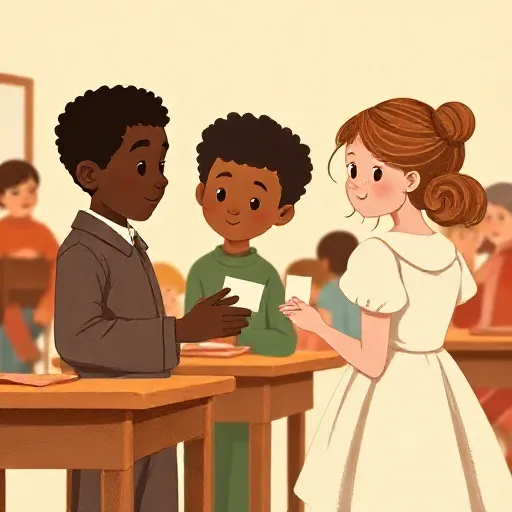
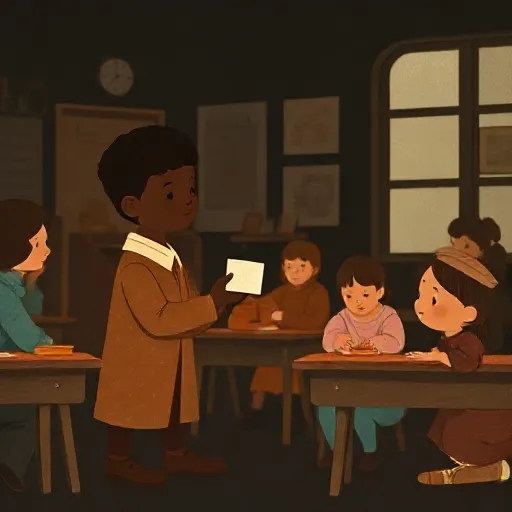
In the 1880s, in a school in Great Barrington, Massachusetts, students were swapping visiting cards — little cards with their names, like old-fashioned friendship bracelets. A tall boy named William Du Bois handed his card to a white girl. She refused to take it. Instantly, he understood: he was different. He later wrote that it felt like a veil had fallen between him and his white classmates.
That boy grew up to become W.E.B. Du Bois (1868–1963), one of the most important thinkers about race and identity in American history. The moment in that classroom stayed with him. In 1897, in an article in The Atlantic Monthly, and again in his 1903 book The Souls of Black Folk, Du Bois used a startling new phrase to describe what that veil felt like from the inside: double-consciousness.
A Strange Sensation: What Is Double-Consciousness?

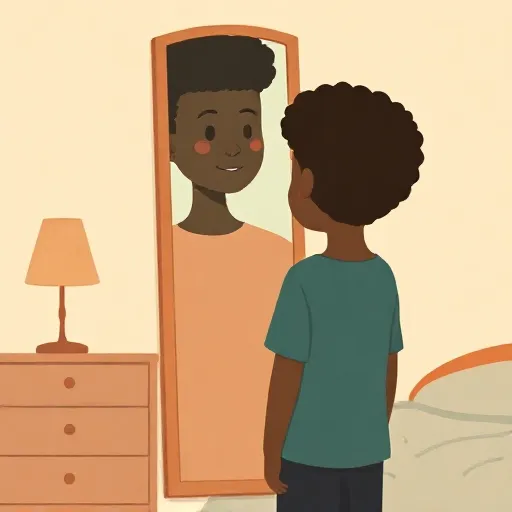
Du Bois defined double-consciousness as a peculiar kind of self-awareness. He wrote,
It is a peculiar sensation, this double-consciousness, this sense of always looking at one’s self through the eyes of others, of measuring one’s soul by the tape of a world that looks on in amused contempt and pity.
In other words, a Black person in America, living under segregation and racist violence, could never simply see herself as herself. She was always also seeing herself through the gaze of a white world that treated her as inferior. That split in how you experience your own identity — knowing who you are, yet constantly aware of a hostile outside view — is the heart of double-consciousness.
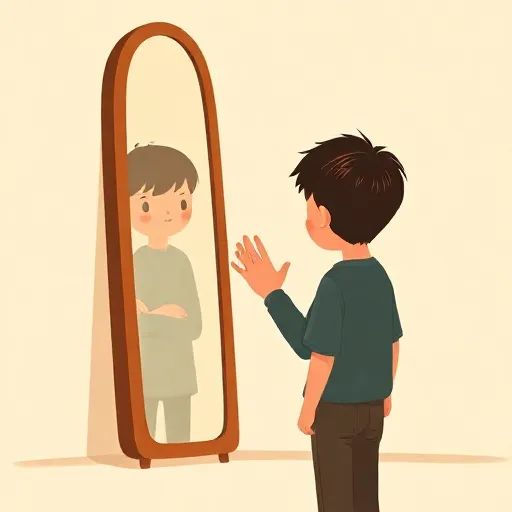
Du Bois said this was not a passing mood. It was a durable, everyday reality. He also linked it to two other key ideas: the veil and second sight. The veil is the racial divide in American society — a wall you can’t fully cross, though you can sometimes see through it. Second sight is a strange “gift” that comes from living behind that veil: a Black person learns to see herself the way white people see her, even when that view is distorted. This second sight gives access to white thoughts and prejudices that white people themselves don’t always recognize, but it also plants a false, contemptuous picture inside the Black person’s own self-understanding.
Two Souls, Two Strivings: The War Inside
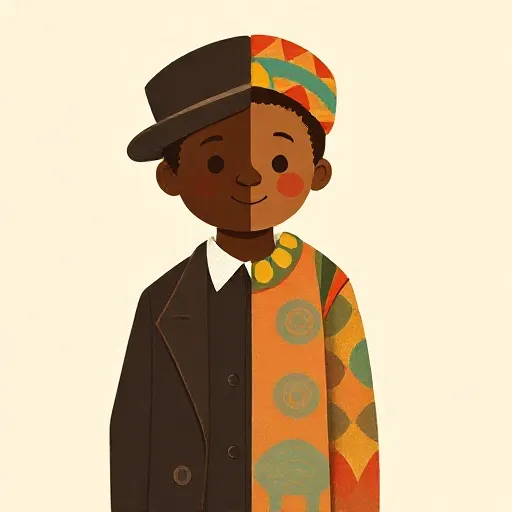
Double-consciousness doesn’t just split your vision; it cuts your whole sense of self in two. Du Bois wrote,
One ever feels his two-ness, — an American, a Negro; two souls, two thoughts, two unreconciled strivings; two warring ideals in one dark body, whose dogged strength alone keeps it from being torn asunder.
This two-ness means carrying two sets of values, two sets of hopes, two ways of being, that don’t easily fit together. You are an American, but also a Negro — and those identities feel like they are being pulled apart by a society that tells you only one of them is real or worthy.
In a second chapter of Souls, “Of the Faith of the Fathers,” Du Bois deepened this picture without using the word “double-consciousness.” He described a “double life” that Black Americans were forced to live, caught between two worlds that changed at different speeds. This produced a painful self-consciousness, a “morbid sense of personality,” and a moral hesitancy that could tempt people toward pretense or revolt, hypocrisy or radicalism. The danger wasn’t just feeling bad; it was becoming divided against yourself in a way that could undermine your own struggle for freedom.
From the Inner World to the Outer World: A Double Environment
Here’s a puzzle: after 1903, Du Bois never used the term “double-consciousness” again in anything he published. Some thinkers have argued he abandoned the idea. But if you follow his later writing, the idea didn’t vanish — it changed shape.
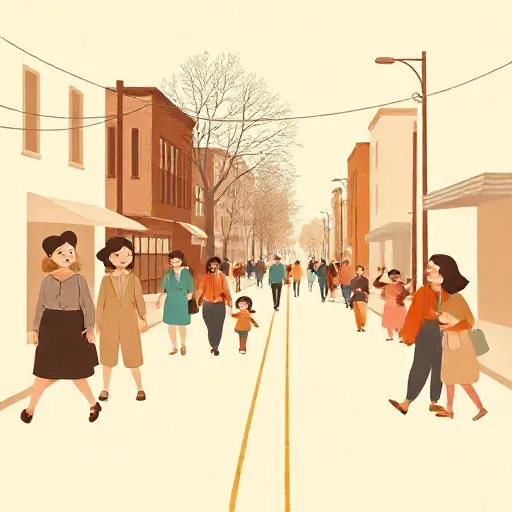
In his 1940 book Dusk of Dawn, Du Bois stopped talking so much about an inner split and started describing a double environment. Black Americans, he said, live inside two worlds: the white surrounding world, which deals with them through stereotypes and rules, and the colored world of family and community, where they know each other through direct contact. The tearing-away goes on outside the individual soul — it’s in the conditions people must navigate every day.
Du Bois wrote that he had to “take into careful daily account the reaction of my white environing world” if he wanted to move, act, or even live. This wasn’t about internalizing a false view of himself; it was practical awareness of a world built to restrict him. At the same time, he admitted that the “absurd assumptions” of white society could still get inside him and others, creating self-doubt and despair. He also noted that this experience was not unique to Black people — historically, many oppressed groups suffered a similar “inner spiritual slavery.”
So the concept evolved: it started as a dramatic picture of a fractured soul, and then became an account of how a social environment forces a person into a kind of double existence that affects every corner of life.
Double Consciousness Today: Beyond Black and White
Du Bois’s idea didn’t just survive — it spread. In recent years, philosophers have used the concept to think about groups far beyond its original focus on Black Americans.
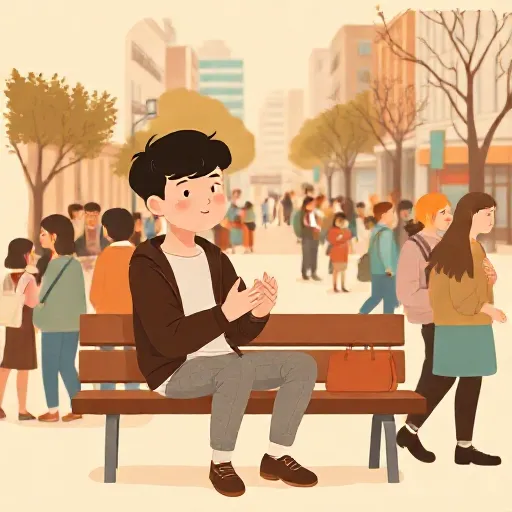
Linda Alcoff has described a white double consciousness. She argues that many white Americans today are growing uneasy with their racial identity. As the country becomes more diverse and old myths about white superiority break apart, some white people start to see themselves through the eyes of nonwhite others — and feel guilt, shame, or disorientation. This uncomfortable awareness can lead some to ignore race altogether, or to try to “escape” whiteness. But, Alcoff says, it can also push them toward a more honest, anti-racist life, if they face the history and the harm without running away.
José Medina has gone even further, proposing a kaleidoscopic consciousness. In a society with many kinds of oppression — based on race, gender, class, and more — we need a many-sided awareness, not just a double one. Medina’s version is not simply a feeling you’re stuck with; it’s a practice you choose: staying alert to new blind spots, actively seeking out the perspectives of people different from you, and never assuming you’ve fully understood the truth. This turns Du Bois’s insight into a tool for democratic struggle.
Why does this still matter? Because the feeling Du Bois described is not locked in 1903. If you’ve ever felt that you had to see yourself through someone else’s judgment — a group you wanted to join but couldn’t, a label people stuck on you — you’ve tasted something like second sight. The challenge is to hold onto your own worth even when the world sends back a distorted picture. That’s what made double-consciousness so dangerous, and so urgent, for Du Bois — and why the concept remains a compass for anyone trying to navigate a divided world without losing sight of who they really are.
Think about it
- Have you ever felt like you were being judged by a group you couldn’t join? How did that change the way you saw yourself?
- Du Bois thought the lines between groups were created by society, not by nature. Can you think of an invisible line in your community that shapes how people treat one another?
- Is it ever possible to completely ignore how others see you and just be “yourself”? Why or why not?