Do You See Yourself Through Their Eyes? Du Bois’s Double Consciousness
The Boy Who Felt Split in Two

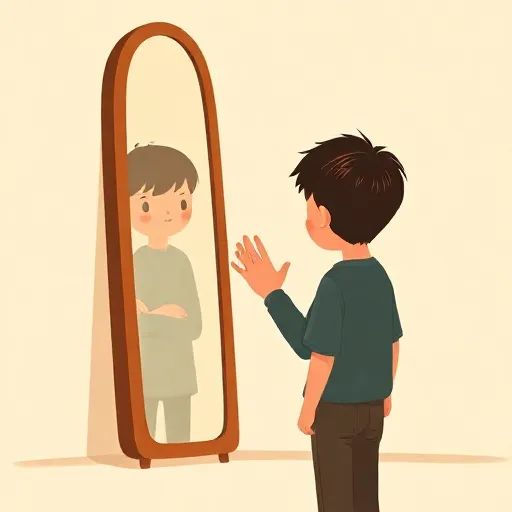
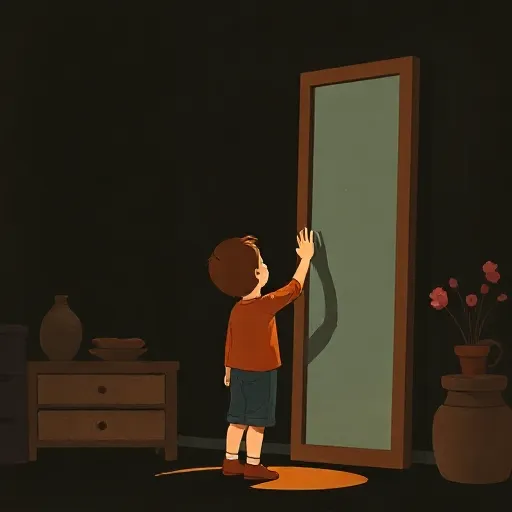
Picture a twelve-year-old boy in a small Massachusetts town in 1880. He is curious, quick with books, and the only Black student in his classroom. When he studies his own face in the window, he does not simply see himself. He also sees the way his white classmates look at him — with suspicion, amusement, or pity. That boy was William Edward Burghardt Du Bois (1868–1963), and that feeling of being split in two would become the center of his life’s work.
Du Bois grew up in Great Barrington, a mostly white community. He sailed through school, won prizes, and earned a degree from Fisk University before becoming the first Black person to receive a PhD from Harvard. He studied in Berlin, learned from some of the sharpest minds in sociology and philosophy, and then returned to America determined to understand a puzzle that was at once personal and national: why did being Black mean being seen as a problem?
His most famous answer came in a book called The Souls of Black Folk (1903). There he gave a name to that split he had felt since childhood. He called it double consciousness.
What It Feels Like to Have Double Consciousness

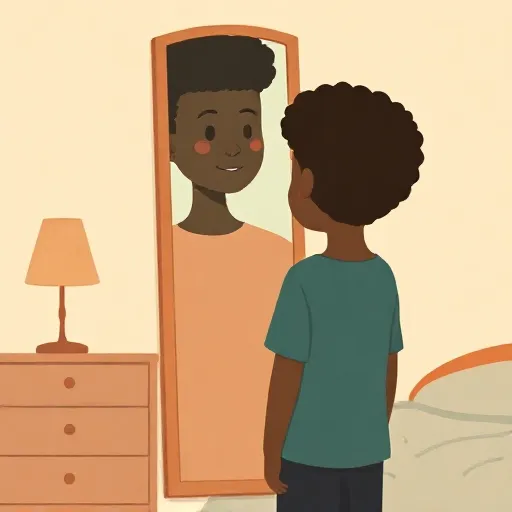
Du Bois described double consciousness as the sense of always looking at yourself through the eyes of other people — people who look at you with amused contempt and pity. It is not just worrying what someone thinks. It is a constant, tiring measurement of your own soul against a world that has already decided you are less valuable.
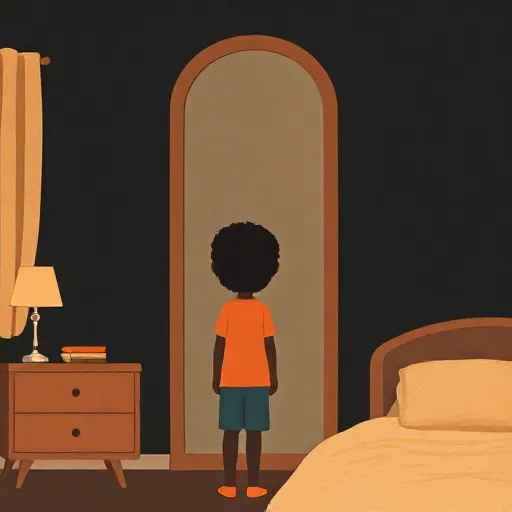
Imagine you are trying to play a video game while a crowd of spectators hovers over your screen, laughing every time you stumble. Soon you start to see yourself the way they do. Even when you are alone, their voices echo in your head. That inner split makes it hard to act freely. You are never just you; you are also the “you” that the mocking crowd has created.
For Du Bois, this was not merely a private feeling. It was a social condition — part of what he called the Negro problem. The problem was not that Black people were a “problem” by nature. Rather, a cluster of real social problems — poverty, lack of education, crime — fell heavily on Black communities. Du Bois believed these problems had two main causes: white racial prejudice and what he called the Negro’s cultural backwardness. Prejudice locked doors, and economic and educational disadvantages made it hard for Black Americans to walk through the doors that remained. Double consciousness was the inner, lived side of that same story.
Is a Race a Real Thing? Du Bois’s Bold Answer

To explain why prejudice lasted, Du Bois needed to think clearly about what a race actually is. Many scientists of his day claimed that race was simply a matter of biology — skin color, hair type, skull shape. Du Bois thought that was too thin. In an essay called “The Conservation of Races” (1897), he insisted that there are deep, spiritual differences between groups of human beings that go beyond physical measurements.
He defined a race as a vast family of people who share a common history, common traditions, common impulses, and common strivings toward ideals of life. They do not need to share the same blood or language, though they often do. What makes them one people is not their DNA but their story — the laws, religions, habits of thought, and collective hopes that have woven them together across time.
Du Bois also argued that these spiritually distinct races each have a special “message” to offer the world. For the Negro race, that message was still being formed. He saw no contradiction in saying that races are both real and historically made. The same factors — history, tradition, striving — explain both why a race exists and what makes it a race.
But not everyone agreed. Decades later, the philosopher Kwame Anthony Appiah (20th–21st century) challenged Du Bois’s definition. Appiah argued that if you try to sort all humanity into distinct races using only historical and cultural markers, the borders blur. You end up needing a hidden biological thread to tell who belongs where. Appiah concluded that race, as a deep fact about the world, does not really exist — it is an illusion.
Other philosophers have pushed back. They say Du Bois was not trying to find a scientific checklist. Instead, he was describing a social kind: a group of people who come to be treated as one race by themselves and by others because of shared experiences, struggles, and memories. In that view, race is real in much the same way that money is real — because enough people believe in it and act accordingly.
From Spiritual to Institutional: Riding Jim Crow

As Du Bois grew older, his ideas about race shifted. In his 1940 book Dusk of Dawn, he imagined a conversation in which someone asked: “But what is the black race and how do you tell it apart?” Du Bois answered bluntly: he recognized it “quite easily and with full legal sanction; the black man is a person who must ride Jim Crow in Georgia.”
Here, race is no longer a spiritual family. It is an institutional fact — a reality created by laws, customs, and collective habits. Just as a piece of paper becomes a dollar bill because a government says so, a person becomes “black” or “white” because society has drawn lines and enforced them with segregated waiting rooms, separate schools, and locked opportunities. This newer view did not deny that race feels deeply real to those who live it. But it insisted that the cause of that feeling is not a hidden essence inside the body. It is the power arrangements that train everyone to see skin color as a badge of rank.
Du Bois also explored how whiteness works. In Black Reconstruction (1935) and earlier writings, he described whiteness as a kind of public and psychological wage — a status that gave even poor white workers a sense of superiority over Black workers. That feeling kept them loyal to a system that exploited them economically. So race, in this picture, is not only about identity. It is a tool of power, a way of telling some people “you belong here” and others “you belong back there.”
Why Seeing Yourself Through Others’ Eyes Still Matters
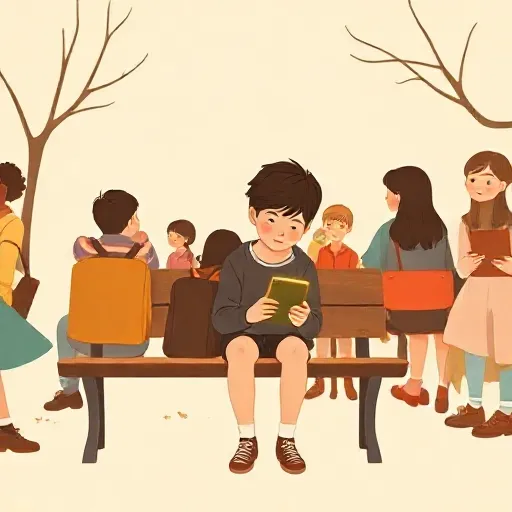
You may never have ridden a segregated train car. But you have probably felt the sting of being watched and judged. A playground insult, a classroom moment when your answer was mocked, a social media post that made you worry about how your whole self appears to a crowd — these are ordinary, smaller echoes of double consciousness.
Du Bois’s idea matters because it gives us a name for a struggle that is deeply human: the struggle to know who you are when other people’s ideas about you keep getting in the way. It also reminds us that the categories we use — race, gender, class — are not just neutral labels. They carry histories of power and prejudice that can tug our sense of self apart.
When we understand double consciousness, we begin to see why respect and recognition are not extras. They are part of what it means to live a whole, undivided life. And we start to ask better questions: whose eyes are you looking through right now? And what might you do to give someone else the room to see themselves clearly?
Think about it
- Think of a moment when you felt judged by someone else’s standards. Did that change how you saw yourself? Would you still be “you” without that view?
- If race is something society creates rather than a fact of biology, does it still make sense to use racial labels? Why might keeping them help — or harm — people?
- Can a person ever know herself completely apart from how others see her, or are we always, in some way, double?