
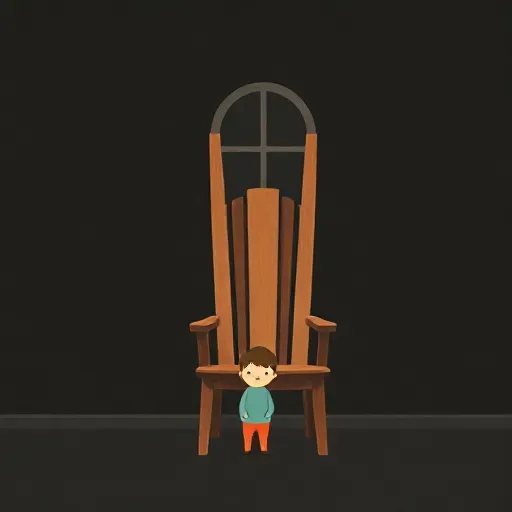
Who's Really in Charge? Why Some Power Feels Wrong
The Teacher Who Could

Imagine you sit down in your classroom. Your teacher has the power to give you extra homework, to keep you after school, even to call your parents and complain. But she never does. She’s fair, kind, and would never dream of bullying anyone. Does she dominate you?
For some philosophers, the answer is yes. They argue that domination isn’t about what someone does — it’s about what they can do. The fact that your teacher could make your afternoon miserable if she chose to, and there’s nothing you could do to stop her, is enough to say you stand under her power in a dominating way.
This idea comes from a group of thinkers called neorepublicans, especially Philip Pettit (born 1945) and Frank Lovett (contemporary). They breathe new life into a very old idea from the Roman republic: freedom isn’t just being left alone right now; it’s being safe from anyone who could boss you around on a whim. A slave whose master decides to be nice for a day is still a slave. The unfairness lives in the master’s unchecked power, not just in how he uses it.
Neorepublicans call this arbitrary power — power that someone can use any way they like, without your input, and without any control from you. To be really free, they say, you need to be shielded from that kind of power, not just left alone by it.
When Your Friends Could Gang Up on You

But a tricky question pops up: can a whole group dominate you even if no single person in the group wants to? Imagine a classroom where every student secretly resents the professor. They haven’t planned anything together — they don’t have a secret pact. Still, if one brave student stands up and starts yelling, others might quickly join in. If the professor knows this could happen any time she gives a surprise quiz, does she face domination from the class?
Pettit and Lovett say no — not unless the students act as a group agent, with shared plans and decisions, like a club or a gang. A random bunch of people who might suddenly act together doesn’t dominate you, because you can ignore that remote possibility.
But other thinkers, like Thomas Simpson (contemporary), point out that sometimes people don’t need a formal plan to coordinate. Think of a protest when strangers pour into the streets after a provoking event. That’s a team, not a group agent. And sometimes a team is ready to form, just waiting for a spark. Lovett calls this a latent team — a group of people who share an understanding that if someone makes the first move, others will follow.
This matters in real life. A professor with students who don’t share any grievance faces no latent team. But a homeless person walking into a fancy restaurant faces one: the wealthy diners and staff all know instinctively that if anyone starts to shoo the person out, the rest will join in. That latent team’s power can dominate, even though it’s not a formal organization.
Does It Matter If They’re Nice?

Plenty of critics think the neorepublican view is too broad. If domination is just the capacity to interfere, then anyone stronger than you dominates you, even if they’re the kindest person in the world. A gentle giant who could crush you but would never dream of it would still dominate you. Even a loving parent has total power over a small child and could make the child’s life miserable. Does that mean all children are dominated by their parents in a state of nature?
For Pettit, that’s exactly right — parents in a state without laws do dominate their children. But many feminists and care ethicists, like Eva Kittay (born 1946), push back. They say that caring relationships aren’t dominating unless the power is actually abused. A caregiver who protects and respects someone isn’t dominating them. Domination requires something more than a bare possibility: it requires a failure of care, a violation of trust, or a systemic indifference to someone’s interests.
The neorepublicans reply that looking only at whether power is used badly misses the point. If a woman navigates a sexist society by avoiding men who would harm her, she might never be attacked, but she’s still not free — her whole life is shaped by the knowledge that the power to harm her is there, unchecked. That constant vulnerability is the domination they’re talking about.
Melvin Rogers (contemporary), studying Black American republican thinkers, adds another layer. He argues that what’s missing in neorepublican accounts is comportment — the way dominators see themselves and the people they control. In racial slavery, the injustice wasn’t just that white people could interfere; it was that the whole culture treated Black people as lesser beings. White people felt entitled to that power. Domination isn’t just a structure of options; it’s a system of attitudes, a way of looking at someone as less than fully human. Changing laws might limit arbitrary power, but without changing hearts, domination still lives in daily interactions.
Is It All About Status?

Recently, philosophers like Dorothea Gädeke (contemporary) and Rafeeq Hasan (contemporary) have tried to solve the over-generalization problem by tying domination to social status. Gädeke asks: if a mugger holds you at gunpoint, does he dominate you? She says no — not in the deep, political sense. The mugger has an opportunistic power over you right now, but he doesn’t embody a social system that treats you as less than him. He’s not backed up by norms and laws and customs that say you’re a second-class person. Real domination has a kind of social legitimacy behind it.
To be dominated, on this view, is to be treated as someone whose voice doesn’t count when the rules are made. The real evil is that the dominator’s society gives him the authority to define your place, while you get no say. This explains why a slaver’s domination is so much more than one person’s violence: it’s a whole civilization saying he’s right to have that power. Even if he never raises his hand, his standing as a master over you colors everything.
This returns to something Pettit himself always emphasized: the eyeball test. A free person can look others in the eye without fear or deference, not because nobody could harm them, but because they have equal standing. For Gädeke, that equal standing isn’t just a side effect of protection from interference — it’s the core of what domination destroys.
So the big divide in philosophy today is between those who locate domination in the capacity to interfere and those who locate it in unequal status under social rules. The first view is clear and precise — it gives us a sharp test for when someone has too much unchecked power. The second view captures the deeper, more personal wrong of being treated as lesser. Both sides agree domination is a central political evil. They disagree on exactly why it’s so bad.
Why This Fight Matters in Your World

You probably don’t live under a slaver or a tyrant. But domination talk pops up in places really close to home. Some modern workers don’t have a human boss breathing down their neck; they have an algorithm assigning tasks, tracking every second, and docking pay if they fall behind. There’s no one to argue with, no one whose mind you can change. Is that dominating? If you think domination is about a person having unchecked power, maybe not — the algorithm isn’t a person. But if you think domination is about being completely vulnerable to a system that treats you as replaceable, the answer might be different.
Even in everyday life: who gets to set the rules in your home? Do your parents dominate you, or do they just have authority? The neorepublican would say that if your parents can punish you arbitrarily, with no appeal and no constraints, then yes — that’s a form of domination, even if they love you. That’s why a good household, like a good society, has known rules and you can speak up when things feel unfair.
Philosophers also argue about market forces. If you have to take any job, even a terrible one, because otherwise you’ll starve, are you being dominated by the economic system itself? Some say yes: the very structure of society forces you into a relationship where someone else has power over you. Others say no: domination only happens between specific people who have each other in their grip.
These aren’t settled questions. They’re the kind you live inside every day. The next time you feel not just pushed around but somehow less than, ask yourself: is it because someone could hurt me if they wanted, or because I’m treated like my say doesn’t count? Philosophers are still debating which of those is the real heart of domination.
Think about it
- If your best friend could embarrass you in front of everyone but never does, are they dominating you just by having that power?
- When you follow a school rule you think is unfair, are you being dominated, or are there other words for it?
- Imagine a future where all decisions about your school day are made by a computer program that no human can change. Is that domination? Why or why not?