
Why You Are Worth More Than a King — Even If Nobody Told You So
An Idea That Wasn’t Always Obvious
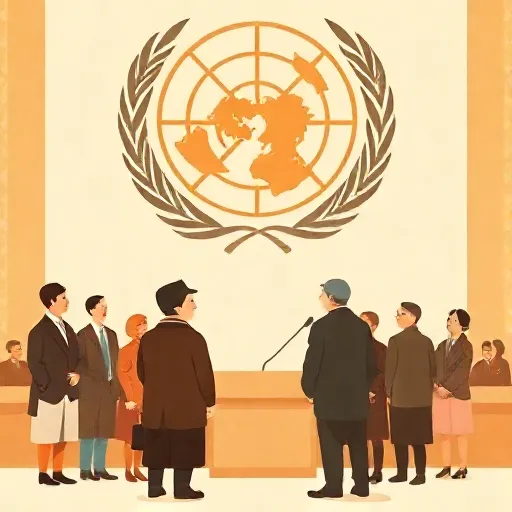
In 1948, representatives from dozens of nations gathered in Paris and approved the Universal Declaration of Human Rights. Its very first sentence announced that all members of the human family have “inherent dignity” and equal, inalienable rights. Today that might sound obvious — of course you and every other person have a basic worth that nobody can take away. But if you transported that sentence back to a dinner party in 1750, the guests would be baffled.
To them, dignity meant something else entirely: the grandeur of a king, the elegance of a countess, or the impressive seriousness of a judge. It was a prize you earned by birth or flawless behavior, not a built-in feature of being alive. So how did this enormous shift in meaning happen? The answer is messier than anyone expected.
The Old Dignity: Crowns and Curtsies
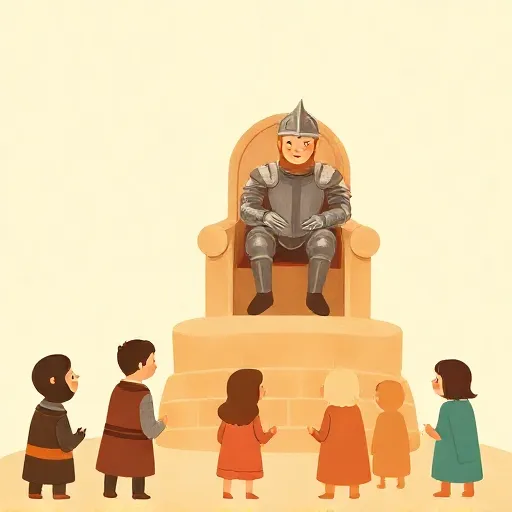
For centuries, the Latin word dignitas and its English cousin “dignity” were all about hierarchy. A duke had more dignity than a farmer. A bishop had more dignity than a merchant. Samuel Johnson’s dictionary in 1755 defined dignity simply as “rank of elevation.” Even the great philosopher Thomas Hobbes (1588–1679) used the word to refer to a person’s public worth, not to some invisible treasure inside them.
The founding documents of new republics tell the same story. The U.S. Declaration of Independence (1776) thunders about equality and inalienable rights — but it never mentions human dignity. Neither does the U.S. Constitution. The French Declaration of the Rights of Man (1789) uses the word exactly once, and there it means the privileges of holding a political office, not the worth of every person. It wasn’t until the Mexican Constitution of 1917 and the German Weimar Constitution of 1919 that the term started showing up in a meaning we would recognize today.
So the idea that all humans share a special, unearned stature is startlingly new. How did it win the world over in time for 1948?
Three Stories About Where Dignity Came From (and Why They Don’t Quite Work)

Three origin stories get told again and again.
The revolutionary story. It claims that eighteenth-century thinkers like Thomas Jefferson and the Marquis de Lafayette planted the seed of universal dignity. But as we just saw, their founding documents are silent on the word with our modern meaning. Meanwhile, voices like Sojourner Truth and Frederick Douglass pointed out that real life in those new republics was full of brutal oppression that flatly denied equal worth to vast numbers of people.
The Kantian story. The philosopher Immanuel Kant (1724–1804) famously wrote that human beings have a dignity (Würde) that surpasses any price, and that you must never treat a person merely as a tool but always as an end in themselves. Many people assume Kant invented the whole idea. Recent research suggests otherwise. Kant was deeply influenced by Jean-Jacques Rousseau, and he did not actually claim that dignity is a mysterious inner value that grounds human rights. What’s more, historians argue that Kant’s direct influence on the development of modern human dignity has been exaggerated.
The imago Dei story. Christian theology long taught that humans are made “in the image of God” — a doctrine called imago Dei. Some point to the Renaissance thinker Giovanni Pico della Mirandola (1463–1494) and his famous Oration on the Dignity of Man as a breakthrough. But scholars now agree that Pico never gave that title to his speech himself, and he used the Latin dignitas only aspirationally — as something humans might achieve by becoming more like angels, not as an equal status they already possess. Detailed studies of medieval debates show that imago Dei and dignity rarely crossed paths in the way the modern idea requires.
A few historians also point to the Roman thinker Cicero (106–43 BCE), who spoke of “the dignity of the human race.” But Cicero meant that humans are superior to cattle because we can reason, not that every person has an equal claim to rights. As the philosopher Stephen Darwall notes, Cicero’s dignity was an ethical standard to live up to, not a basis for demanding anything from others.
None of these stories is pure fiction — each contains a spark. But together they show that the invention of modern dignity was a slow, crooked process, not a single lightning strike.
So, What IS Dignity, Anyway?
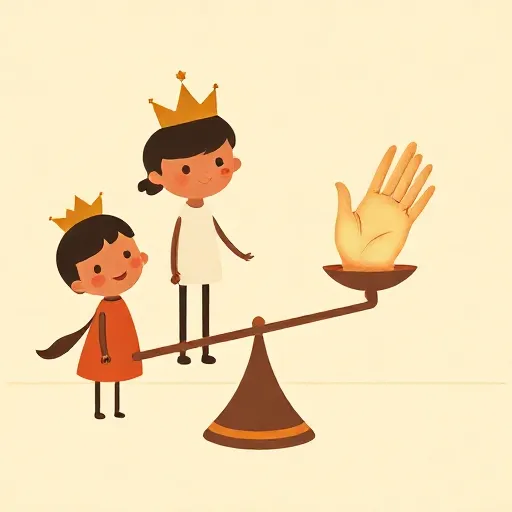
If the history is messy, the meaning is too. Even today, we use “dignity” in several ways. Someone can act with dignity — staying calm and composed under pressure. A king or a judge can hold a position of dignity — a high social rank. But the sense that changed world politics is human dignity: the basic worth or standing that all people share equally, just because they are human.
Here is the sharpest question philosophers now ask: is human dignity something inherent — a special value that lives inside you, like an invisible jewel you are born with? Or is it something constructed — a status we create by treating one another in a certain way?
Many thinkers today lean toward the second view. Consider what happens when you say to a friend, “Hey, that’s not fair — you promised.” In that moment, you are treating your friend as someone who can be held responsible, and you are claiming to be someone whose voice counts. The legal thinker Samuel Pufendorf (1632–1694) noticed this long before modern human rights language existed. He wrote that when people argue against an insult, the strongest comeback is often simply: “I am not a Dog, but a Man as well as yourself.” That outburst assumes a shared standing — a dignity — that even the insulter cannot fully ignore.
On this picture, human dignity is not a hidden treasure you carry alone; it’s more like belonging to an invisible nobility. We grant each other that noble status whenever we take each other seriously as persons with a right to speak and be heard. And we feel its sharpest edges when someone tries to strip it away.
Rights, Respect, and a Suspicious Word
You often hear that dignity is the reason we have human rights. The idea is tempting: because each person has a special worth, they deserve not to be tortured, enslaved, or silenced. But not everyone agrees this logic holds up. Some legal philosophers, like Jeremy Waldron, flip the arrow. They suggest that having rights is what actually gives you the high status we call dignity. It’s as if the whole human race has been knighted — not by a monarch, but by the law itself.
Other thinkers warn that “dignity” can be so fuzzy it becomes useless. The bioethicist Ruth Macklin once complained that it “means no more than respect for persons or their autonomy.” Skeptics wonder: if we can’t nail down what dignity is, does it do any real work, or is it just an impressive-sounding word that makes us feel noble?
Still, when people are humiliated, degraded, or treated as less than human, “dignity” is the word that keeps surfacing. It names a harm that simple lists of rights don’t fully capture. Even if philosophers keep arguing about its innards, the concept remains stubbornly alive.
Why It Still Matters (or, When You Feel It)

You probably don’t walk around thinking, “My human dignity is intact today.” But you might feel a sharp, uncomfortable sting when a teacher ignores your raised hand again and again, or when a friend shares your secret just for a laugh. That sting is often a dignity wound: the message that your standing doesn’t matter.
The long, crooked journey of this idea matters because it gives that sting a name. Every human — the quiet kid in the back row, the elderly man on the bus, the refugee in a far-off country — carries a claim to be seen as a full person. You don’t need to solve all the philosophical puzzles to know that treating someone like a dog instead of a fellow human being is a special kind of wrong.
So the next time you hear the word “dignity,” remember it’s not just an old-fashioned term from a dusty document. It’s a battle cry that took centuries to become obvious — and it still depends on how you and everyone else choose to see one another.
Think about it
- If someone insults you but you genuinely don’t feel hurt, have they still violated your dignity, or does dignity require that you actually feel disrespected?
- Can a person lose their dignity through terrible actions, or is human dignity something that never goes away, no matter what someone does?
- If dignity is something we create by treating one another as equals, does it disappear when others stop treating you that way — for example, if you were stranded alone on a desert island?